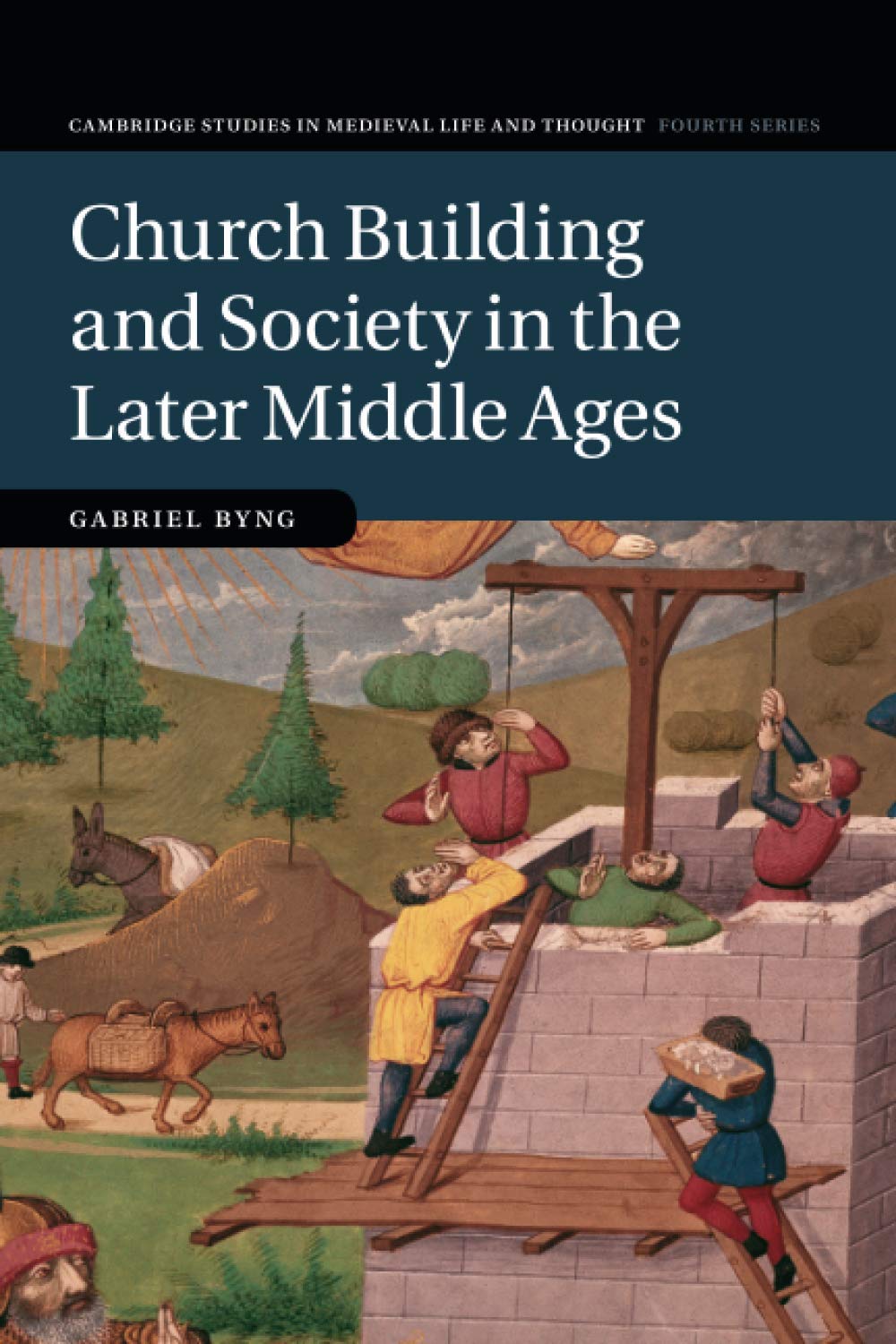
Church Building and Society in the Later Middle Ages (Cambridge Studies in Medieval Life and Thought: Fourth Series, Series Number 107)
$27.93
by Gabriel Byng



The construction of a church was undoubtedly one of the most demanding events to take place in the life of a medieval parish. It required a huge outlay of time, money and labour, and often a new organisational structure to oversee design and management. Who took control and who provided the financing was deeply shaped by local patterns in wealth, authority and institutional development - from small villages with little formal government to settlements with highly unequal populations. This all took place during a period of great economic and social change as communities managed the impact of the Black Death, the end of serfdom and the slump of the mid-fifteenth century. This original and authoritative study provides an account of how economic change, local politics and architecture combined in late-medieval England. It will be of interest to researchers of medieval, socio-economic and art history. 'Church Building and Society in the Later Middle Ages is an engaging and significant study that sets church building - its administration and its financing - in later medieval England within the broader context of the changing economy and society of the period.' Phillipp R. Schofield, The American Historical Review The first systematic study of the financing and management of parish church construction in England in the Middle Ages. Gabriel Byng is a research fellow in History at Clare Hall, Cambridge, and Director of Studies in History of Art at Clare College, Cambridge. His research focuses on the material culture of late medieval and early modern England.