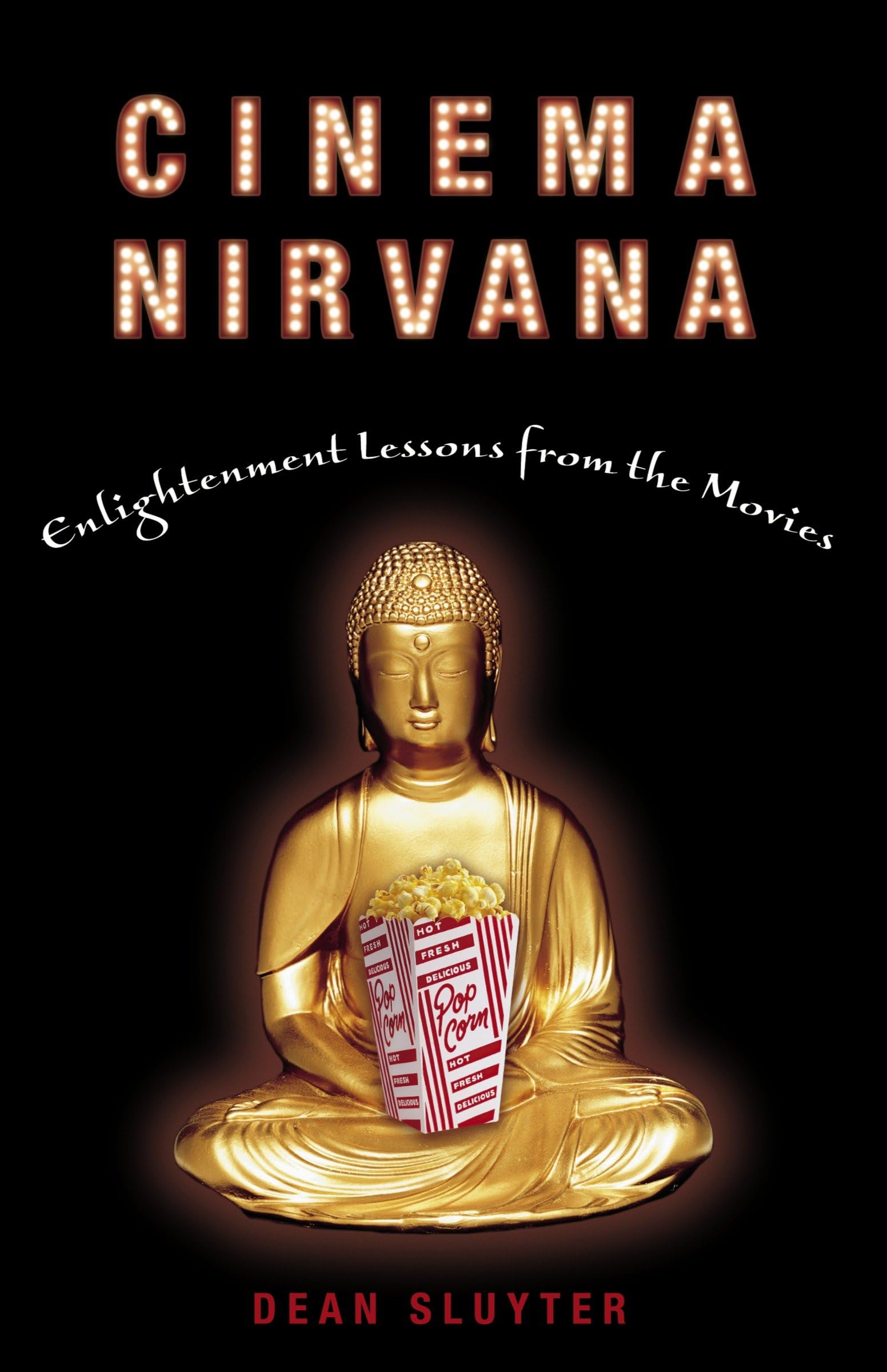



Movie fans and spiritual seekers, unite! In Cinema Nirvana , meditation teacher and award-winning film critic Dean Sluyter illuminates the hidden enlightenment teachings of Casablanca , Jaws , The Graduate , The Godfather , Memento , and ten other classic films, revealing spiritual wisdom in everything from 007’s secret weapons to the colors of the Seven Dwarfs’ eyes. So grab your popcorn, sit back, and prepare to have your mind opened. Cinema Nirvana is a funny but wise, practical but wildly entertaining guide to finding enlightenment—one movie at a time. “Dean Sluyter has one of the freshest voices in spiritual writing today. From the common ore of pop culture, he extracts the gleaming diamonds of dharma-wisdom." —Lama Surya Das, author of Awakening the Buddha Within “If you spliced together DNA from Quentin Tarantino and the Dalai Lama, you’d get Dean Sluyter and he’d write this amazing book.” —Michael Gelb, author of How to Think Like Leonardo da Vinci “Entertaining and thoughtful in turn, Cinema Nirvana compels you to watch the movies in the way a buddha might see them.” —Stephen Batchelor, author of Living with the Devil “Sluyter is the movie guru I have longed for. Virtually every page contains jaw-dropping insights and laugh-out-loud surprises.” —Lama John Makransky, Professor of Buddhism and Comparative Theology, Boston College Movie fans and spiritual seekers, unite! In "Cinema Nirvana, meditation teacher and award-winning film critic Dean Sluyter illuminates the hidden enlightenment teachings of "Casablanca, "Jaws, "The Graduate, "The Godfather, "Memento, and ten other classic films, revealing spiritual wisdom in everything from 007's secret weapons to the colors of the Seven Dwarfs' eyes. So grab your popcorn, sit back, and prepare to have your mind opened. "Cinema Nirvana is a funny but wise, practical but wildly entertaining guide to finding enlightenment--one movie at a time. Dean Sluyter has taught literature and led meditation workshops for more than twenty years. He currently teaches at a private school in New Jersey. Snow White and the Seven Dwarfs (1937) Dare to Be Dopey So, in planning a new picture, we don’t think of grown-ups and we don’t think of children, but just of that fine, clean, unspoiled spot down deep in every one of us, that the world has maybe made us forget and maybe our pictures can help recall. —Walt Disney As a role model, Snow White sucks. She’s an utterly passive fairy-tale heroine who climbs no beanstalks and slays no dragons. She has no talents but housecleaning and no interests beyond pining away for that Special Someone who will someday come and solve all her problems. Her shrill, girly voice attests to her empty-headed helplessness—she’s sisters-under-the-skin with the old politically incorrect Teen Talk Barbie that sighed, “Math is hard!” All she is is young and pretty, and not smart enough to understand that one day, like the Queen, she’ll be forty and washed up. This sort of critique is valid as long as we’re viewing the film on a strictly literal level. But on that level, Jack and the Beanstalk teaches us to solve our problems by stealing and killing, and Christ’s parables are pointless stories about pearls and swine, lost sheep and mustard seeds. If we look at it in the right light and from the right angle, Snow White and the Seven Dwarfs , the first feature-length cartoon ever made, turns out to be an extended dharma parable, its teachings as exquisitely detailed as they are unintended. Back in 1937, when the film was in production, the press called it “Disney’s Folly.” Even Roy Disney, Walt’s brother and partner, wanted to stick to their wildly popular Mickey Mouse shorts, fearful that the project would sink the studio. Walt kept hiring more artists, hundreds of them, and going back to the bank for more money. To realize his vision, new technology was developed (a giant multiplane camera to add layers of perspective), an in-house art school was established, live dancers and dwarfs were filmed and copied, chemists mixed 1,500 custom paint colors, and teams of animators worked around the clock for months, fired up by Walt’s relentless perfectionism. As one artist said, “Disney had only one rule: whatever we did had to be better than anybody else could do it, even if you had to animate it nine times.” The result tapped in to something universal, and Snow White became the first great international blockbuster of the sound era. True, it set in motion the Disney juggernaut-of-cuteness that would eventually crush every delicate, wistful children’s classic in sight (poor Pooh!), but that’s another story. Visually, the film is still stunning today, in such scenes as the climactic storm, where the fall and splatter of each individual raindrop is hand-rendered with painstaking predigital craftsmanship. But most remarkable is how, out of the intensely concentrated awareness of some 1,000 collaborating artists (writers, animators, co