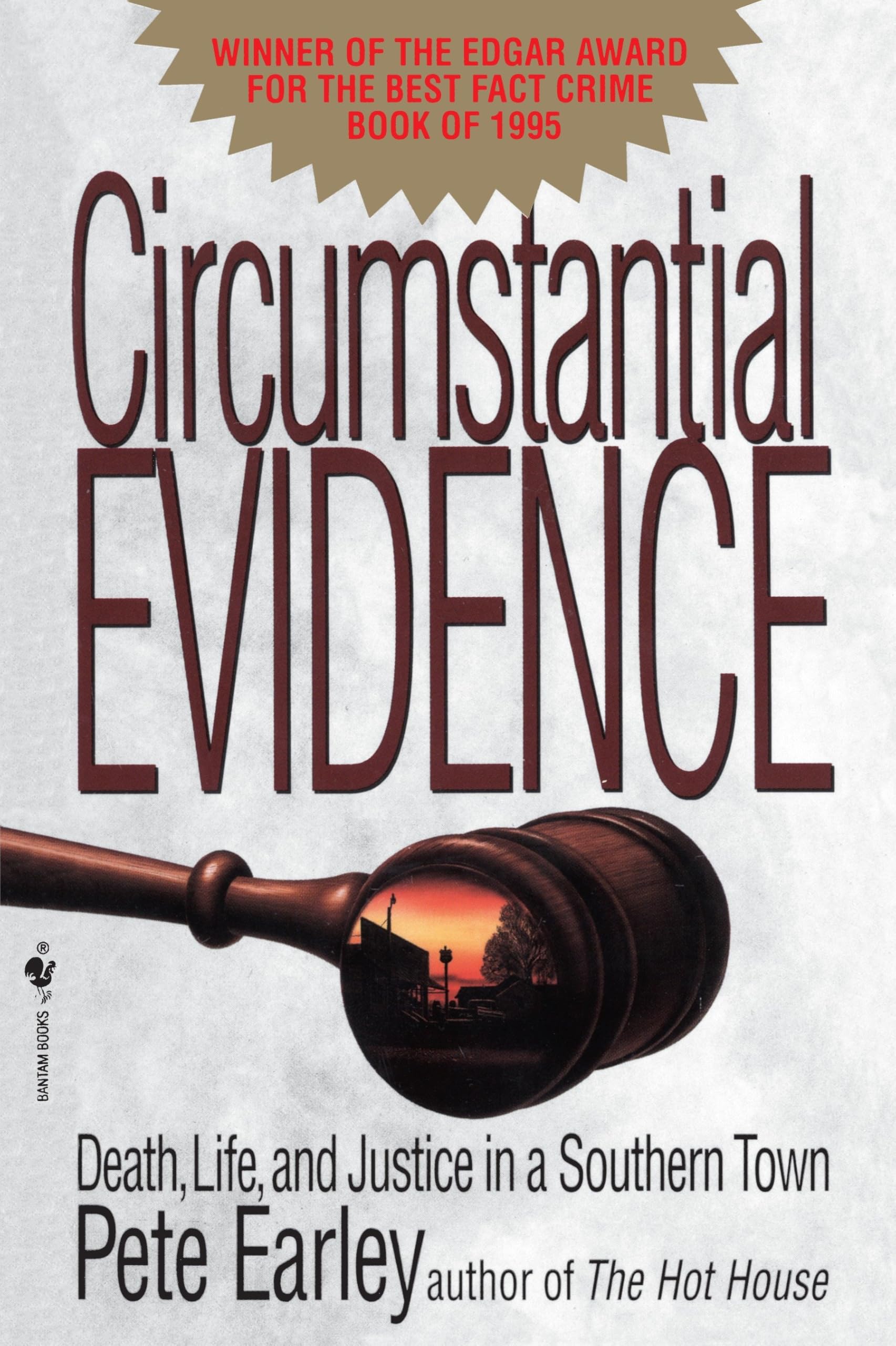



Pete Earley's The Hot House gave America a riveting, uncompromising look at the nation's most notorious prison--the federal penitentiary in Leavenworth, Kansas--a book that Kirkus Reviews called a "fascinating white-knuckle tour of hell, brilliantly reported." Now Earley shows us a different, even more intimate view of justice--and injustice--American-style. In Monroeville, Alabama, in the fall of 1986, a pretty junior college student was found murdered in the back of the dry cleaning shop where she worked. Several months later, Walter "Johnny D." McMillian, a black man with no criminal record, was tried, convicted, and sentenced to death for the crime. As McMillian sat in his cell on Alabama's death row, a young black lawyer named Bryan Stevenson took up his own investigation into the murder of Ronda Morrison. Finding a trial tainted by procedural mistakes, conflicting eyewitness accounts, and outright perjury, he was determined to see McMillian go free--even if it took the most unconventional means... Earley's reporting has the bracing flavor of fiction, as if he were a masterly novelist displaying his imagination in a crime thriller." -- The Washington Post "Mr. Earley tells the story skillfully, weaving together interview material, investigators' reports and courtroom testimony to show how the system slowly, inexorably tightened a noose around Mr. McMillian's neck. Circumstantial Evidence leaves readers outraged." -- The New York Times Book Review "A wonderful story. The new To Kill a Mockingbird ." --Gerry Spence, author of How to Argue and Win Every Time Formerly a reporter for The Washington Post , Pete Earley is the author of Family of Spies: Inside the John Walker Spy Ring and Circumstantial Evidence: Death, Life, and Justice in a Southern Town , winner of the Edgar Award and the Robert F. Kennedy Book Award. Bryan Stevenson turned his Toyota Corolla onto Interstate 65 and pushed down on the accelerator, merging the well-traveled import into the parade of cars hurrying south from Montgomery. It was mid-January 1989, and Stevenson was en route to Holman prison, where he planned to interview three inmates on death row. He had never met any of them. The last name on his list was Walter "Johnny D." McMillian. Stevenson was not from the Deep South. He had been born and reared in rural Delaware, and he often found life in Alabama depressing. He stayed only because of his work. As a civil rights lawyer who specialized in death row appeals, Stevenson was right where he belonged. More than half of the nation's death row inmates are imprisoned in Alabama, Georgia, Mississippi, Louisiana, Texas, and Florida. Nearly eighty-five percent of all executions take place in those six states. Among attorneys the states are known as the Death Belt. Stevenson was the newly hired director of the Alabama Capital Representation Resource Center, and it was his job to do everything he could to prevent Alabama from executing a single inmate. Despite its grand-sounding name, the nonprofit Resource Center was a fledgling two-month-old operation based in a Victorian row house not far from the state capitol in Montgomery. The driving force behind the creation of the Center was a no-nonsense white woman in her late twenties named Eva Ansley, who had waged a one-person campaign against the death penalty in Alabama for several years. Ansley was not an attorney, but she was highly respected in Alabama legal circles and despised by death penalty proponents. In early 1988 Bryan Stevenson heard about Ansley's efforts in Alabama and called to offer his help. Back then he was working for Southern Prisoners' Defense Committee in Atlanta, another nonprofit group opposed to the death penalty. Stevenson agreed to represent Ansley's most hard-pressed clients, and he also began offering other lawyers in Alabama advice on how to file death row appeals. With Stevenson's help, Ansley convinced the Alabama Bar Association that something had to be done to assure the condemned men legal representation up to the point of their execution, and the bar association agreed to help apply for various federal grants. In November 1988 the federal funds started to arrive, the Resource Center was organized, and Stevenson agreed to move to Montgomery temporarily to run it. He and Ansley were now in the process of hiring a staff and unpacking files. As he drove south Stevenson thought about the three men he planned to meet. With more than a hundred cases to choose from, Stevenson's decision to pick out McMillian's might have seemed odd. There were lots of other prisoners much closer to being executed. But Johnny D.'s case had stuck out. Nearly everyone on death row had a long criminal record. Johnny D. didn't. Nearly everyone on death row had been linked to a murder by fingerprints or some other physical evidence. He hadn't. And few death row inmates had alibis as strong as Johnny D.'s. Why hadn't jurors believed