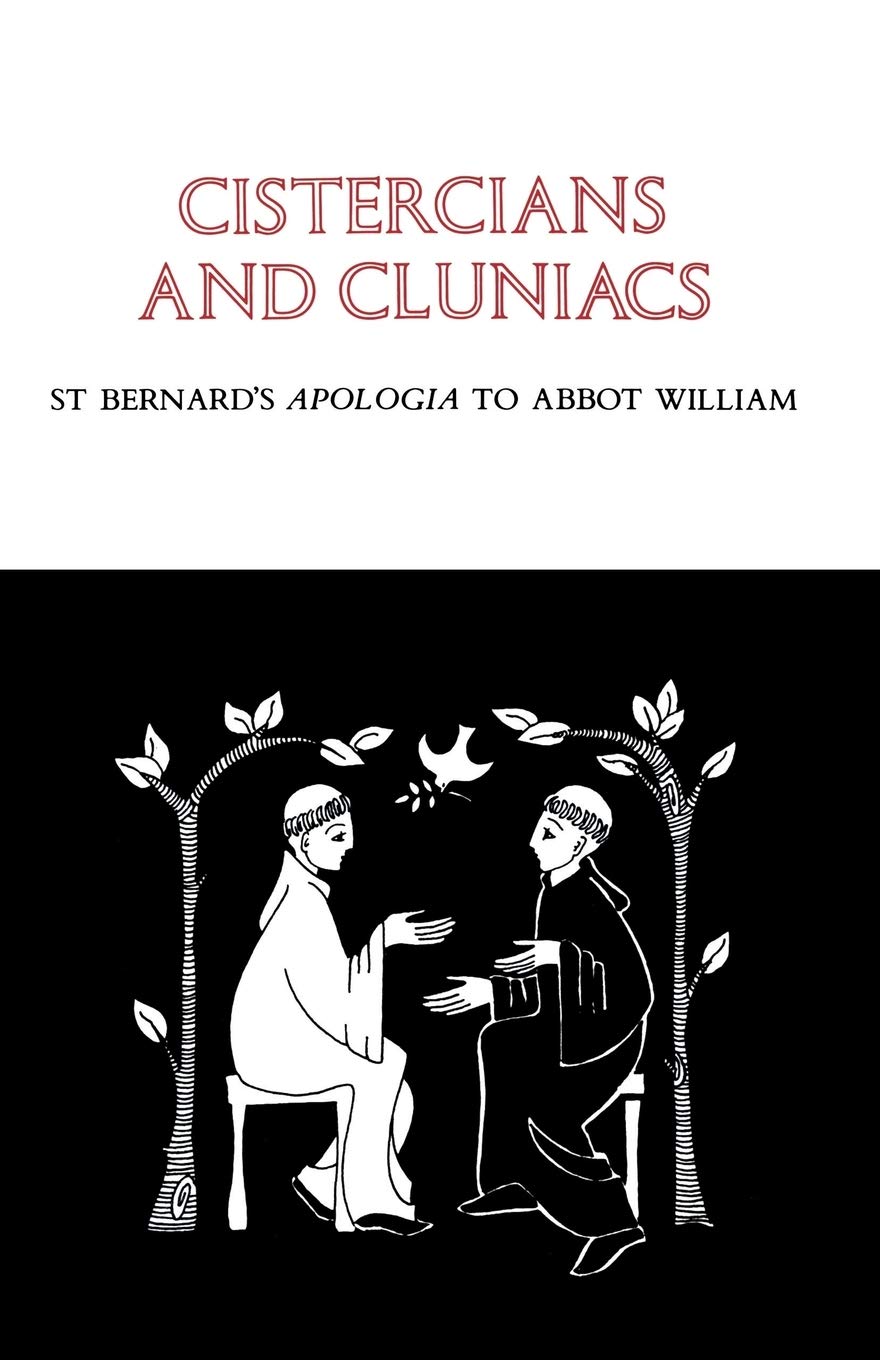
Cistercians and Cluniacs: St. Bernard's Apologia To Abbot William (Volume 1) (Cistercian Fathers Series)
$14.29
by Bernard Of Clairvaux



Founded in 910 to return to the authentic monasticism of St Benedict, the Abbey of Cluny led a revolution in the medieval Church. Wresting secular hands from control of monastic offices and finances, the great burgundian monastery and its hundreds of daughter houses inspired eleventh-century churchmen to seize control of the Church from petty lords and outraged emperors. Powerful and respected, the Cluniac order cast a long shadow over the european Church, but it's very position of leadership brought prosperity into the cloister and, in its train, complacency. The Cistercians were founded in 1098 to revive the primitive observance of the Rule of St Benedict. Having experienced the worldly dangers threatening, even embraced by, the Black Monks of Cluny, the White Monks of Cîtwaux resolved to withdraw from, not to reform, the world. Their uncompromising asceticism attracted scores of young men, and soon the Cistercian Order outstripped the Cluniac in pious prestige and personnel. Cluniacs felt censured; Cistercians grew smug. As rumors mounted in the spring or summer of 1125, William, the Benedictine abbot of Saint-Thierry, exhorted his good friend Bernard, the Cistercian abbot of Clairvaux, to take pen in hand to check mutual rancor. This Apologia , composed by Bernard and approved by William, is the result. it excoriates monks black and white: Cistercian who had become slanderers, Cluniacs who had grown self-indulgent, Bernard's satirical wit spared no one who had lost sight of the monk's first duty, the love of God and the brethren. Swift would have appreciated it; the monks of Cluny did not.Irish Times Michael Casey, OCSO, has been a monk of Tarrawarra Abbey (Australia) since 1960. In the intervening years he has conducted many retreats and workshops on every continent (except Antarctica) and has written many articles on topics relating to monastic history and spirituality. He is also the author of many books, including The Road to Eternal Life: Reflections on the Prologue of Benedict's Rule and Seventy-Four Tools for Good Living: Reflections on the Fourth Chapter of Benedict’s Rule , both from Liturgical Press.