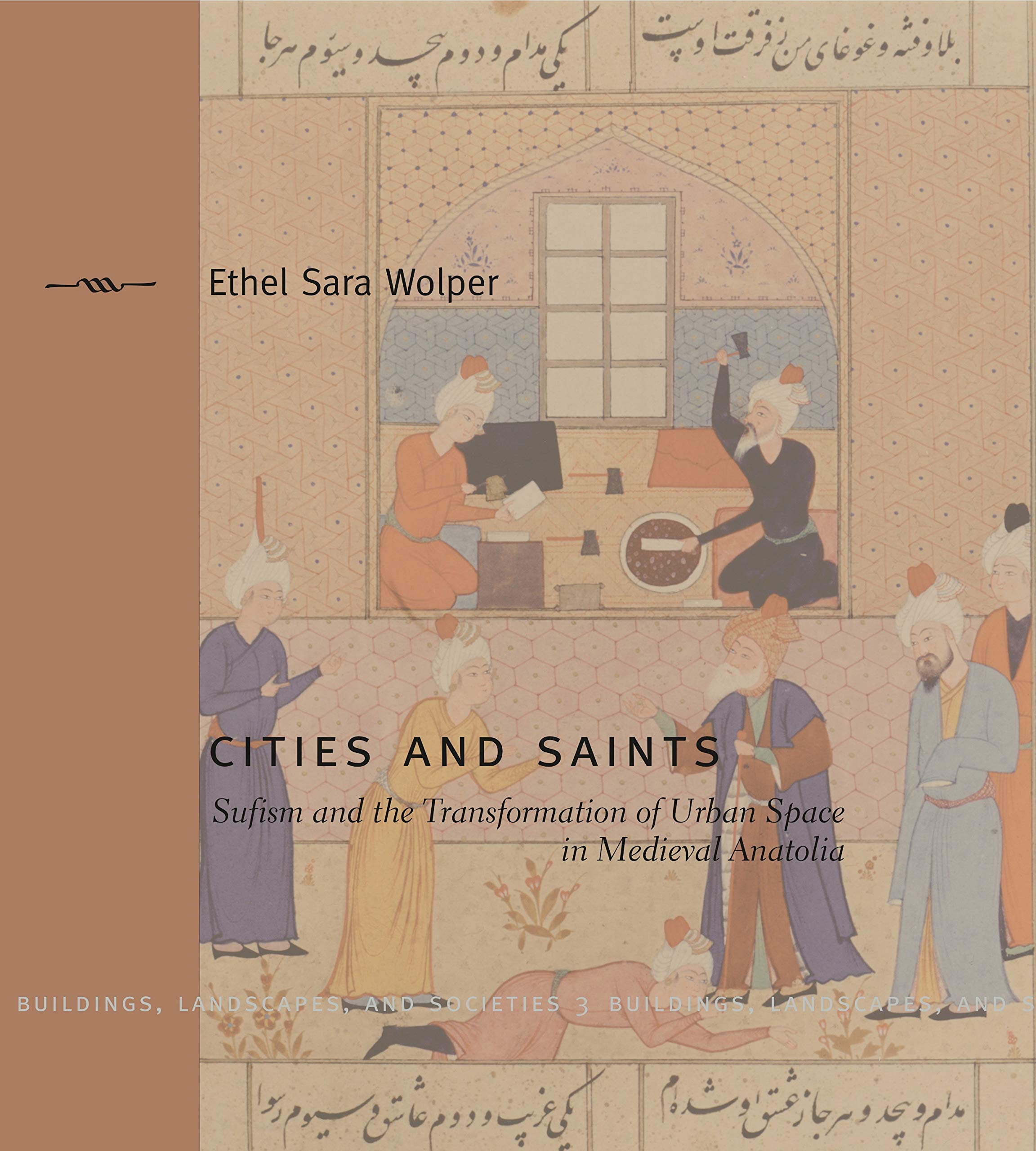
Cities and Saints: Sufism and the Transformation of Urban Space in Medieval Anatolia
$113.95
by Ethel Sara Wolper



In recent years, Sufism has become all but synonymous with the mystic poetry of Jalāl al-Dīn Rūmī (d. 1273) and the ritual "whirling" of dervishes from Turkey. This branch of Islam does, however, have a long, complex history, and spiritual retreat was only one aspect of its significance. In medieval Anatolia, Cities and Saints contends, Sufis made alliances that gave dervish lodges powers so vast that they were able to alter the layout of cities and serve as the means of forging new social bonds. Through close examination of the design and function of medieval Sufi buildings in several Anatolian cities, Ethel Sara Wolper shows that dervish lodges became sites where a new ruling elite promoted the cult of Sufi saints. Wolper's discussion, enriched by the use of a wide range of primary sources, goes on to chart the role Sufis and their patrons played in the establishment of a new urban order anchored in dervish lodges built near city gates, markets, and along major thoroughfares. Highly original, Cities and Saints unites architectural history with the study of urban space and the spread of Islam. It will be an important reference for students of community formation in the Middle East as well as historians of art, architecture, and religion. “A significant addition to the literature.” ―U.U. Bates Choice “Wolper’s method is on the whole solid and very persuasive. Her study is one of the most accessible and clearly illustrated treatments of the immensely important subject of Muslim pious endowments I have read. Her analysis of the various socio-religious constituents of the lodges is very well done, and her chapter on women in lodge life is a fine contribution to the study of gender in medieval Muslim societies. Excellent photographs, plans, and city-maps illustrate her argument clearly and efficiently. For readers with a prior interest in medieval Islam in particular, this work will open up new avenues of inquiry, especially in relation to Sufism’s role in shaping religious community beyond the orbit of ruling Muslim dynastic authority.” ―John Renard Religion and the Arts “Wolper both makes fresh contributions to the unearthing and evaluation of the relevant architectural record during a key transitional period and opens up new avenues of thinking for historians of Sufism in understanding community formation and institutionalization. . . . It is to be hoped that Wolper will continue to apply this same combination of scholarly rigor and innovative approach to other regions and periods of Anatolian Sufi history.” ―Ahmet T. Karamustafa Speculum: A Journal of Medieval Studies “In the short and elegant Cities and Saints: Sufism and the Transformation of Urban Space in Medieval Anatolia , Ethel Wolper examines the dervish lodges erected in the thirteenth and fourteenth centuries in three Anatolian cities―Amasya, Sivas, and Tokat―and the way in which they fostered Sufi traditions and practices. . . . Architecturally, the monuments are vividly presented with very good photographs and newly drawn plans of the buildings and their urban locations.” ―Yasser Tabbaa Journal of the Society of Architectural Historians “ Cities and Saints gives the reader a feel for the dervish lodge as a structure and the attraction it exerted on the local population. . . . The reader feels a participant in the slow process by which the dervish lodge displaced the madrasa and by which the dynamic of the city was thereby rerouted away from its old symbolic center.” ―Leslie Peirce, University of California, Berkeley In recent years, Sufism has become all but synonymous with the mystic poetry of Jala-l al-Din Ru-mi (d. 1273) and the ritual "whirling" of dervishes from Turkey. This branch of Islam does, however, have a long, complex history, and spiritual retreat was only one aspect of its significance. In medieval Anatolia, Cities and Saints contends, Sufis made alliances that gave dervish lodges powers so vast that they were able to alter the layout of cities and serve as the means of forging new social bonds. Through close examination of the design and function of medieval Sufi buildings in several Anatolian cities, Ethel Sara Wolper shows that dervish lodges became sites where a new ruling elite promoted the cult of Sufi saints. Wolper's discussion, enriched by the use of a wide range of primary sources, goes on to chart the role Sufis and their patrons played in the establishment of a new urban order anchored in dervish lodges built near city gates, markets, and along major thoroughfares. Highly original, Cities and Saints unites architectural history with the study of urban space and the spread of Islam. It will be an important reference for students of community formation in the Middle East as well as historians of art, architecture, and religion. Ethel Sara Wolper is Assistant Professor at the University of New Hampshire. Preface The successive houses in which we have lived have no doubt made our gestures commonpl