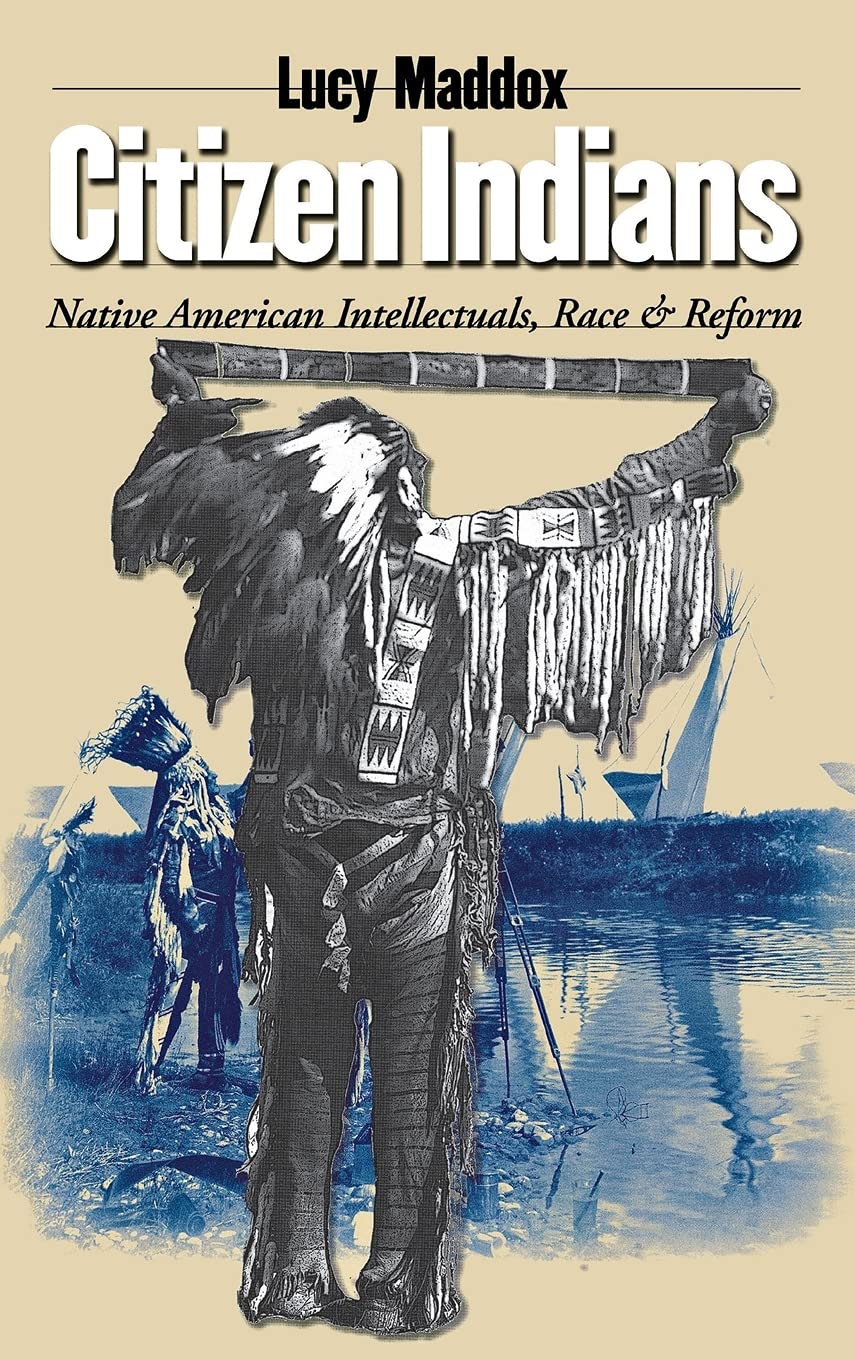



By the 1890s, white Americans were avid consumers of American Indian cultures. At heavily scripted Wild West shows, Chautauquas, civic pageants, expositions, and fairs, American Indians were most often cast as victims, noble remnants of a vanishing race, or docile candidates for complete assimilation. However, as Lucy Maddox demonstrates in Citizen Indians , some prominent Indian intellectuals of the era―including Gertrude Bonnin, Charles Eastman, and Arthur C. Parker―were able to adapt and reshape the forms of public performance as one means of entering the national conversation and as a core strategy in the pan-tribal reform efforts that paralleled other Progressive-era reform movements. Maddox examines the work of American Indian intellectuals and reformers in the context of the Society of American Indians, which brought together educated, professional Indians in a period when the "Indian question" loomed large. These thinkers belonged to the first generation of middle-class American Indians more concerned with racial categories and civil rights than with the status of individual tribes. They confronted acute crises: the imposition of land allotments, the abrogation of the treaty process, the removal of Indian children to boarding schools, and the continuing denial of birthright citizenship to Indians that maintained their status as wards of the state. By adapting forms of public discourse and performance already familiar to white audiences, Maddox argues, American Indian reformers could more effectively pursue self-representation and political autonomy. Lucy Maddox describes the efforts of Native intellectuals to transform the public's conception of the Indian. She centers her discussion around the Society of American Indians (SAI), a group of diverse Native activists who held disparate views on how Indian people ought to accommodate and contest majority conceptualizations.... Some have contended that the SAI's efforts were futile, and they point to the dated stereotypes that remain embedded in American culture. To a considerable extent, Maddox disagrees with this argument in her excellent work.... Perhaps more important, Maddox adds in her conclusion, is the fact that American Indian thinkers of the Progressive era paved the way for their intellectual descendants' exploration and experimentation in the 1960s and 1970s. -- Tim Alan Garrison ― North Carolina Historical Review Maddox's book... demonstrates that Native Americans were actively engaged in trying to create a place for themselves as both Indians and Americans during the Progressive era, and in doing so she has filled in some... missing pages in our national textbook. -- Steve Conn ― American Historical Review Lucy Maddox's Citizen Indians brings to life the active work done by Native American intellectuals on behalf of uplift, progressive reform, of universally conceived Indian rights as well as specific tribal concerns. Focusing on the Society of American Indians (SAI) and a broad range of figures including Chief Simon Pokagon, Daniel La France, Gertrude Bonnin, and Luther Standing Bear, Maddox redraws American intellectual history of the period that witnessed widespread discussions of 'the Indian problem' and of assimilation as well as the quest for cultural and political sovereignty. -- Werner Sollors, Harvard University "Lucy Maddox s Citizen Indians brings to life the active work done by Native American intellectuals on behalf of uplift, progressive reform, of universally conceived Indian rights as well as specific tribal concerns. Focusing on the Society of American Indians (SAI) and a broad range of figures including Chief Simon Pokagon, Daniel La France, Gertrude Bonnin, and Luther Standing Bear, Maddox redraws American intellectual history of the period that witnessed widespread discussions of the Indian problem and of assimilation as well as the quest for cultural and political sovereignty." Werner Sollors, Harvard University "A brilliant account of the issues and constraints confronting the first generation of modern pan-Indian intellectuals, Citizen Indians stands at the forefront of a long-overdue reassessment of the cultural productions and political efforts of Native people during the first half of the twentieth century. Unraveling the complex dynamics underpinning Indian performances, Lucy Maddox places Native people at the center of a national conversation, forcing readers to reconsider familiar histories of race and politics in the United States." Philip J. Deloria, University of Michigan "In this engaging and well-written account of the rise of a certain kind of Indian public intellectual in the United States at the turn of the twentieth century, Lucy Maddox shows how a fundamental dilemma of political representation inspired creative solutions and a powerful social and political critique. The efforts of Indian intellectuals and activists to fashion a critical voice as well as a politics of race and reform frame