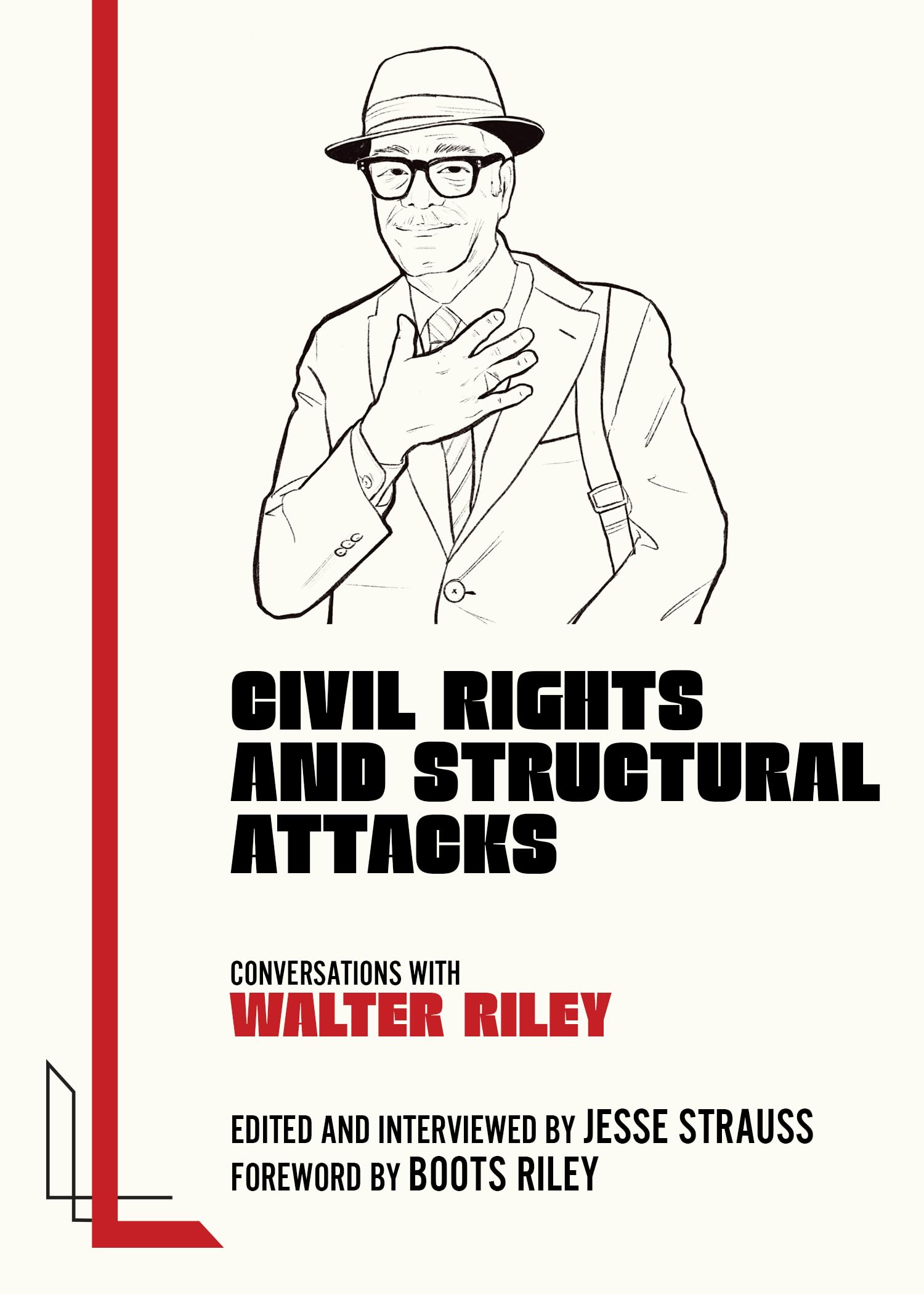
Civil Rights and Structural Attacks: Conversations with Walter Riley (Legacy Left)
$18.99
by Walter Riley



Profound lessons from someone who has seen it all in US freedom movements In Civil Rights and Structural Attacks Walter Riley, from his more than eighty years of political organizing, begs readers to throw haymakers—to take action. Raised among the entrails of chattel slavery in Durham, North Carolina, Walter shares political reflections and lessons from decades of movement experience. This includes 1950s and early 1960s mobilizations against Jim Crow apartheid laws and welcoming Freedom Riders to Durham, followed by later 1960s student and labor organizing with the Progressive Labor Party, early Black Panther Party formations, anti-war activities, and co-leading the Peace and Freedom Party’s Black Caucus. By the 1970s, Walter had become a leader in the national Progressive Labor Party and led labor and welfare organizing in Chicago and Detroit. In the 1980s he became a criminal defense and civil rights lawyer and challenged South Africa’s apartheid system from the Bay Area. He also addresses his more recent work, supporting infrastructure for Haitian movement-building as well as challenging police violence in Oakland. This text is a multi-generational conversation between legendary Civil Rights organizer Walter Riley and longtime friend and Oakland anarchist Jesse Strauss. Together, they reflect on the importance of political action as the primary venue for learning and reflection. Walter Riley has a never-ending commitment to building a better world and he’ll challenge readers to avoid the paralysis of analysis that slows movements down and to avoid getting caught in the missives of ego. Includes a foreword by Walter Riley's son, Boots Riley. "At a time when a lot of people are disconnected from actual movements, I hope my father’s legacy reminds you that it is each of our responsibility to participate in changing the world." — Boots Riley , from the foreword “Walter Riley is one of the great revolutionary thinkers and strategists of our time–often compared with Amilcar Cabral or Walter Rodney. If you didn’t know this before, thanks to Jesse Strauss, now you know. You will find in these pages the critical insight, wisdom, and direction organizers need to meet the moment. And because Riley shares his own story of a life in struggle, you know why he is a beacon of light and brilliance for our movements.” — Robin D. G. Kelley , author of Freedom Dreams: The Black Radical Imagination “Walter Riley is my political mentor and hero. Like Ella Baker, his lifelong commitment to the fight for freedom and justice has been powerful, persistent, and unassuming. As a union organizer, radical movement intellectual, people’s lawyer, and courageous freedom fighter, Walter’s contributions to a wide range of liberation movements over many decades is unmatched. An unflinching opponent of capitalism, colonialism, and racism from Haiti to Oakland, Walter is an exemplary champion of oppressed people the world over. No exaggeration. My only critique of this short bio-narrative is that it should be longer. There are so many important stories Walter could tell us, and lessons he could convey. Read, learn, and be inspired and fortified for the struggles ahead.” — Barbara Ransby , activist, historian, and author of Ella Baker and the Black Freedom Movement “Walter Riley is a Movement Man—the kind of essential organizer/activist/thinker/doer who keeps the Movement moving. Here is an urgent intergenerational dialogue, the ideal vehicle for unlocking the wisdom of a veteran freedom fighter whose organizing work centers on principled unity and whose vast experience is wholly relevant to the demands of radical movement building today. Riley knows that eighty years is a long time in the life of a man but the blink of an eye in the life of a struggle, and so he’s neither nostalgic for a ship that’s already left the shore nor interested in burnishing a legacy. Rather, he’s still leaning forward, still on the move and in the mix, still asking the most insistent and burning questions: How do we name this political moment? Where do we go from here? What does the known demand of us now? Read Civil Rights and Structural Attacks: Conversations with Walter Riley as a challenge as well as an invitation to join Walter Riley on today’s barricades—we have a world to win.” — Bill Ayers , co-founder of the Weather Underground and author of When Freedom is the Question Abolition is the Answer “The haymaker punch is named after the wide swinging motion of the scythe—the 14th Century agricultural tool used to reap edible grains and chop down undesirables. Name linked to the Latin scindere (to cut), the scythe’s broad arcing swing reaps abundance. Walter Riley’s deft dialectic introduces openness, risk, willingness to struggle, and revolutionary contingency to the scythe’s movement. In Walter’s words: ‘A haymaker in boxing is when you don’t know where the punch is going to land but you know it has power in it and you hope it’ll work. At the same t