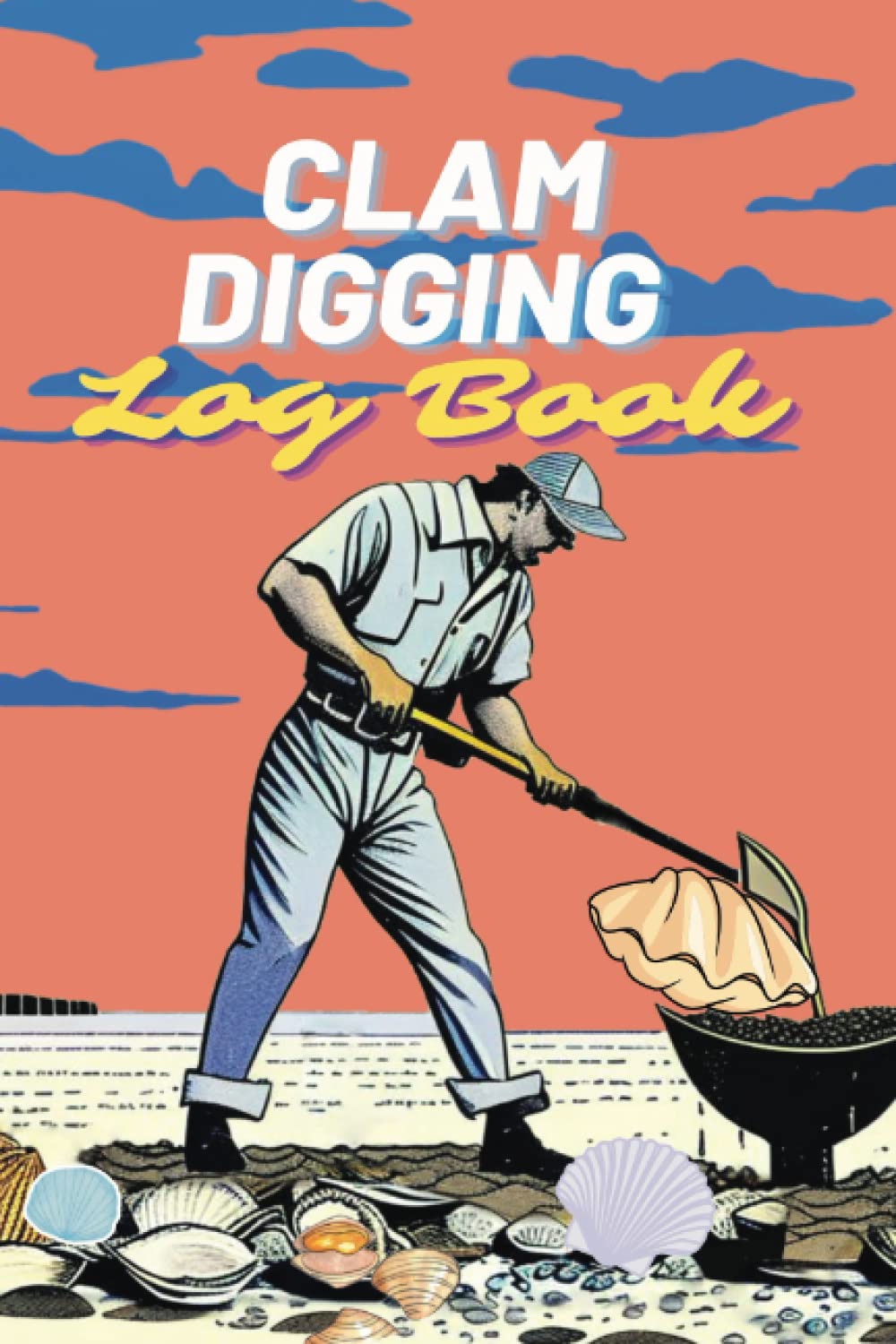
Clam Digging Log Book: Essential companion accessory for pacific northwest, west and east coast beach clamming adventures.
$6.00
by Knight Moon Pin



CLAM DIGGING LOG BOOK: Ten reasons why this clam digging log book is an invaluable guide companion for your clam-digging beach expeditions. Record keeping: A clam digging log book allows you to keep track of the locations, dates, and yields of your clam digging beach expeditions. - Legal compliance: Some states require that you keep records of your clam-digging beach activities, and a log book can help you comply with these regulations. - Planning: By keeping track of the locations and yields of your previous clam digging expeditions, you can plan future beach trips more effectively. - Tracking progress: A log book allows you to track your progress over time and see how your clam digging skills have improved. - Identifying patterns: By keeping track of the locations, dates, and yields of your clam-digging beach expeditions, you can identify patterns in the behavior of the clam populations and plan your beach trips accordingly. - Documenting personal achievement: A clam digging log book is a great way to document your personal achievements and milestones, whether it be your first clam, your biggest catch or your first time digging alone. - Keeping memories: A log book can serve as a keepsake of the memories of your clam-digging beach expeditions. - Learning from experience: By keeping track of the locations, dates, and yields of your previous clam-digging beach expeditions, you can learn from your experiences and improve your methods. - Sharing information: A log book can be a useful tool for sharing information with other clam diggers, allowing them to learn from your beach experiences and vice versa. - Scientific research: A log book can be used to gather data for scientific research on clam populations, helping to improve our understanding of these important species and support beach conservation efforts.