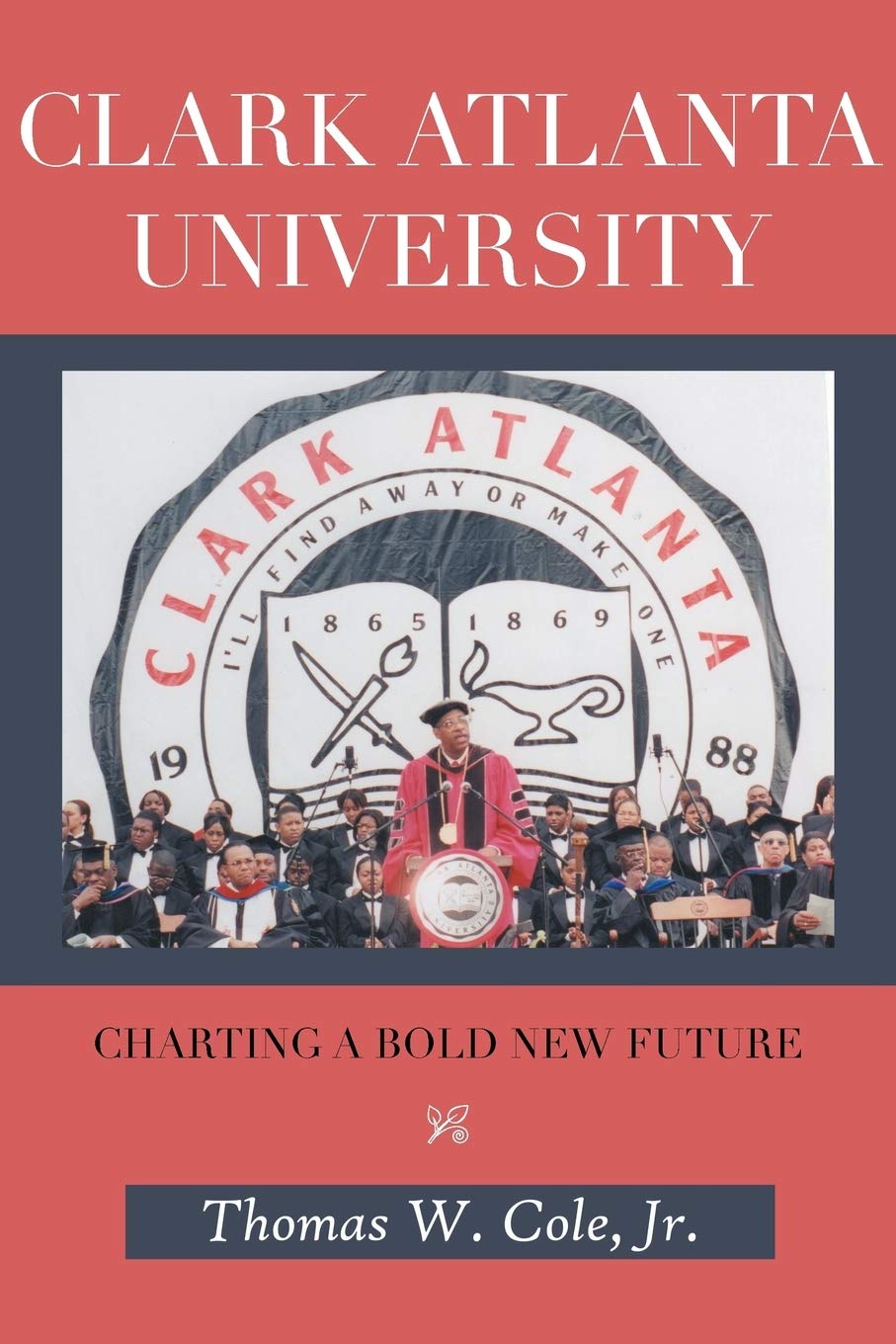



This book is the story of how events, timing, relationships and people of goodwill converged at a particular moment in time to achieve a vision for Atlanta University, Clark College and for American higher education that many predicted was not possible in the Atlanta University Center. It describes the formation and development of the consolidated institution from 1988 to 2002 and the historical context that made it possible for two independent institutions with proud histories and legacies of over 100 years each to consolidate. A careful, strategic and deliberate planning process, endorsed by both boards of trustees, is outlined which created the only exclusively private, comprehensive historically black university in the Nation with academic programs of study and research from the freshman year through the doctorate. CLARK ATLANTA UNIVERSITY CHARTING A BOLD NEW FUTURE By Thomas W. Cole Jr. AuthorHouse Copyright © 2013 Thomas W. Cole, Jr. All rights reserved. ISBN: 978-1-4817-7915-9 Contents Foreword, vii, Preface, xi, Chapter 1 A Triumphant Bow, 1, Chapter 2 Seeds of Challenge, 7, Chapter 3 Deficits Set Course, 20, Chapter 4 Consolidation Discussions Begin, 31, Chapter 5 Consolidation Takes Shape, 45, Chapter 6 Cooperative Spirit Recaptured, 62, Chapter 7 The Transition Year, 74, Chapter 8 The New University, 90, Chapter 9 The Remarkable Rise of Clark Atlanta University, 102, Chapter 10 Coming of Age, 115, Chapter 11 Unlimited Possibilities, 124, APPENDIX I, 133, APPENDIX II, 155, APPENDIX III, 159, APPENDIX IV, 161, APPENDIX V, 164, INDEX, 175, CHAPTER 1 A Triumphant Bow The excitement was running everywhere through the coolNovember air as I walked toward Harkness Hall shortly before dawn.The campus looked anything but normal: a stage the size of a boxingring had been set up in the middle of the quadrangle, and temporarygrandstands that could seat about 1,000 spectators were in place.Television cables snaked over the grass. The university, with all thespunk, charm and hope of the five-year-old that it was, would soonbe introduced to the nation on "Good Morning America." As part of a Southern tour, the popular morning news show ledby its stars of the day, Joan Lunden and Charles Gibson, had decidedto broadcast from the Clark Atlanta Quadrangle on November 22,1994. It was an honor to be selected over other sites in Atlanta thecrew had considered during its preview of potential locations forthe broadcast. We were eager to participate in the planning of theprogram with less than three weeks to work with the GMA staff onso many details. Getchel Caldwell, then Associate Vice Presidentfor Development, and the university staff, planned a nearly flawlessevent. Part of Caldwell's task was to convince the GMA staff ofthe importance of including representation from all the AtlantaUniversity Center (AUC) schools, along with as many other metroAtlanta higher education institutions as possible. We had madecollaboration a priority at Clark Atlanta, and we wanted thatreflected in the broadcast. It was no easy task to ensure that all AUCinstitutions were represented on the stage that morning, but for us,doing so was a critical aspect of our negotiations with the show. As I arrived on campus at five o'clock in the morning, studentswere already in place and spirits were high. From my office inHarkness Hall, I had a bird's eye view of the staging area andeverything happening both on camera and off. I could see theprogram director giving instructions to the crew; the show breakingaway to national news and returning to local news; the co-hostsmoving from center stage sometimes together and sometimesseparately to other parts of the campus to interview guests. As president of the host institution, I was told I would beinterviewed early in the program so that I could give an officialwelcome. I could not stop rehearsing my opening remarks over andover in my head; however, by the time I was told to take a seat oncenter stage, all of my Atlanta University Center colleagues hadbeen interviewed. I welcomed Gibson and his show to Clark Atlantaanyway. And then, in what seemed to me to be a rather abrupt shiftin topics, Gibson introduced the question of whether HistoricallyBlack Colleges and Universities (HBCUs) could provide qualityeducation to the best and brightest African-American students. Thismoment in the broadcast was preceded by an extensive report onblack colleges and universities and their place in society thirty yearsafter the historic 1954 Brown v. Board of Education desegregationdecision. Gibson had opened the segment with what he called"an appropriate question for our location this morning: AreAfrican-American students better served by separate colleges or by amore integrated educational setting?" What followed was a report onthe status of black higher education. Current students, educators andfamous alumni such as film director Spike Lee, a Morehouse graduatewho studied