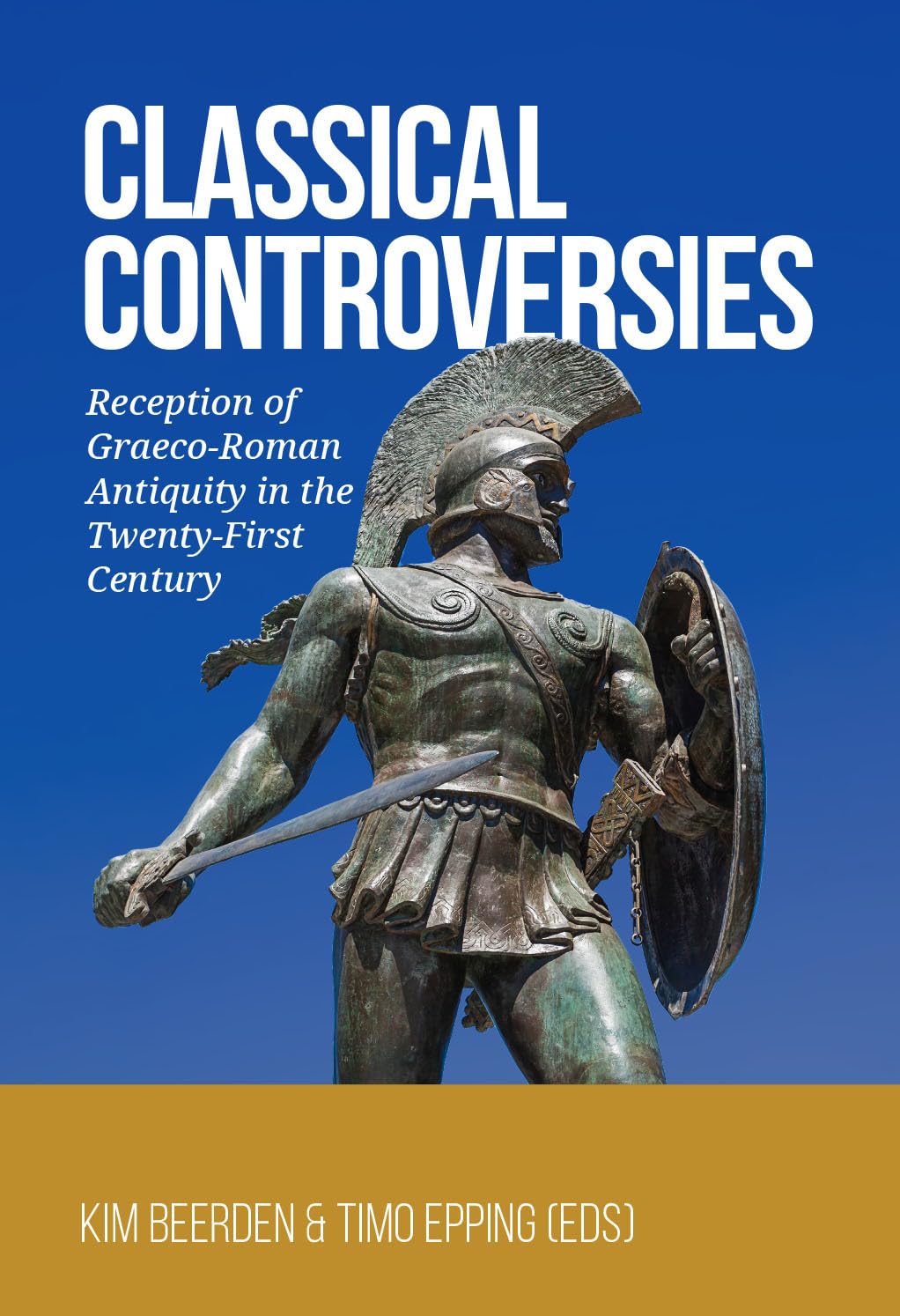
Classical Controversies: Reception of Graeco-Roman Antiquity in the Twenty-First Century
$45.00
by Dr Kim Beerden



“Classical Controversies will interest anyone concerned with the political appropriation of antiquity and classical reception in the present day, including historians, classicists, archaeologists, and students in these disciplines.” – Bryn Mawr Classical Review Modern receptions of Graeco-Roman Antiquity are important ideological markers of the ways we envisage our own twenty-first-century societies. An urgent topic of study is: what kinds of narratives – sometimes controversial – about Antiquity do people create for themselves at this moment in time, and for what reasons? This volume aims to showcase a number of illustrative examples, and thus to provide a deeper understanding of twenty-first-century reception of Antiquity. After a general introduction in Part I, the volume focuses on two main fields: controversies referencing ancient and modern literary works; and controversies surrounding heritage ethics. Part II takes literary evidence from the USA to Italy as its starting point: it shows how metaphors about early Christianity find their way into American conservative discourse; how Sparta is evoked in right-wing thinking in the USA, Germany, France and Scandinavia; and how Aeneas plays a role in recent Italian debates on migrations. The last paper discusses the depiction of classicists in modern novels. Part III focuses on heritage ethics and material culture, in first instance taking practices at the Dutch National Museum of Antiquities (Rijksmuseum van Oudheden) – on the display of death, queering and orientalism - as case studies. The last paper delves into the history of the Via Belgica to show how antiquity has been weaponized for political aims for many centuries. Together, these papers show that academics should engage with the receptions of antiquity in the recent past and present. If they want their research and museum displays to be part of current reception, they should make their voice heard. Table of Contents Part I: Introduction Preface Kim Beerden 1. Introduction: Stop the Steal! Frederick G. Naerebout Part II: Controversies and Literary Traditions 2. Whose persecution? Early Christianity as a Metaphor in Contemporary American Political Discourse K.P.S. (Renske) Janssen 3. Spartans on the Capitol: Recent Far-Right Appropriations of Spartan Militarism in the USA and their Historical Roots Stephen Hodkinson 4. Leonidas Goes North: Swedish Appropriations of Sparta and the Battle of Thermopylae and their Wider European Context Johannes Siapkas and Thomas Sjösvärd 5. Pop Culture against Modernity: New Right-Wing Movements and the Reception of Sparta Julia Müller 6. Fato Profugus. Aeneas the Refugee: an Italian Debate Marco Gay 7. The Classicist as a Literary Character in Contemporary Literature: the Depiction of a Discipline Barbara Holler Part III: Controversies and Heritage Ethics 8. Ancient Death and the Contemporary World: the Role of Graeco-Roman Death in Museum Display Patricia Kret 9. Queering the National Museum of Antiquities Suus van den Berg 10. Dummie de Mummie: an Egyptian Body as the Undead, Oriental Other Daniel Soliman 11. Who Owns the Road to the Roman Past? The Case of the Via Vipsania aka the chaussée romaine, the Römerstrasse, the Romeinse kassei, aka the Via Belgica Liesbeth Claes “The editors have nevertheless done a valuable job in highlighting some of the more problematic—and indeed controversial—aspects of contemporary classical reception, and the volume certainly offers ample food for thought, as well as providing a useful springboard for future research.” Journal of Anthropological Research “ Classical Controversies will interest anyone concerned with the political appropriation of antiquity and classical reception in the present day, including historians, classicists, archaeologists, and students in these disciplines.” Bryn Mawr Classical Review “For readers with an interest in military history, the three essays related to Sparta are likely to be the most relevant parts of this book […] As the teaching of ancient history and classical languages falls off a cliff in our failing educational systems, Americans will rapidly lose the connection to Graeco-Roman antiquity which so deeply informed our ‘Founding Fathers’. It is good to see that this is not happening as quickly in European academia.” The NYMAS Review Kim Beerden is a lecturer in Ancient History at Leiden University, The Netherlands. She has published in the field of ancient divination, see her monograph Worlds full of signs: ancient Greek divination in context (Brill, Leiden: 2013; paperback 2021). Timo Epping is a museum educator at the National Museum of Antiquities (Leiden, The Netherlands). He has published several articles in journals for history teachers and museum education.