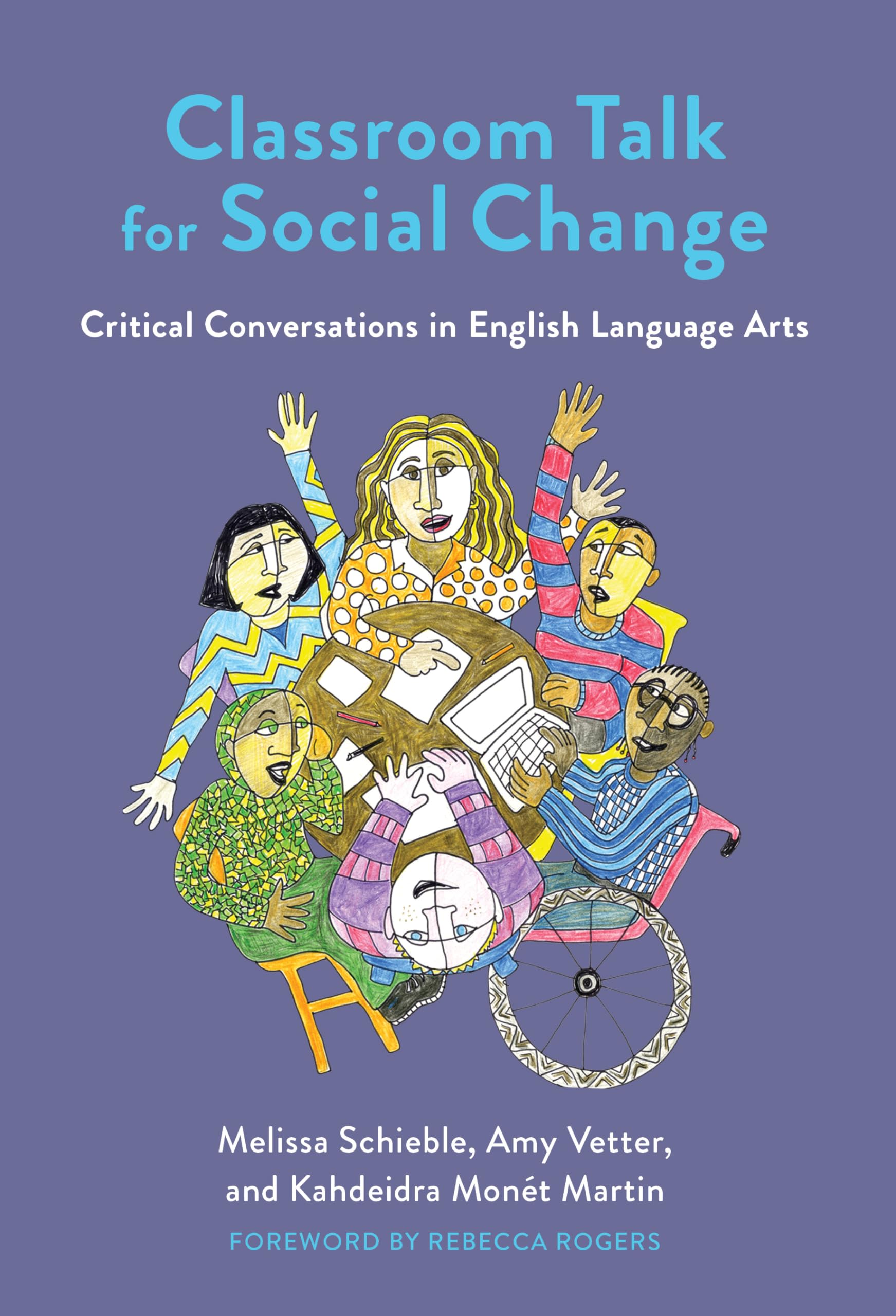
Classroom Talk for Social Change: Critical Conversations in English Language Arts
$33.19
by Melissa Schieble



Learn how to foster critical conversations in English language arts classrooms. This guide encourages teachers to engage students in noticing and discussing harmful discourses about race, gender, and other identities. The authors take readers through a framework that includes knowledge about power, a critical learner stance, critical pedagogies, critical talk moves, and vulnerability. The text features in-depth classroom examples from six secondary English language arts classrooms. Each chapter offers specific ways in which teachers can begin and sustain critical conversations with their students, including the creation of teacher inquiry groups that use transcript analysis as a learning tool. Book Features: Strategies that educators can use to facilitate conversations about critical issues. - In-depth classroom examples of teachers doing this work with their students. - Questions, activities, and resources that foster self-reflection. - Tools for engaging in transcript analysis of classroom conversations. - Suggestions for developing inquiry groups focused on critical conversations. “Expertly organized and presented, Classroom Talk for Social Change: Critical Conversations in English Language Arts is an extraordinary and unreservedly recommended addition to school district, college, and university library Teacher Education collections and supplemental curriculum studies lists.” ― Midwest Book Review “To build classrooms that hold the potential for humanizing, problematizing, and resisting power and oppression, how we interact and relate is central. Overall, this book offers a lot for teachers of various positions and experiences.” ― Teachers College Record “ Classroom Talk for Social Change encourages teachers to engage students in noticing and discussing harmful discourses about race, gender, and other identities. The authors take readers through a framework that includes knowledge about power, a critical learner stance, critical pedagogies, critical talk moves, and vulnerability. The text feature in-depth classroom examples from six secondary English language arts classrooms. Each chapter offers specific ways in which teachers can begin and sustain critical conversations with their students, including the creation of teacher inquiry groups that use transcript analysis as a learning tool.” ― Sir Read A Lot “This carefully researched volume is an invaluable go-to guide for teachers eager to address critical conversations responsibly.” ― English Education “This text lays out the why and how of engaging students in these critical conversations, which would be of value to nearly any discussion-based course in any field. The authors also showcase the power of inquiry groups as a tool to study one’s own practice and reflect with others in a collaborative setting.” ― The Wabash Center Journal on Teaching ?Expertly organized and presented, Classroom Talk for Social Change: Critical Conversations in English Language Arts is an extraordinary and unreservedly recommended addition to school district, college, and university library Teacher Education collections and supplemental curriculum studies lists.? ? Midwest Book Review ?To build classrooms that hold the potential for humanizing, problematizing, and resisting power and oppression, how we interact and relate is central. Overall, this book offers a lot for teachers of various positions and experiences.? ? Teachers College Record ? Classroom Talk for Social Change encourages teachers to engage students in noticing and discussing harmful discourses about race, gender, and other identities. The authors take readers through a framework that includes knowledge about power, a critical learner stance, critical pedagogies, critical talk moves, and vulnerability. The text feature in-depth classroom examples from six secondary English language arts classrooms. Each chapter offers specific ways in which teachers can begin and sustain critical conversations with their students, including the creation of teacher inquiry groups that use transcript analysis as a learning tool.? ? Sir Read A Lot ?This carefully researched volume is an invaluable go-to guide for teachers eager to address critical conversations responsibly.? ? English Education ?This text lays out the why and how of engaging students in these critical conversations, which would be of value to nearly any discussion-based course in any field. The authors also showcase the power of inquiry groups as a tool to study one?s own practice and reflect with others in a collaborative setting.? ? The Wabash Center Journal on Teaching “ Classroom Talk for Social Change impressively builds on a lineage of scholarship committed to classroom inquiry through talk in a way that helps fellow educators to visualize why and how classroom talk matters. The authors position critical conversations at the nexus of critical literacy, dialogic teaching, and culturally sustaining teaching.” ―From th