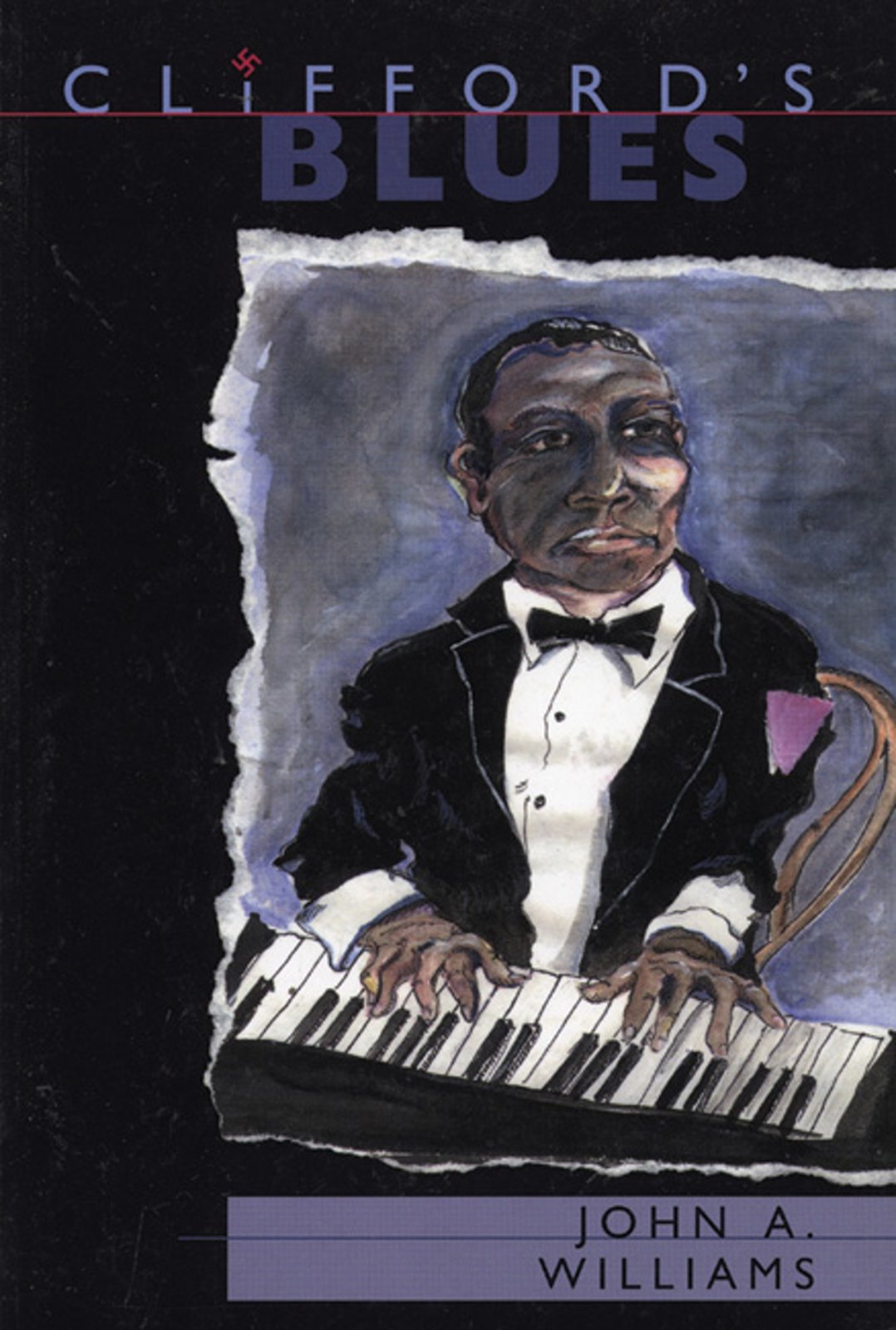



Africans and African Americans in the Holocaust. A first novel by journalist Williams (If I Stop Ill Die: The Comedy and Tragedy of Richard Pryor, 1991), portraying the travails of a black musician imprisoned in Dachau. Prison camps have hardly been places, conventionally, to catch up with ones diary. Here, though, the solitude, boredom, and seemingly endless stretches of they time serve to make our central character quite introspective indeed, even though this person is the gregarious and feckless as Clifford Pepperidge. A gay pianist from New Orleans, Cliff made the scene in Harlem in the 1920s, playing alongside the likes of Ellington, Ma Rainey, and Miss Bessie Smith. When a Russian impresario decides to take a jazz band on tour through Europe, Cliff jumps on board and eventually winds up in Berlin, where he becomes one of the stars of the cabaret years of Weimar. Arrested during one of the Gestapos periodic roundups of gays, Cliff is taken (in spite of his US citizenship) into Protective Custody and sent to Dachau. Upon arrival, hes recognized by Dieter Lange, a gay SS officer with a secret passion for jazz who used to frequent Cliffs nightclubs. Dieter makes Cliff his calfactor (houseboy) and gets him special treatment in exchange for sex and music (all the other Nazis apparently love jazz as much as Dieter, and Cliff helps Dieter win favor with the brass by playing at parties for them). And since Dieters young wife Anna is (not surprisingly) far from satisfied by her husband, it soon becomes part of Cliffs duties to take care of her as well. How much degradation is enough for a man? Cliff has no illusions: Good men who are strong dont last here. But if you want to make it, you can put up with just about anythingand Cliffs diary shows how he does just that. A worthwhile variation on a grim and lamentably familiar story. The tone veers toward the disconcertingly light, but, even so, things remain a long way from Hogans Heroes. -- Copyright ©1999, Kirkus Associates, LP. All rights reserved. Saturday, November 11, 1939 Dieter Lange came up behind me this morning while I was cleaning the house before going to the canteen. Anna had gone shopping in Munich to getsome new clothes. "They almost got him!" Dieter Lange whispered, as though someone was hiding in the house. "Almost got him!" "Got who? Who's they?" His eyes were bright and he was all up in my face like when he's drunk andhe whispers, "Wie steht es?" How about it? "Hitler! They almost got Hitler, with a bomb in Munich, Thursday night!" I snapped the dust out of my cloth. To me a miss was as good as a mile. I didn't know what all the fuss was about. "But who did it?" "Some Red carpenter in Munich. They got him." "But who else? You said they?" "Just him, as far as I've heard. But it shows that people don't want war and they want to be rid of Hitler. So maybe the next time they'll get him,eh? And maybe that's not too far off." He walked around the room, his hands behind his back. "You know I'd let you go if we got out of this mess. I'd give you the money to get back home. I really would, Cleef." "I'd sure appreciate that," I said, but it wouldn't happen. He knew it and I knew it. White people fulla shit, especially when they run a place like Dachau. He stopped walking right in front of me and held my dusting hand. "What's the matter with you, Cleef?" He gave me a close look, as though he might find something in my face that he'd missed before. "You've been . . . nicht heir for over a month now. Are you sick?" I looked at him. I didn't know what he was talking about. I said, "What doyou mean?" He raised his arms and moved them slowly up and down like he was a bird on the wind. "You just got machen all the time, maybe like you had some cocaine?" I released my hand and went back to dusting. He watched me and said, "Achtsam, Cleef, bitte, Achtsam," then he went upstairs to his office. When I finished, I shouted to him that I was going to the canteen and left. Ididn't wait for him to answer. It was another Armistice Day, ha-ha-ha, to celebrate the war to end all wars, except the one that just began. Ta-ta, da-da, de-dum. . . . "Hey, Sunshine!!" I stopped and turned around. I'd passed through the Jourhaus gate. Sergeant Rekse, his Schaferhund straining at his leash, was shouting. I didn't know why. "What do you do, why do you skip like a little kid? Are you nuts, Pepperidge? You want to wind up in the Hartheim wagon like those other niggers went out of here this morning?" Skipping? I was skipping? I whipped off my cap. "No, sir." "I'll tell your mother on you!" he roared, laughing, rolling back on his heels. He rubbed my head for good luck. The shepherd he'd brought to heel snapped his head from me to Rekse and back again, its tongue hanging out. Would Rekse never forget that visit by Ruby Mae? "Get going, Pepperidge, and get those marbles out of your head. They're glass, you know, and can be broken." I thanked him and replaced my cap and walked q