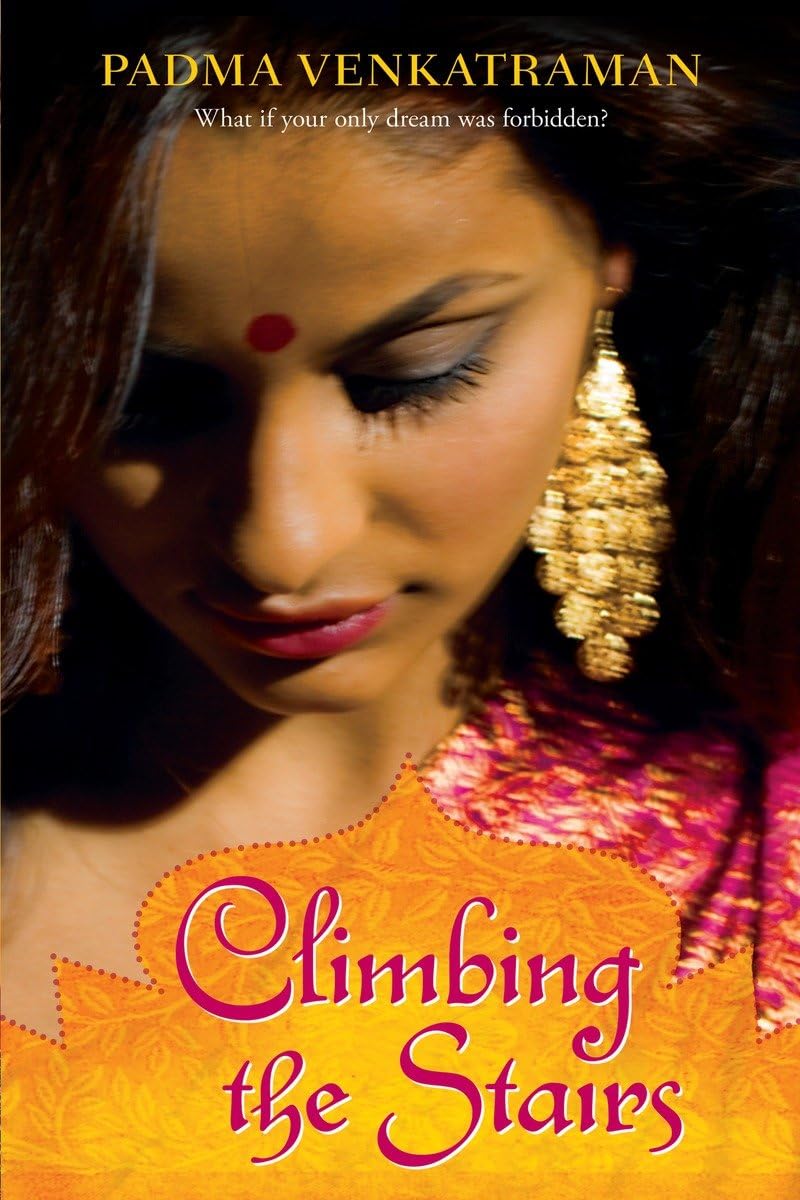



Read Padma Venkatraman's posts on the Penguin Blog. Fifteen-year-old Vidya dreams of going to college— an unusual aspiration for a girl living in British occupied India during World War II. Then tragedy strikes, and Vidya and her brother are forced to move into a traditional household with their extended family, where women are meant to be married, not educated. Breaking the rules, Vidya finds refuge in her grandfather’s library. But then her brother does something unthinkable, and Vidya’s life becomes a whirlwind of political and personal complications. The question is, will she be strong enough to survive? Watch a Video "This novel vivifies a unique era and culture as it movingly expresses how love and hope can blossom even under the most dismal of circumstances." - "Publishers Weekly", starred review "In her first novel, Venkatraman paints an intricate and convincing backdrop of a conservative Brahmin home in a time of change." - "Booklist", starred review ?This novel vivifies a unique era and culture as it movingly expresses how love and hope can blossom even under the most dismal of circumstances.? ?"Publishers Weekly", starred review ?In her first novel, Venkatraman paints an intricate and convincing backdrop of a conservative Brahmin home in a time of change.? ?"Booklist", starred review This novel vivifies a unique era and culture as it movingly expresses how love and hope can blossom even under the most dismal of circumstances. "Publishers Weekly", starred review In her first novel, Venkatraman paints an intricate and convincing backdrop of a conservative Brahmin home in a time of change. "Booklist", starred review Padma Venkatraman lives in North Kingstown, Rhode Island. An oceanographer by training, she is the author of twenty books for young readers, published in India, on a variety of subjects. To learn more, about her book Climbing the Stairs , visit the web site, www.climbingthestairsbook.com. You can also read her blog, padmasbooks.blogspot.com. Chapter 1 I still remember the day we celebrated Krishna Jayanthi, the festival of Lord Krishna’s birth, at our home in Bombay. The drive was drenched with the juice of fallen jamun fruit and the sand of Mahim beach gleamed like a golden plate in the afternoon sunlight. Whispers of heat rose from the tar road and shivered toward the slumbering Arabian Sea.I had folded up my ankle-length skirt and was getting ready to climb up the jamun tree. A warm breeze blew around my bare knees. My brother’s brown legs were already wrapped around the roughness of the main trunk, clinging on like a monkey to its mother’s body. Kitta was eighteen and he’d just started college, but though his voice had recently deepened and the first fuzzy promise of a black mustache shadowed his upper lip, he still looked more a boy than a man. Our dog, Raja, was yapping loudly on the ground, wagging his tail.I spread an old rug on the ground beneath the tree and climbed up after him, scraping my skin against its lumpy bark. Soon we were shaking the branches, watching the ripe purple fruit rain onto the rug like a monsoon shower.“Vidya!” amma called. I glanced down. I could see her disapproving gaze from where she stood, barefoot on our verandah, the open patio in front of our home. Ever since I had turned fifteen and started wearing a half sari, she had been hoping that I would become womanly, not climb any more trees, run no more races across the beach sands and stop playing volleyball at Walsingham Girls’ School (she felt it wasn’t ladylike). She held a bowl and a small white rag in her hands. “Would you like to decorate the verandah?”Every year we would paint tiny white footprints all the way across the red cement on the front steps and verandah, into the marble-flecked mosaic floor of the house, through the great hall and to the prayer room in the back; footsteps to lead Lord Krishna into our home. I didn’t mind. It was one of the few girlish tasks I enjoyed.“I’m going to paint some Krishna feet,” I told Kitta. I climbed down and patted Raja on his head. I tried to rinse the purple stains off my hands at the brass tap in the corner of the garden, scrubbing my hands with the hairy hide of a fallen coconut. I straightened out my skirt and walked up the stairs.“Thank you,” amma said, forcing the corners of her mouth upward. Her smiles had been different ever since appa had started coming home late. The bright white sign still hung on the door of the clinic behind our home, slightly askew, stating in English, Hindi and Marathi that the doctor worked from nine o’clock to five o’clock during the week and from nine until twelve on Saturdays. But he no longer kept those hours. He went missing, at least a few days each week, returning after Kitta and I were back from school. Some evenings, amma sent us to bed before we saw him.“Where do you go, appa?” I had asked, and he had patted my head and replied that he had started another job.“What job?” I had asked. “Why do you n