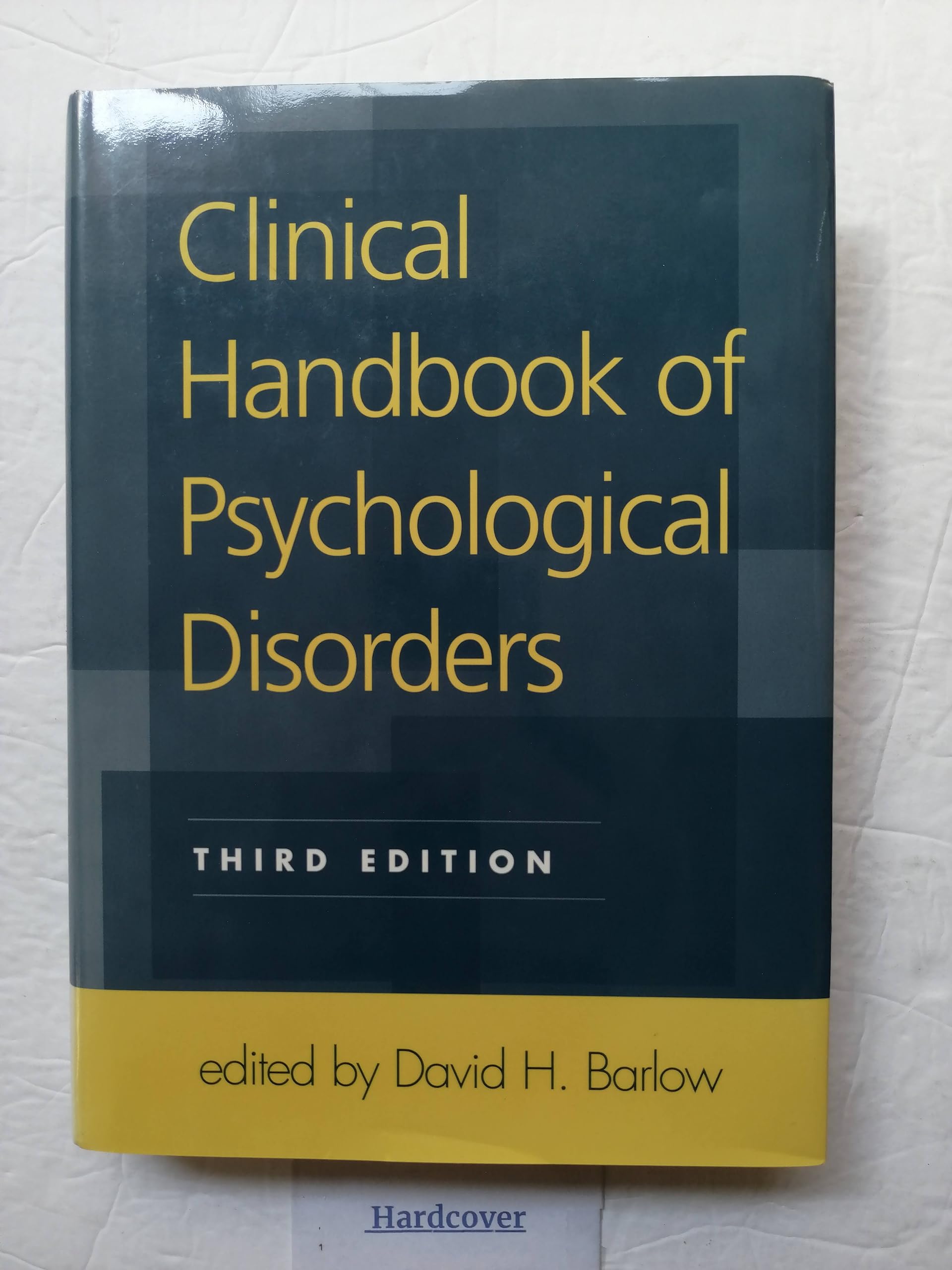
Clinical Handbook of Psychological Disorders, Third Edition: A Step-by-Step Treatment Manual
$17.97
by David H. Barlow



Each chapter summarizes the clinical presentation, etiology, and diagnosis of the each of the most commonly enountered disorders; reviews the models or theories that guide intervention; and delineates step-by-step protocols for assessment and treatment, illustrated with transcripts and vignettes. "I consider this handbook to be an invaluable fixture in the field of psychological treatment. This was the text I read in graduate school, and it gave me a useful roadmap in my own training in clinical psychology. I know of no other book that brings together research and clinical practice in such a cogent and readable manner. I have recommended this book to graduate students and have used it as a text in an undergraduate course that introduces evidence-based practice in psychology. Although it is more of a graduate text, it has given my students a glimpse into how clinicians actually apply treatments that have empirical support. Several students have remarked that my course 'changed the way they think about treatment,' and I believe this book played a role."--Alexander L. Chapman, PhD, Department of Psychology, Simon Fraser University "In preparing graduate-level social workers to use CBT in their field practica, I have found this book to be extremely useful. Covering a range of psychological disorders, each chapter outlines the sequential steps of treatment; clarifies the multiple treatment components; provides a detailed, relevant case study; and presents the empirical evidence supporting the latest CBT treatment. This is one of the most valuable reference books a clinician can have in her or his library."--Nancy Grote, PhD, MSW, Assistant Professor, School of Social Work; Fellow, Center for Mental Health Services Research, University of Pittsburgh "I have used the previous editions of this Handbook in my graduate survey course in psychosocial intervention, and certainly intend to continue with the third edition. The chapters, written by acknowledged clinical researchers and practitioners, are unique in combining careful theorizing, a strong empirical focus, and a sophisticated appreciation of clinical applications. The volume offers a true scientist/n-/practitioner approach to understanding the nature and amelioration of psychological disorders. The creative challenges of moving from theoretical abstractions and research data to humane, practical clinical interventions are spelled out in persuasive and vivid detail. As with earlier editions, my students and I are grateful for the publication of this classic--yet new and innovative--work."--Gerald C. Davison, PhD, Department of Psychology, University of Southern California. "This is an outstanding resource for practicing clinicians and graduate students in the mental health professions. Like the previous editions, the third edition provides a wealth of information about the diagnosis and treatment of psychological disorders. The book will be especially valuable to graduate students as they struggle to make the transition from the classroom to the clinic. Our Counseling Psychology Program has used the previous editions of this book in counseling practica and advanced intervention courses and students were overjoyed to find a book that helped them understand how to put these theories into practice. I have told psychology graduate students and psychiatry residents that if they could buy only one book on psychotherapy, this was the one to buy."--Leonard A. Doerfler, PhD, Professor and Director, Counseling Psychology Program, Assumption College,Worcester, MA "As empirical evidence grows and grows that psychosocial therapies are effective, the need for comprehensive treatment manuals to guide clinicians is ever greater. Barlow is clearly the leader not only in developing effective psychotherapies, but in educating the profession and the public about how to use them. Here, he has assembled a cast of some of the most impressive figures in psychosocial interventions to provide us with this most welcome and very comprehensive guide."--Jack M. Gorman, MD, Lieber Professor and Vice-Chair for Research, Department of Psychiatry, College of Physicians and Surgeons of Columbia University David H. Barlow, PhD, ABPP, is Professor of Psychology, Research Professor of Psychiatry, Director of Clinical Training Programs, and Director of the Center for Anxiety and Related Disorders at Boston University. He has published over 400 articles and chapters and over 20 books, mostly in the areas of anxiety disorders, sexual problems, and clinical research methodology, and has received numerous awards for his contributions to research and practice. Most recently, he was the 2000 recipient of the American Psychological Association Distinguished Scientific Award for the Applications of Psychology and the APA Division 12 (Clinical Psychology) Distinguished Scientific Award, as well as the first annual Science Dissemination Award from the Society for a Science of Clinical Psychology. Extens