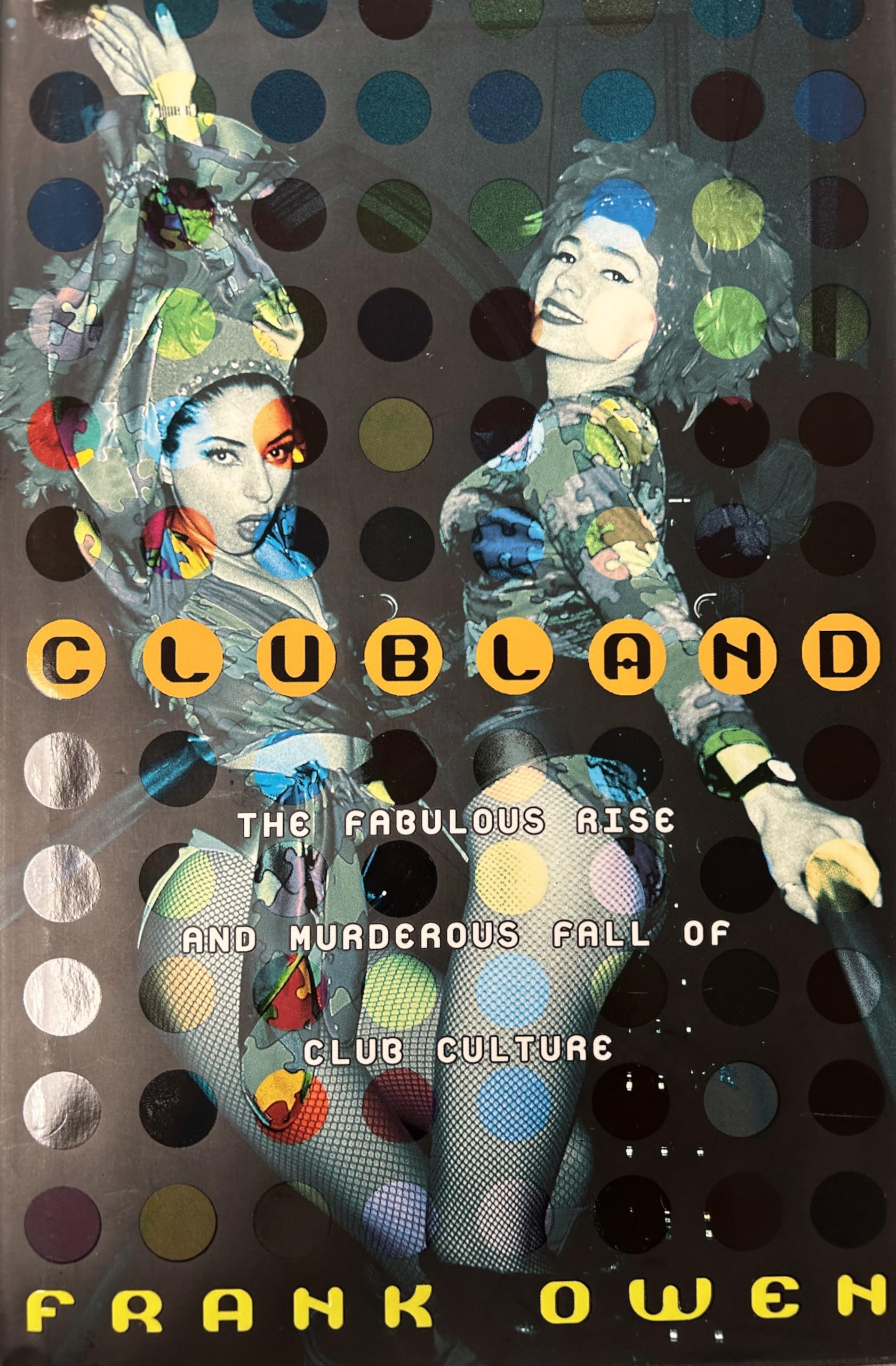



In 1995, journalist Frank Owen began researching a story on “Special K,” a new designer drug that fueled the after-midnight club scene. He went to buy and sample the drug at the internationally-notorious Limelight, a decrepit church converted into a Manhattan disco, where pulse-pounding music, gender-bending dancers, and uninhibited sideshows attracted long lines of hopeful onlookers. Clubland is the story of Owen’s six year journey behind the velvet ropes, into the cavernous clubs where any transformation was possible, every extreme permissible—even murder. At first, Owen found an unexpected common ground between very different people: stockbrokers danced with transvestites, pacifier-sucking “club kids” with celebrities, thick-necked jocks with misfits. But as money flowed into the clubs, the music darkened, the drugs intensified, and the carnival spiraled out of control. Four men defined the scene, all of them outsiders, who saw in clubland the chance to escape their pasts and reinvent themselves by making their own rules. Peter Gatien rose from a small Canadian milltown to become the most powerful club operator in America; Michael Alig, a gay misfit from the midwest, escaped to Manhattan where he won a legion of fashion-and-drug enamored followers; Lord Michael Caruso left Staten Island’s bars for the rave parties of England, returning as clubland’s leading drug dealer and techno music pioneer; and Chris Paciello began as a brutal Bensonhurst gang member, then recast himself as the glamorous prince of Miami Beach, partying with Madonna and Jennifer Lopez at the exclusive nightspots he created. Each of them had secrets that led them over the edge, and when when clubland fell, it left behind tragic human consequences: the disillusioned, the strung out, and the dead. A tour de force of investigative and participatory journalism, Clubland offers a dramatic exposé of a world built on illusion, where morality is ambiguous, identity changeable, and money the root of both ecstasy and evil. Ah, club culture! Was it really all glamour, heroin, and flashing lights? Owen considers that and other questions in his contribution to the continuing story of sex and drugs and rock and roll. He has a lot to work with, including real-life Pulp Fiction characters like Michael Alig, nowadays "stoned and puffy with jail food fat," but "the prince of perversion" when he was a party promoter in high demand. Alig had equally alluring playmates, of course--Mafia dandies, drug lords, and zany "club kids"--but his career screeched to a halt when he "chopped up his buddy's body." Owen came to his subject as a result of a Vil lage Voice assignment to do an article on ketamine, an animal anesthetic and clubgoers' "mind-bending party favor." One thing led to another, and presto!--this chronicle- cum -true crime story in the gaudy, Mardi Gras-like trappings of a phenomenon that straddled the disco and rave cultures. A gripping story, pleasantly sleazy and well told. Mike Tribby Copyright © American Library Association. All rights reserved Frank Owen was born in Manchester, England. A music critic for ten years, and now a full time writer, he has written stories for The Village Voice, Spin, Details, Vibe, Newsday, and The Washington Post , among others. He now resides in New York with his wife Chene. Chapter One THE ONE-EYED DON New York City, Early October 1995 It was one of those brilliant autumn days in New York, the city radiant with luminous color. While the soothing afternoon light skipped gaily across the surface of the Hudson River, Peter Gatien's world was all grim turmoil. A couple of nights ago, in the early hours, the stony-faced Gatien saw his flagship venue in Chelsea, the Limelight, padlocked by the NYPD. Friday evening, just at the peak of business, and his temple of thump-thump-thump-located at the corner of Twentieth Street and Sixth Avenue in a weathered Victorian pile that once housed St. Peter's Episcopal church, then later a drug treatment center-was packed to the vaulted rafters with gyrating penitents hanging off the two tiers of metal balconies that surrounded the cavernous main floor. The irony wasn't lost on the revelers, who seemed to take a perverse delight in frolicking on the altar or sniffing blow in the pulpit. Out on the churning dance floor, the atmosphere was like the pagan party scene in some Hollywood biblical epic, the last fling of a primitive tribe threatened with extinction by powerful social trends few of its members could fully comprehend. Meanwhile, a string of stretch limousines idled impatiently outside the noisy nightclub, which was fast becoming a stone monument to an era of all-out licentiousness, now vanishing under the puritanical political regime that had taken over the city. Nonetheless, a long procession of young party people, all eager to pay the twenty-dollar admittance, shuffled along the avenue. A drag queen with a clipboard and a bad attitude inspected th