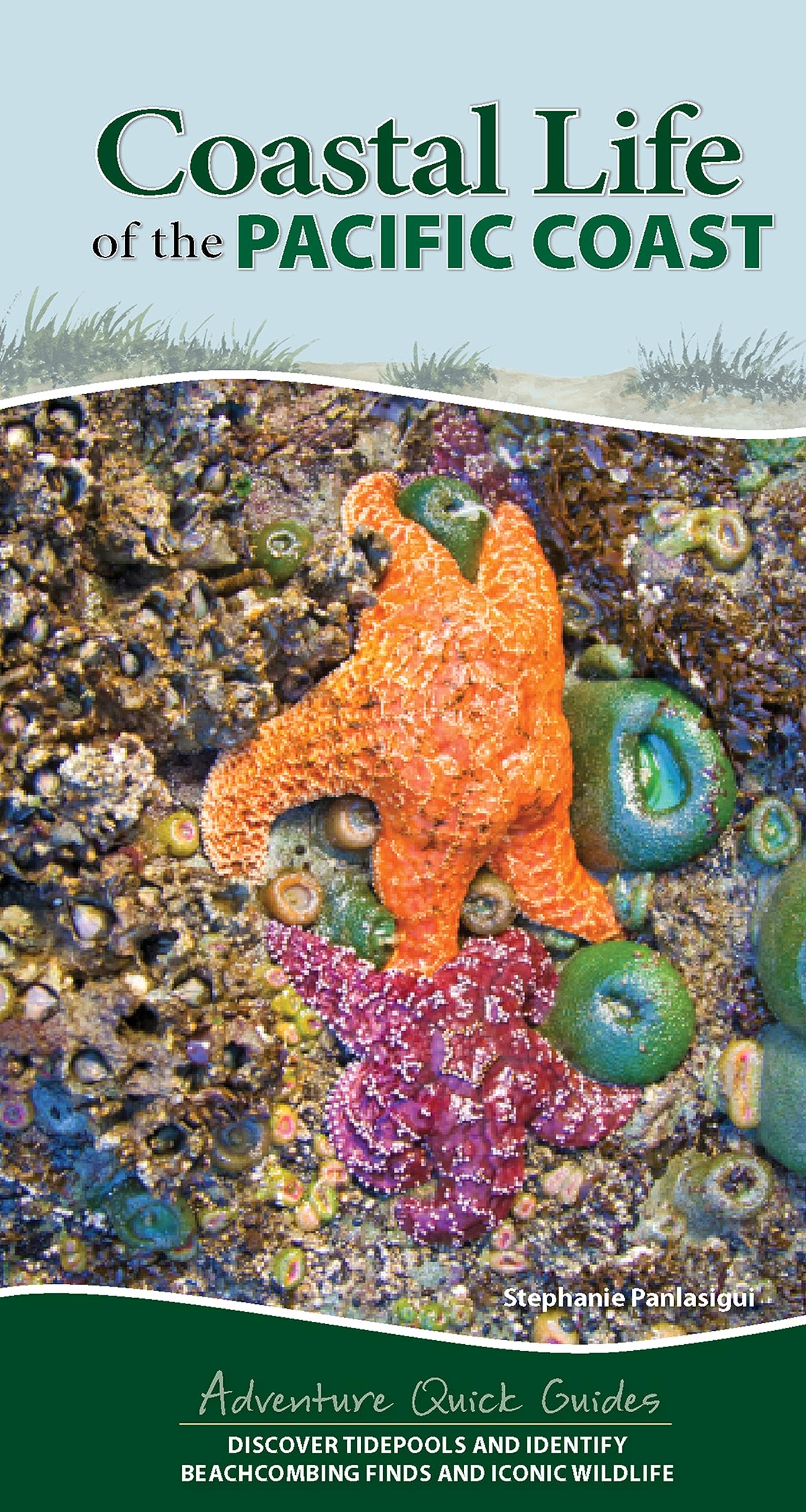
Coastal Life of the Pacific Coast: Discover Tidepools and Identify Beachcombing Finds and Iconic Wildlife (Adventure Quick Guides)
$8.98
by Stephanie Panlasigui



Utilize this tabbed guide to learn about plants, animals, and seashells of the Pacific Coast. Beaches are the borders between two vastly different ecosystems. As such, they are teeming with a variety of fascinating life. Whether you’re a tourist on vacation or a local resident on a day trip, keep this tabbed booklet close at hand. Written by expert naturalist Stephanie Panlasigui, it features more than 100 of the most common and important animals and plants to know—from birds and fish to crabs, sharks, and more! Plus, the booklet includes other beachcombing finds—like seashells and sea glass—as well as a quick guide to tidepools. The handy booklet is applicable to the coastlines of California, Oregon, and Washington. It is organized by group for quick and easy identification, and it offers the at-a-glance information that you want to know. The pocket-size format is much easier to use than laminated foldouts, and the tear-resistant pages help to make the spiraled guide durable in the field. As an added bonus, it includes information about helping coastal life thrive in this essential habitat. Book Features: Pocket-size format—easier than laminated foldouts - Professional photos of each species - Entries organized by group to ensure that you quickly find what you’re looking for - Easy-to-use information for even casual observers - Details about beach anatomy, how beaches are formed, and beach safety In her home state of California, Stephanie Panlasigui grew up swimming in the Pacific Ocean, spotting dolphins, and hiking on the bluffs with her family. Stephanie began her career as a naturalist, guiding children to explore redwood forests, tidepools, and sandy beaches. She has since worked for many years to help ensure that natural ecosystems are protected, restored, and given the chance to thrive. She holds a master’s degree in environmental management from Duke University and a bachelor’s degree in environmental sciences from the University of California, Berkeley. About the Pacific Coast The word “beach” often conjures an image of a long, narrow strip of sand alongside the ocean, but beaches can also be made of pebbles or rocks. The Pacific Coast’s incredible features—from sea stacks to tidepools, and from huge gray whales to tiny mole crabs—draw visitors from around the world every year. Greatly diverse life-forms make their home here, and even more species migrate along the Pacific Coast. Many birds use a north-south migratory route known as the Pacific Flyway; offshore, some whale species migrate between arctic and tropical waters. How Our Beaches Formed Over millions of years, the Pacific Coast was created by strong natural geologic forces, including volcanic activity. For a long time, scientists have studied how Earth’s crust is made of multiple large plates called “tectonic plates” that are always moving. Colliding plates can push land up to create mountain ranges like the Coast and Cascade Ranges, or push land down to create deep trenches like Monterey Canyon. When the pressure between plates builds, the plates can slip suddenly, causing an earthquake. The largest of these plates is the Pacific Plate, followed by the North American Plate. The outer edge of the Pacific Plate, dubbed “the Ring of Fire,” contains 75% of the world’s active volcanoes. A smaller plate called the Juan de Fuca Plate sits between the two major plates to the west of Washington and Oregon. Erosion by wind and water is another force that shaped the Pacific Coast. Rocks and sand in coastal watersheds are broken and worn down into finer material over time. This material is transported along waterways until it is deposited at the ocean’s edge, forming the beach.