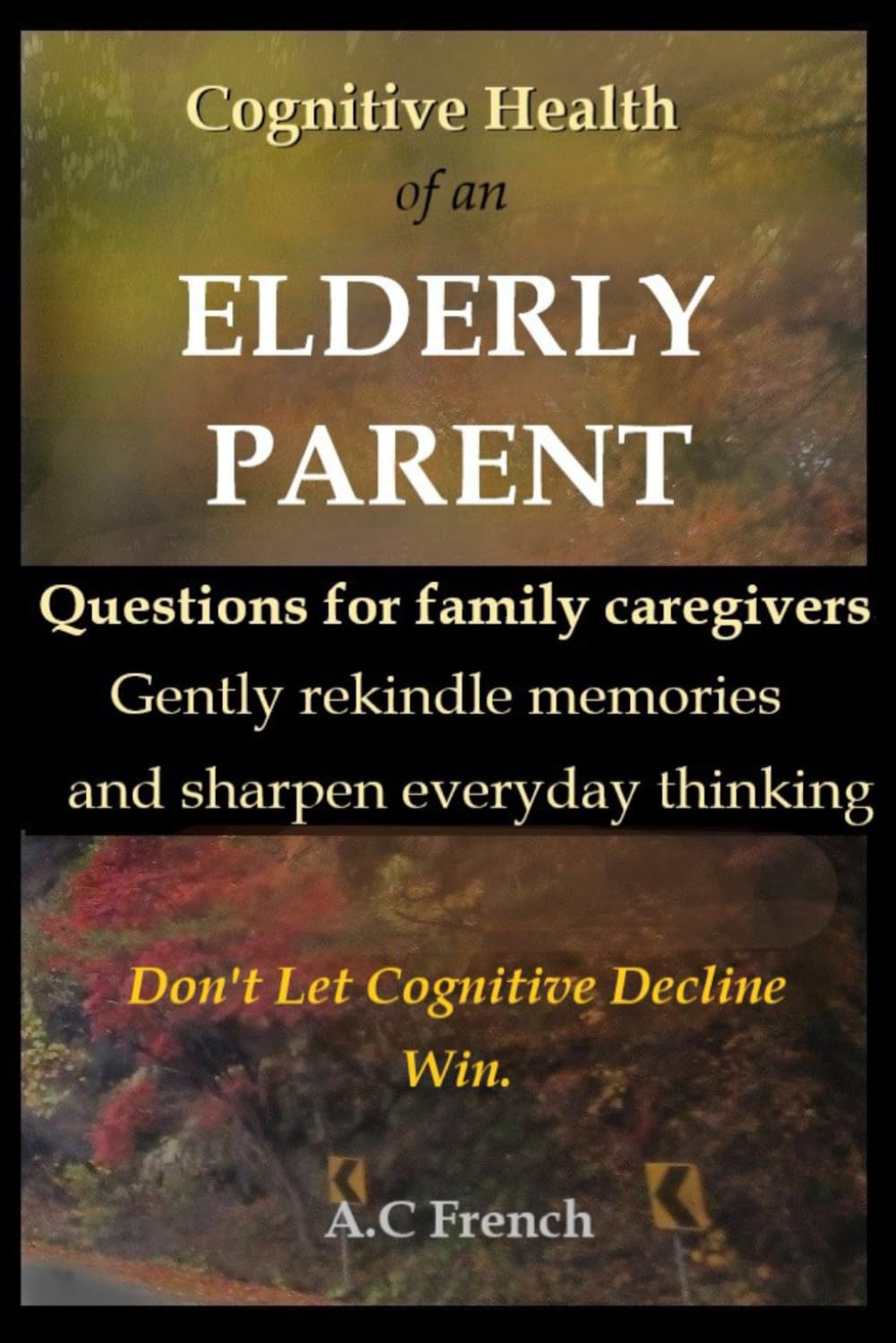



A Practical Conversation Resource to Support Emotional Well-being, Memory Care and Cognitive Health for Aging Parents As parents age — or recover from illness or stroke — conversation can quietly become harder. Not because there’s nothing to say, but because knowing what to ask suddenly matters. Cognitive Health of an Elderly Parent is a gentle, easy-to-use collection of thoughtful questions designed to support memory, everyday thinking, and meaningful conversation. It helps families stay emotionally connected while encouraging mental engagement — whether in person, by phone, or over video call. It is especially helpful for families supporting an elderly parent recovering from a stroke, when confidence, motivation, and communication can be affected — even as physical healing progresses. At its heart, the book is built on a simple idea: well-chosen questions can unlock memory, reflection, and meaningful connection. The questions are: - gentle and non-invasive - designed to encourage natural conversation and reminiscence - structured to feel calm, supportive, and unpressured Light, everyday prompts are carefully blended with memory-based questions, allowing conversation to flow naturally — without feeling like a test, therapy session, or interrogation. What’s inside: • 400+ gentle, non-invasive questions • Designed to trigger reminiscence or sharpen memory and recent recall • Use in a face-to-face setting, by video call, or phone • Easy to dip into anytime — no pressure, no rigid structure (Easy to use— even when energy, attention, or motivation is limited.) They are designed to gently support older adults experiencing: - memory and recall difficulties - age-related cognitive changes - mild cognitive impairment - reduced motivation, low mood, or withdrawal - post-stroke communication challenges - Alzheimer’s disease and other forms of dementia* *In cases involving dementia, questions requiring reasoning should be avoided and in book guidance must be followed. This book is intended as a supportive conversation resource — not a medical intervention. Who This Book Is For: - Adult children caring for elderly parents - Families supporting a loved one after a stroke - Family carers navigating memory or communication changes - Anyone who wants conversation to feel natural again — not forced or awkward Shared memories and gentle conversation play a powerful role in emotional wellbeing, confidence, and identity — particularly during recovery. Sometimes, all it takes is one thoughtful question to bring back a smile — or a story. Order your copy today. ---- This book was written in memory of the author’s late mother, whose life inspired both the questions and the purpose behind this work. A press release announcing the book’s recent recognition can be found here: https://www.einpresswire.com/article/884087488/innovative-family-carer-resource-gains-recognition-across-key-amazon-australia-bestseller-categories