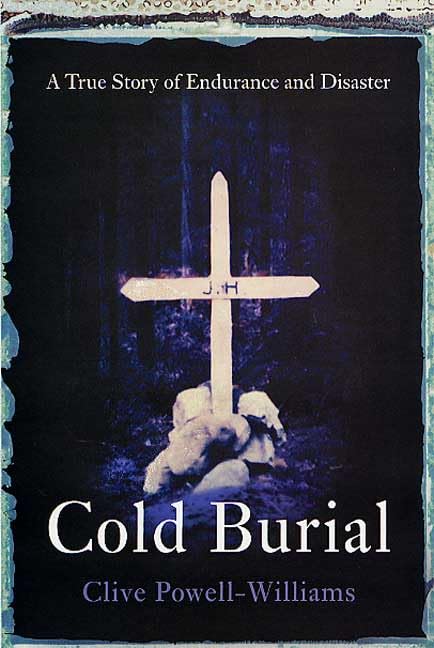



For schoolboys in the 1920s, too young to have experienced first-hand the horrors of World War One, theirs was yet the age of adventure. Their imaginations fired by the exploits of Robert Scott, T. E. Lawrence, Ernest Shackleton, and George Mallory, and by the novels of John Buchan and Jack London, they dreamed of exploring and conquering new frontiers. Lawrence had retreated from public life, and Scott, Shackleton, and Mallory were by then all dead, but their heroic feats remained the measure of British manhood, the standard to be carried forward. In the Spring of 1926, Edgar Christian, a young man of eighteen fresh out of public school, joined his dashing cousin, the legendary (if somewhat self-styled) adventurer Jack Hornby, and a friend named Harold Adlard on an expedition into the Barren Lands of the Canadian Northwest Territories. The plan was to hunt caribou and trap for fur. For young Edgar, the Barrens expedition offered a chance to prove himself and to find his direction in life; for Hornby, a veteran of the Great War as well previous forays into the Northwest (he was known in some quarters as "Hornby of the North"), it represented his latest date with disaster. Together they would demonstrate that civilized men could survive, even thrive, in one of the world's most inhospitable regions. They were proved wrong. Based in large part upon a diary left behind by Edgar, discovered when his body and those of his companions were found two years after their deaths, Clive Powell-Williams' account of the expedition is a gripping narrative of innocence and experience, youthful idealism and unyielding nature. It matters little that we know in advance the tragic outcome, for in its unfolding Cold Burial recounts a tale of courage, folly, and ultimately redemptive love that will haunt readers long after they've read the last page. He was known as Hornby of the North, the Brit who rejected his wealthy background for the frontier life of Canada's frozen north. In 1926, Jack Hornby, the living legend, took his young cousin, Edgar Christian, and Harold Adlard to the remotest part of the Barren Lands, accessible only by canoe and dog team. Except he didn't bring dogs, nor enough clothing or supplies. Instead, he staked their lives on the fifty-fifty chance of meeting with the great caribou migration. In his diary, the young Edgar wrote, "We live on our rifles and see nobody." Two years later, the diary would be found stashed in the stove near the skeletons of the three men. Powell-Williams has meticulously reconstructed this chilling and controversial adventure, considered by some a noble repetition of Mallory and Scott's expeditions, by others a pitiful folly, and by those who lived it, an expression of honor, camaraderie, and courage. --Lesley Reed In 1926, the Barren Lands of the Canadian Northwest Territories were rightly regarded as an inhospitable region of appalling weather where the threat of starvation, accident, and loneliness always lurked a place where men (i.e., Europeans) would be tested to the limit. Troubled World War I veteran Jack Hornsby, a drifter and adventurer, had been there and he had liked it. He organized an expedition with two young and inexperienced friends, with the intention of wintering north of the Great Slave Lake. They would hunt and trap to support themselves, and Hornsby would collect scientific data. Hornsby was knowledgeable about the region, but he failed to make basic preparations despite warnings. After many hardships and colossal mistakes in judgment, all three died. Two years later, Mounties found their bodies, letters to parents, and the detailed diary of one of Hornsby's friends. The author has used the diary and a number of surviving letters to reconstruct the adventurers' trip in great detail. An interesting counterpoint to the many stories of survival under harsh conditions but rather depressing. For comprehensive subject collections. Edwin B. Burgess, U.S. Army Combined Arms Research Lib., Fort Leavenworth, KS Copyright 2002 Cahners Business Information, Inc. In the summer of 1926, professional wanderer Jack Hornby and his young cousin, Edgar, set out for the barren wastes of northern Canada. For the record, it was a scientific expedition to record temperatures and observe the wildlife. In fact, Jack simply couldn't bear to live a sedentary lifestyle in civilization, and Edgar worshipped Jack, with all his tales of living off the land. Joined by a friend along the way, they gradually made their way by canoe to "the Barrens" to settle in for the winter. Although friends and other travelers along the way argued that the three were dangerously undersupplied, Hornby was unconcerned and overconfident, gambling their lives on his perception of caribou migration patterns. The story that follows is one of hardship, endurance, but ultimately failure. Powell-Williams draws from the diary kept by young Edgar, as well as letters written home by the three men, and the testi