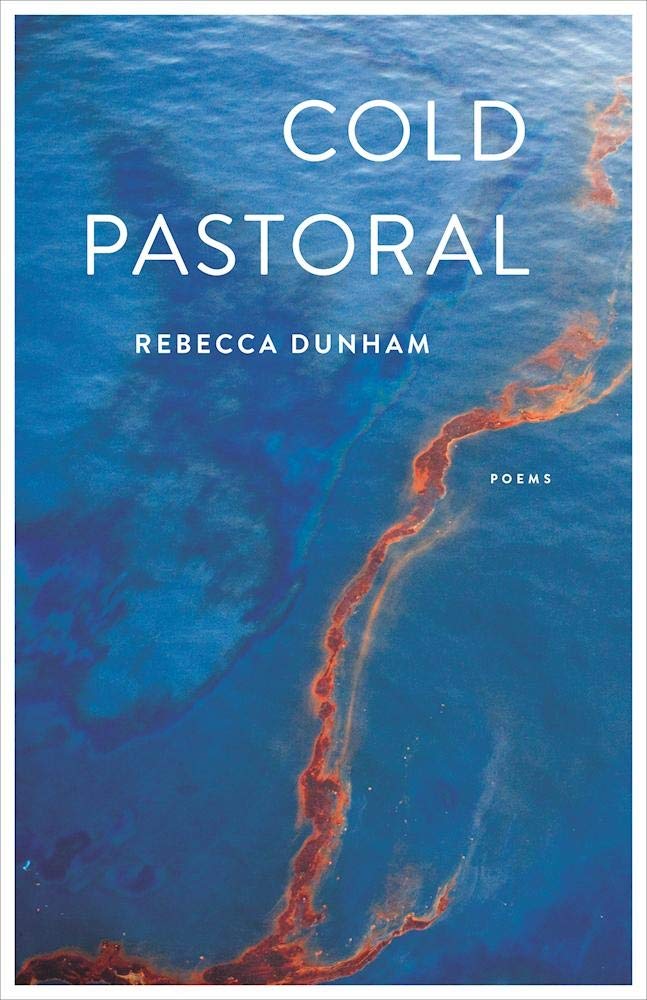



FINALIST FOR THE MIDWEST BOOKSELLERS CHOICE AWARD (POETRY) A searing, urgent collection of poems that brings the lyric and documentary together in unparalleled ways—unmasking and examining the specter of manmade disaster. On September 20, 2010, an explosion on the Deepwater Horizon oil rig killed eleven men and began what would become the largest oil spill ever in US waters. On August 29, 2005, Hurricane Katrina made landfall in Louisiana, leading to a death toll that is still unconfirmed. And in April 2014, the Flint water crisis began, exposing thousands of people to lead-contaminated drinking water. This is the litany of our time—and these are the events that Rebecca Dunham traces, passionately and brilliantly, in Cold Pastoral . In poems that incorporate interviews and excerpts from government documents and other sources—poems that adopt the pastoral and elegiac traditions in a landscape where “I can’t see the bugs; I don’t hear the birds”—Dunham invokes the poet as moral witness. “I owe him,” she writes of one man affected by the oil spill, “must learn, at last, how to look.” Experimental and incisive, Cold Pastoral is a collection that reveals what poetry can—and, perhaps, should—be, reflecting ourselves and our world back with gorgeous clarity. “Cold Pastoral is both elegy and polemic, a powerful work that finds the poet unsure of what to do or who to blame. . . . This is a book full of questions, implicating poet, reader, and corporation alike. It’s a book in which the poet can say, ‘Reading isn’t enough,’ but also ‘Who will document the crisis that bleeds on and on?’” ― Los Angeles Review “One way to understand the power of this book is that it revises the pastoral tradition so as to make it meaningful in the time of Deepwater Horizon and Flint and other environmental disasters. Another way to understand it is as a meaningful and moving series of poems that explore how contemporary landscapes, with their human-made dystopias, stress and mangle relations between humans. And that it does all of this without giving up on the lyric, the form that was made to explore the intimacies between humans that we call love, is a sign of its timely power.” ―Juliana Spahr "One of the most anticipated, and most needed poetry collections of 2017, Rebecca Dunham's Cold Pastoral examines the man-made natural disasters of our time: the explosion on the Deepwater Horizon oil rig, Hurricane Katrina and its aftermath, and the Flint water crisis. Her poems are experimental, edgy, and powerful, blending interviews and excerpts from government documents with pastoral poetic traditions." ― Bustle "Rebecca Dunham’s searing poems consider the consequences, from Katrina to the Deepwater Horizon oil spill to Flint, Michigan’s toxic water, with a combination of elegiac lyricism and documentary pastiche." ― Literary Hub “Dunham hones the docu-poetic in Cold Pastoral to throttling results, braiding uncompromising fragments of interviews, post-disaster testimonies, and excerpts from government documents, along with image-making and musicianship of the highest order―proving that artfully executed parataxis may be the environmentally conscious poet’s sharpest blade.” ― Orion Magazine “The environmental disasters of Cold Pastoral aren’t just the catastrophes that make the news. With panoramic detail, Rebecca Dunham’s poems unpack the ways in which small decisions can have enormous, unintended consequences. How, asks one poem, does one ‘continue in a world that disappears around me’? Dunham doesn’t offer any easy answers. Illuminating but not didactic, Cold Pastoral is an elegy for our endangered environment and the pastoral paradise of which we still dream.” ―Rebecca Hazelton “Dunham keenly navigates the responsibility of the poet. This tension―between the photograph and the poem, the statistical fact and the lyric, oracular utterance―is the tension of all great works of witness.” ― Kenyon Review “‘Disaster was my god,’ wrote Rimbaud in A Season in Hell . Cold Pastoral offers the reader a series of lyric investigations of disasters, the devastation of the Deepwater Horizon oil rig its central crime scene. Sorrowing and lucent, Rebecca Dunham is as attentive to the threats to nonhuman species as she is to the men who died when the rig exploded: ‘Love can turn a man / to flame.’ Dunham’s poems find in disaster not exactly god, but the will toward meaning that disaster must manifest when it encounters a living language, eloquent as the wounds of Nature themselves.” ―Joshua Corey “In Cold Pastoral , Rebecca Dunham unfailingly captures and confronts our current ecological crisis. Her method is at once investigative, documentary, elegiac, and lyric. With passion and brilliance, she creates a rich and devastating poetry that does not resist confrontation, does not apologize for its anger, its intelligence, its prophecy, or its lamentation. With each new collection of poetry, Dunham has pushed beyond the a