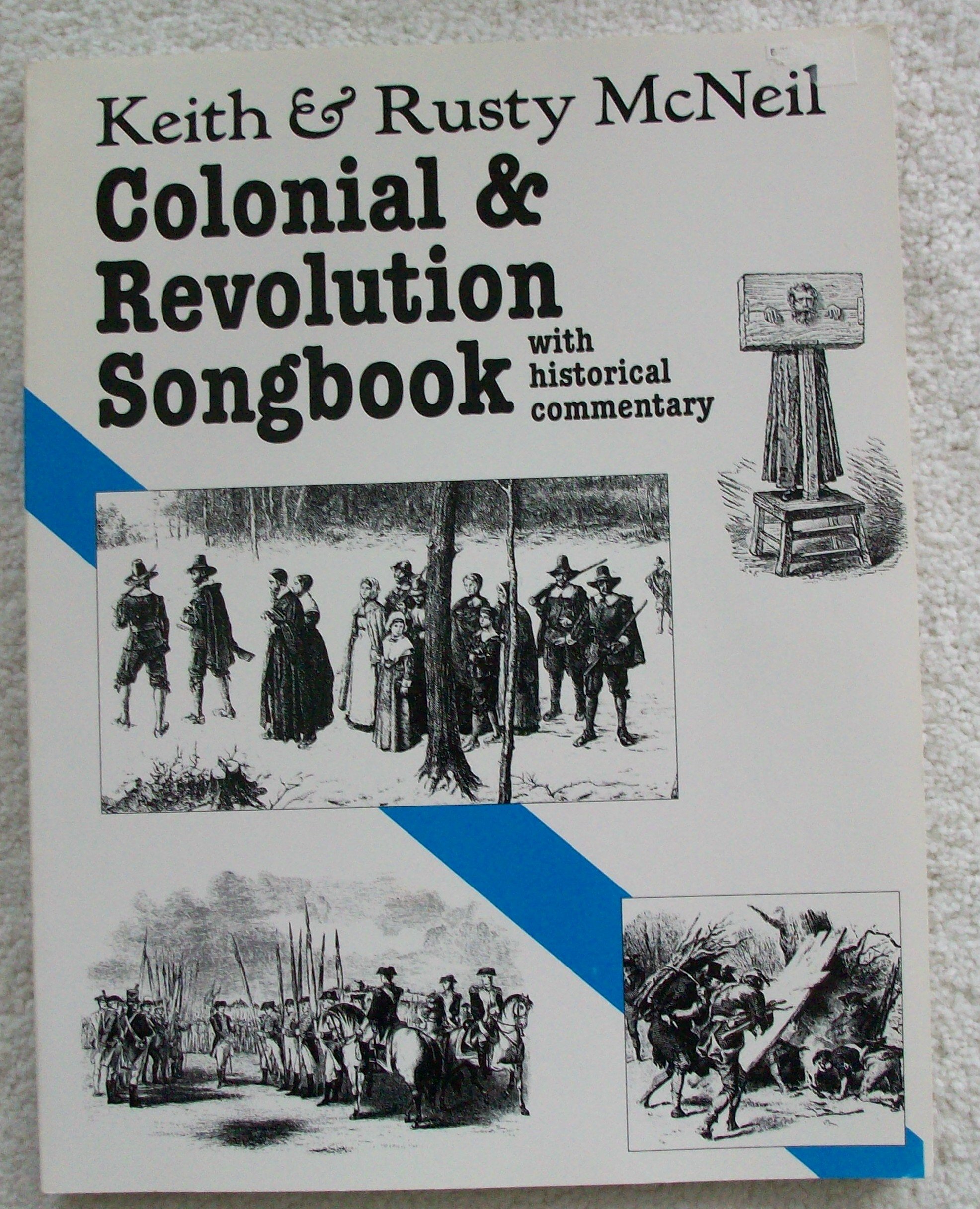



Thirty-nine songs with historical context and historic woodcut illustrations which accompanied the shaping of the country as it evolved from thirteen struggling colonies into a nation. Companion volume to Colonial & Revolution Songs collection, two stereo cassettes or two stereo CD's. Total Playing Time: 2 hours. Colonial America 17th Century: The Puritan psalm-singer, the ill-treated sailor, the proud Pennsylvania-German farmer, the frustrated indentured servant and the angry English convict each expressed through folksong his or her experience in 17th century Colonial America. Traditional ballads from the Old Country and new ones written in America served as entertainment, preserved the superstitions, described the Indians and poked fun at nearly everyone. The narrative dialogue and songs effectively capture the flavor of the period. Colonial America 18th Century: As immigrants arrived in the 18th century, Irish fiddle tunes, African drums and Scots Highla! nd bagpipes set the patterns for America's music. The songs highlight the cultural heritage of the immigrants and the changes during the period which affected American attitudes and way of life. The songs also tell of the shift from White indentured servant to Black slave, the expansion of New England shipping, and the French defeat at Quebec during the French and Indian War. The American Revolution: The American Revolution inspired both British and American citizens and soldiers to write songs about their differences. The words of the songs were printed in newspapers, periodicals and broadsheets sold on the streets of Boston, Philadelphia and other major American cities. Includes songs which express stirring pride, angry threats, ridicule and biting satire. They tell of rising political tensions, the Boston Massacre, the tea parties, the weaknesses of the enemy and the virtues of patriotism. The War of 1812: While the Canadians sing of retribution, the Americans sing of jubilation over the defeat of the British ship Guerriere by Old Ironsides, the preparation of defenses at Philadelphia and the victory at New Orleans (15 days after the peace treaty was signed). These songs effectively illustrate the strong feelings of nationalism during the War of 1812. Grade 4-7-Covering the 17th and 18th centuries, the American Revolution, and the War of 1812, the McNeils have chosen 39 traditional songs and provided each with brief historical commentary. Each song includes a melody line and guitar chords. The black-and-white line drawings are historical reproductions from the featured periods. A cassette recorded by the McNeils is available. Teachers will find this selection a great help in making the Colonial and Revolutionary periods come to life. Mollie Bynum, formerly at Chester Valley Elementary School, Anchorage, AK Copyright 1996 Reed Business Information, Inc. "...a fine collection of Colonial and Revolutionary songs... The narration is especially notable, since it so briefly, yet skillfully outlines the significant aspects of Colonial and Revolutionary development." -- Choice Use of WEM tapes for performances in schools is granted, and most of the songs in our book are public domain. However, Colonial & Revolution Songbook contains one song "When I First Came To This Land," with a copyrighted translation (Oscar Brand, Ludlow Music). WEM Records cannot legally grant the rights to perform materials copyrighted by others. The reviews on the six volumes vary as to recommendation of age groups. Our experience is that teachers from grades four through graduate school use the tapes. Obviously, some of the songs and narration are more appropriate for older students, and teachers use discretion with their younger students. America's best loved interpreters of history-through- folksong, Keith & Rusty perform a variety of songs and song-styles and play over thirty instruments, including banjo, guitar, bagpipes, African drums, dulcimer, clarinet, harmonica and mandolin. For more than thirty years, through concerts, public television, records and tapes the McNeils have enchanted audiences in the United States, Canada, Britain, France and Japan. Between concert appearances they teach graduate courses on American history through folksong at universities across the United States; conduct workshops and study tours in Britain, Ireland, Europe and Africa; and continue their research on American history and lifestyles as expressed through traditional music. Free America The American colonists viewed the presence of British troops in America with favor, as long as the threat of French or Indian attack remained. After the French and Indian Wars, however, the Americans saw no need for continued British military presence. On the other hand, from the British point of View, the need was increasing. The newly gained territory needed protection, there was no organized government west of the Allegheny Mountains, and the British wanted the Americans to share in the increased