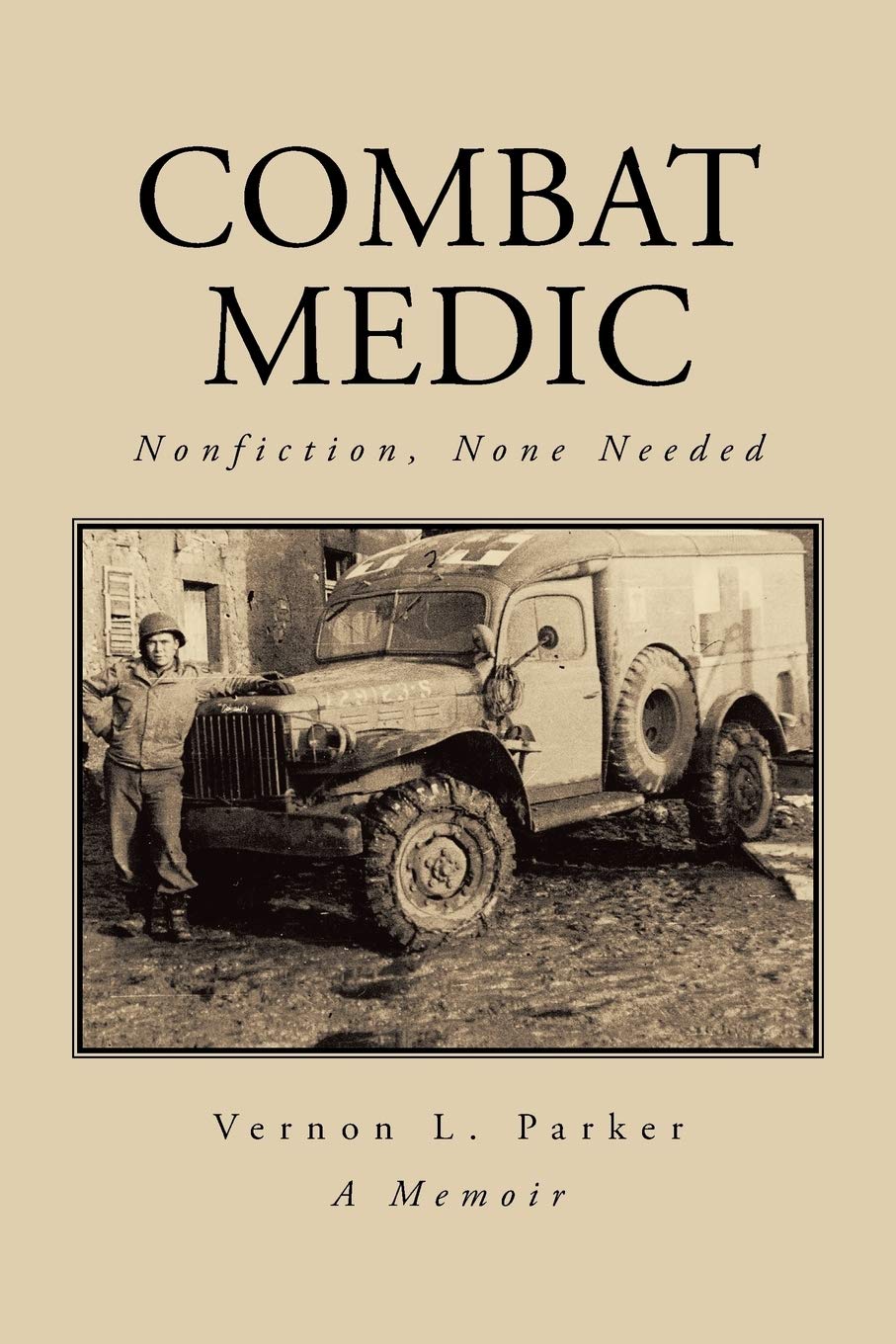



Combat Medic shares Corporal Vernon L. Parker's first-person account of World War II. Parker, like many other young men drafted in WWII, was transported from a simple, hard-working life in rural America in 1942 to a complex, stressful environment that would forever change his life. Nothing could have prepared him for the experiences he encountered as a combat medic and ambulance driver with the Third Army, led by "Blood and Guts" General George S. Patton, Jr. Parker was part of the D-Day invasion. After landing at Normandy, he spent more than ten months on the front lines, supporting the armored divisions through five major campaigns in France, Luxembourg, and Germany. A gifted storyteller, Parker presents a self-deprecating narrative filled with keen insights and colorful descriptions of day-to-day life with fellow infantrymen, officers, civilians, and enemy soldiers. As his saga unfolds, it describes the transformation of a naïve and cocky country boy into a battle-weary survivor struggling to maintain his dignity, compassion, and humanity. In Combat Medic, Parker demonstrates a startling recall of events from decades ago, including detailed descriptions of people, places, and even conversations-indicating just how much of an impact those war years had on him. COMBAT MEDIC Nonfiction, None Needed By Vernon L. Parker iUniverse LLC Copyright © 2013 Betty Jane Kirby, Tom L. Parker, and A. Dale Parker All rights reserved. ISBN: 978-1-4917-0843-9 Contents Editor's Preface, vii, Dedication, ix, Acknowledgements, xi, Introduction, xiii, You're In The Army Now, 1, Over There, 31, Normandy to Luxembourg, 49, Battle of the Bulge, 95, Across the Rhine, 115, Going Home, 139, Epilogue, 155, Appendix A—Medals, Citations and Awards, 157, Appendix B—Route Through France, Luxembourg and Germany, 159, Appendix C—World War II Websites, 161, CHAPTER 1 YOU'RE IN THE ARMY NOW War clouds was looming in Europe, and things was picking up.They were hiring in different plants. The United States was buildingsubmarines, boats, tanks, anything that could be used in the army forEngland; it was called lend lease at that time. Hitler was expandingall of his operations. He was getting greedy. He took Finland; thenhe went into the Netherlands. He took Czechoslovakia, and Englandwas really taking a beating. Germany had all kinds of airplanes,tanks, infantry, and everything. They were occupying France at thetime, and they pushed the British back into the English Channel atDunkirk. A lot of them was captured. Some of them got back acrossthe English Channel on any type of transportation that would float.The United States was furnishing them as much as they could, butRoosevelt decided he wouldn't put any American troops on foreignsoil. On December 7th, 1941, I was driving down the road on 112on Sunday morning, and I heard a broadcast that the Japanese hadbombed Pearl Harbor. I was on second shift and heard that night thatRoosevelt was going to make a speech, so I pulled my car down tothe tipple where I was working, and we all turned the radio on in mycar and listened, and he declared war on Japan. Back then they hadthe draft where you would go in and stay eighteen months and thenyou would come out. Well, a lot of them had spent their eighteenmonths, but when he declared war, they froze that and wouldn't letthem out and they started drafting anybody from 18 to 44. And theywere throwing up training camps all over the United States. They wastemporary camps. They set up a Camp Campbell at Hopkinsville. Wealso had some forts: Ft. Sill, Oklahoma; Ft. Hood, Texas. Well, Ft.Knox, Kentucky had always been a fort where most of the tankersgot their experience—their training. Mr. Connery talked to me. I had gotten promoted up to a washeroperator. He said, "Vernon, when you get your papers, you call meor come in the office and I'll get you a deferment because that jobyou have is essential to the defense." When I got my papers, I didn'tsay anything to him. I just went ahead and went for an examination.Pretty soon I got called. I was supposed to report the first of October,1942, to the induction center in Evansville. I went into the office andtalked to Mr. Connery and told him I didn't want a deferment; I wasgoing to go, and that was the same thing as volunteering. He said, "Sit down. Let me talk to you a little bit. I'm a WorldWar I veteran, Vernon, and I got gassed while I was over there." Iknew that he was always short of breath and wheezed and coughed alot. He said, "Good luck to you, and when you get discharged, if youmake it, you come back to Norton Coal Corporation and you've gotyou a job; it'll be waiting for you." * * * I went to Hopkinsville, caught the bus over there to Evansville,and we were all examined there at the Armory. That was a bunch ofwild people I'll tell you—all kinds: farmers, people that had workedat the bank, people who drove trucks. You name it and they were onthat bus. So we went to