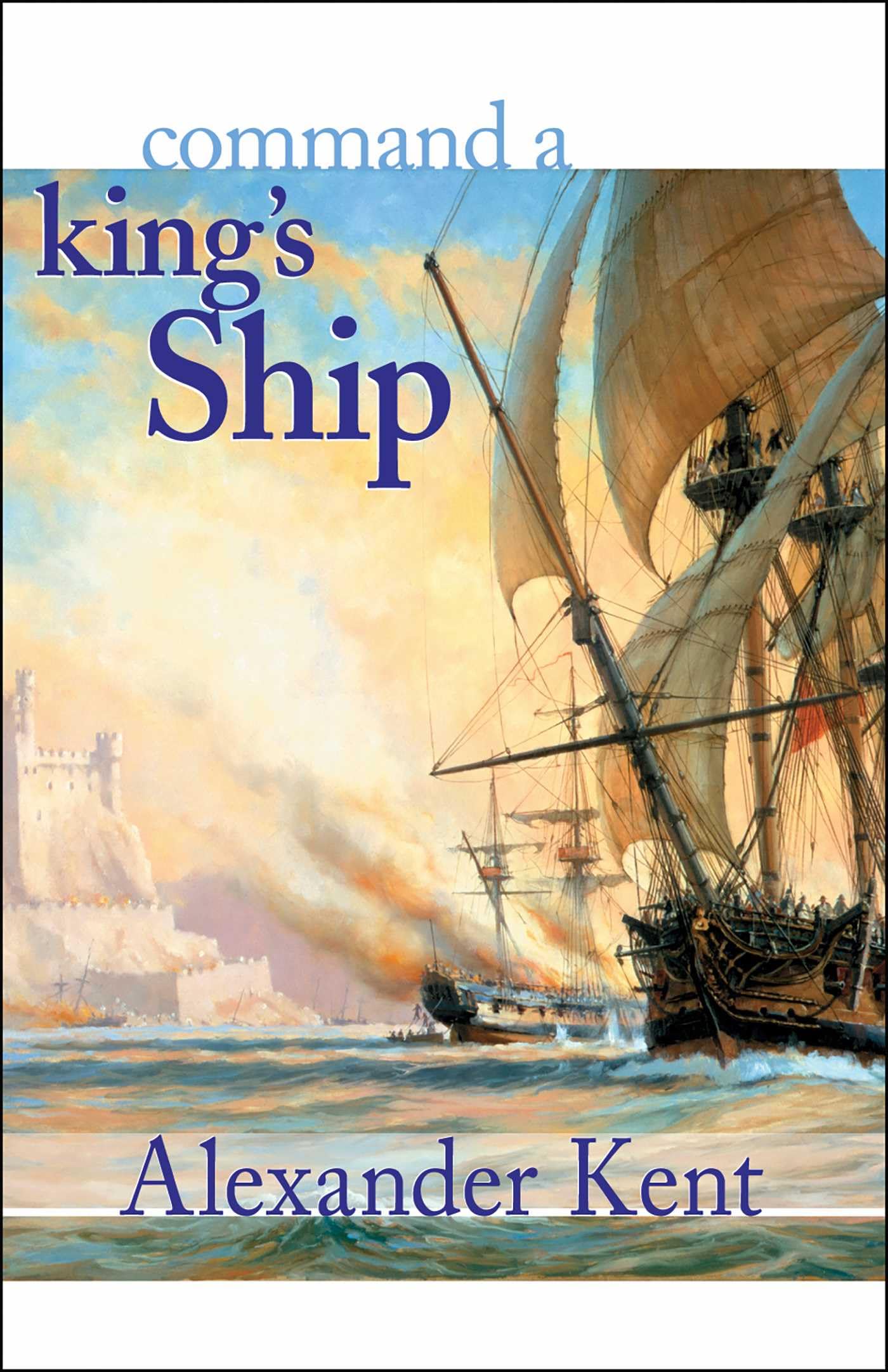



Spithead, 1784. His Majesty's Frigate Undine sets sail for India and the seas beyond. Europe may be at peace—but in colonial waters the promises of statesmen count for little and the bloody struggle for supremacy still goes on. This trio, published in 1972, 1973, and 1968, respectively, offer more of the briny adventures of Richard Bolitho as he sails the seas during the late 18th century. LJ's reviewers found Sloop to be a "rousing novel" (LJ 12/1/72), while Kent himself was praised as the "worthy successor to C.S. Forester" (LJ 7/68). For all collections that like their adventure stories served with a pinch of salt. Copyright 1998 Reed Business Information, Inc. "Enemy action, . . . sinkings, boardings, amphibious operations, decks awash with blood . . . This one does not disappoint." -- The New York Times Alexander Kent, pen name of Douglas Edward Reeman, joined the British Navy at 16, serving on destroyers and small craft during World War II, and eventually rising to the rank of lieutenant. He has taught navigation to yachtsmen and has served as a script adviser for television and films. His books have been translated into nearly two dozen languages. Command a King's Ship The Bolitho Novels: 6 By Alexander Kent McBooks Press, Inc. Copyright © 1973 Alexander Kent All rights reserved. ISBN: 978-0-935526-50-9 CHAPTER 1 THE A DMIRAL'S CHOICE An Admiralty messenger opened the door of a small anteroom and said politely, "If you would be so good as to wait, sir." He stood aside to allow Captain Richard Bolitho to pass and added, "Sir John knows you are here." Bolitho waited until the door had closed and then walked to a bright fire which was crackling below a tall mantel. He was thankful that the messenger had brought him to this small room and not to one of the larger ones. As he had hurried into the Admiralty from the bitter March wind which was sweeping down Whitehall he had been dreading a confrontation in one of those crowded waiting-rooms, crammed with unemployed officers who watched the comings and goings of more fortunate visitors with something like hatred. Bolitho had known the feeling, too, even though he had told himself often enough that he was better off than most. For he had come back to England a year ago, to find the country at peace, and the towns and villages already filling with unwanted soldiers and seamen. With his home in Falmouth, an established estate, and all the hard-earned prize money he had brought with him, he knew he should have been grateful. He moved away from the fire and stared down at the broad roadway below the window. It had been raining for most of the morning, but now the sky had completely cleared, so that the many puddles and ruts glittered in the harsh light like patches of pale blue silk. Only the steaming nostrils of countless horses which passed this way and that, the hurrying figures bowed into the wind, made a lie of the momentary colour. He sighed. It was March, 1784, only just over a year since his return home from the West Indies, yet it seemed like a century. Whenever possible he had quit Falmouth to make the long journey to London, to this seat of Admiralty, to try and discover why his letters had gone unanswered, why his pleas for a ship, any ship, had been ignored. And always the waiting-rooms had seemed to get more and more crowded. The familiar voices and tales of ships and campaigns had become forced, less confident, as day by day they were turned away. Ships were laid up by the score, and every seaport had its full quota of a war's flotsam. Cripples, and men made deaf and blind by cannon fire, others half mad from what they had seen and endured. With the signing of peace the previous year such sights had become too common to mention, too despairing even for hope. He stiffened as two figures turned a corner below the window. Even without the facings on their tattered red coats he knew they had been soldiers. A carriage was standing by the roadside, the horses nodding their heads together as they explored the contents of their feeding bags. The coachman was chatting to a smartly dressed servant from a nearby house, and neither took a scrap of notice of the two tattered veterans. One of them pushed his companion against a stone balustrade and then walked towards the coach. Bolitho realised that the man left clinging to the stonework was blind, his head turned towards the roadway as if trying to hear where his friend had gone. It needed no words. The soldier faced the coachman and his companion and held out his hand. It was neither arrogant nor servile, and strangely moving. The coachman hesitated and then fumbled inside his heavy coat. At that moment another figure ran lightly down some steps and wrenched open the coach door. He was well attired against the cold, and the buckles on his shoes held the watery sunlight like diamonds. He stared at the soldier and then snapped angrily at his coachman. The servant ran to the horses' heads,