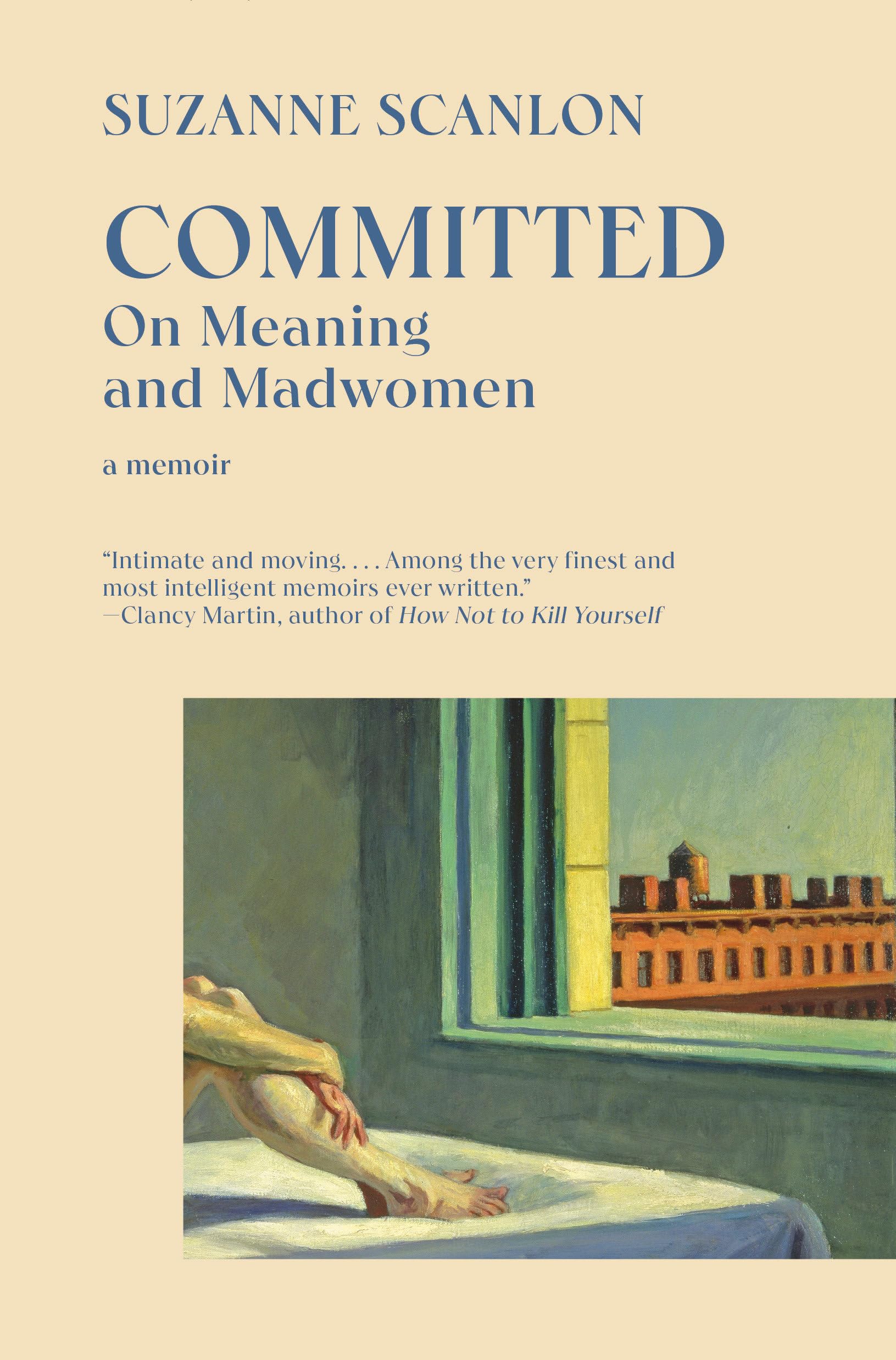



A raw and masterful memoir about becoming a woman and going mad—and doing both at once. When Suzanne Scanlon was a student at Barnard in the 90s, grieving the loss of her mother—feeling untethered and swimming through inarticulable pain—she made a suicide attempt that landed her in the New York State Psychiatric Institute. After nearly three years and countless experimental treatments, Suzanne left the ward on shaky legs. In the decades it took her to recover from the experience, Suzanne came to understand her suffering as part of something larger: a long tradition of women whose complicated and compromised stories of self-actualization are reduced to “crazy chick” and “madwoman” narratives. It was a thrilling discovery, and she searched for more books, more woman writers, as the journey of her life converged with her journey through the literature that shaped her. Transporting, honest, and graceful, Committed is a story of discovery and recovery, reclaiming the idea of the madwoman as a template for insight and transcendence through the works of Charlotte Perkins Gilman, Virginia Woolf, Sylvia Plath, Janet Frame, Audre Lorde, Shulamith Firestone, and others. A must-read book at LitHub, NYLON, Bustle , The Millions "Layered and lovely. . . . Read equipped with: pen and paper to take notes of all the books Scanlon talks about that you’ll want to read by the time she’s done with you." —Vox , "The Best Books of the Year (So Far)" "[An] affecting memoir. . . . If the hospital ward where Scanlon stayed felt at times like a “foreign country,” books served as a ballast for her fragile psyche." —The New Yorker " Committed flows like a psychotherapy session, with rich, entertaining digressions that culminate in unexpected insights. . . . Rich with the texture of a life, of the passionate and varied intellectual pursuits of its author. Its existence serves as an addendum to Scanlon’s case file, a correction to the record, illustrating how drastically medical narratives can reduce the scope of a life. . . . The treatment of mental illness has changed since 1992, but whether this change represents true progress remains an open question. Even now, it is still the work of writers and readers to fill in the gaps where medicine fails us, to teach us more thoughtful and expansive ways to learn how to live with the grief at the heart of the human experience." — Los Angeles Review of Books "I’m gonna keep coming back to this one. . . . Absolutely stunning." —Maris Kreizman in The Maris Review "A victory." —The Pittsburgh Post-Gazette "This review can only ever be a vain attempt to enumerate all that is relatable and insightful within the covers of Scanlon’s Committed . . . . It is one of those books many will likely say they could have used earlier in life, but that will no doubt also be said to have come right on time because any time is the right one for this book." — The Chicago Review of Books "A deep, sometimes harrowing book about loss, grief, and the way literary representations of mental illness shaped Scanlon’s experience of her own life." —Emily Gould, The Cut "In this unconventional memoir, [Scanlon] situates herself in the lengthy tradition of “crazy women writers,” illuminating how this label doesn’t have to be reductive, but can provide a certain power and a path forward that permits the complexity of being a person." — Chicago magazine "When Suzanne Scanlon entered the New York State Psychiatric Institute in 1992 after a suicide attempt, she had no idea that she would remain there for almost three years. In this bracing memoir, Scanlon, now a writer, teacher, and mother, tries to understand how and why she was institutionalized for so long. By writing about her own history as well as those of other writers including Virginia Woolf and Charlotte Perkins Gilman, Scanlon explores the experiences of women dealing with mental illness and critiques a medical establishment overly reliant on medication. This frank memoir doesn’t provide easy answers, but does shed light on important subjects many still consider taboo." — Bustle "Scanlon’s depiction of her artistic development suggests an appealingly thorny relationship between ideation and identification. “We don’t always get to pick our influence,” she writes. Summoning Sylvia Plath, Marguerite Duras, Shulamith Firestone, and Janet Frame, Committed becomes a love-letter-cum-Künstlerroman, revealing with dazzling fervor what it means to be enraptured by the page." — The Millions "Suzanne Scanlon’s memoir Committed is a lyrical and illuminating account of a young woman’s struggle with mental illness and institutionalization. Mining the metaphors endemic to the institutional setting—the way madness or insanity is “a story the patients are told and learn to tell about themselves”—and making use of medical records and her own journals alongside literary depictions and descriptions of treatment, Scanlon que