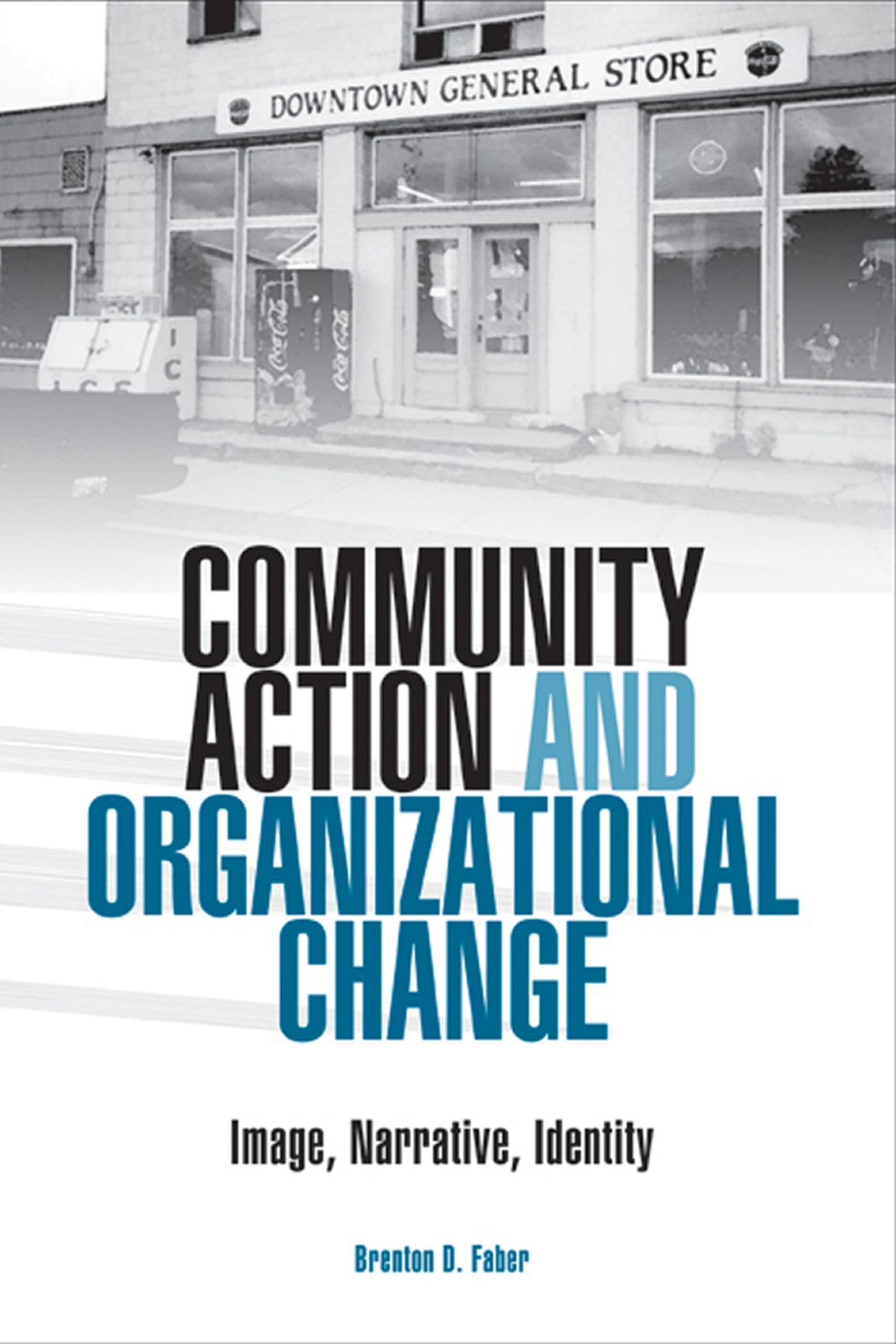
Community Action and Organizational Change: Image, Narrative, Identity
$24.98
by Brenton D Faber



Brenton D. Faber’s spirited account of an academic consultant’s journey through banks, ghost towns, cemeteries, schools, and political campaigns explores the tenuous relationships between cultural narratives and organizational change. Blending Faber’s firsthand experiences in the study and implementation of change with theoretical discussions of identity, agency, structure, and resistance within contexts of change, this innovative book is among the first such communications studies to profile a scholar who is also a full participant in the projects. Drawing on theories of Michel Foucault, Anthony Giddens, and Pierre Bourdieu, Faber notes that change takes place in the realm of narrative, in the stories people tell. Faber argues that an organization’s identity is created through internal stories. When the organization’s internal stories are consistent with its external stories, the organization’s identity is consistent and productive. When internal stories contradict the external stories, however, the organization’s identity becomes discordant. Change is the process of realigning an organization’s discordant narratives. Faber discusses the case studies of a change management plan he wrote for a city-owned cemetery, a cultural change project he created for a downtown trade school, and a political campaign he assisted that focused on creating social change. He also includes detailed reflections on practical ways academics can become more involved in their communities as agents of progressive social change. Featuring six illustrations, Faber’s unique study demonstrates in both style and substance how stories work as agents of change. “This is an excellent book! It is well conceived, beautifully written, and compelling in its case for using narratives to reconnect universities to their communities. . . This book has potential to be considered an important, ground-breaking study in the area of community studies and organizational studies.” —H. L. Goodall Jr. , author of Casing a Promised Land: The Autobiography of an Organizational Detective as Cultural Ethnographer Brenton D. Faber's spirited account of an academic consultant's journey through banks, ghost towns, cemeteries, schools, and political campaigns explores the tenuous relationships between cultural narratives and organizational change. Blending Faber's firsthand experiences in the study and implementation of change with theoretical discussions of identity, agency, structure, and resistance within contexts of change, this innovative book is among the first such communications studies to profile a scholar who is also a full participant in the projects. Drawing on theories of Michel Foucault, Anthony Giddens, and Pierre Bourdieu, Faber notes that change takes place in the realm of narrative, in the stories people tell. Faber argues that an organization's identity is created through internal stories. When the organization's internal stories are consistent with its external stories, the organization's identity is consistent and productive. When internal stories contradict the external stories, however, the organization's identity becomes discordant. Change is the process of realigning an organization's discordant narratives. Faber discusses the case studies of a change management plan he wrote for a city-owned cemetery, a cultural change project he created for a downtown trade school, and a political campaign he assisted that focused on creating social change. He also includes detailed reflections on practical ways academics can become more involved in their communities as agents of progressive social change. Featuring six illustrations, Faber's unique study demonstrates in both style and substance how stories work as agents of change. Brenton D. Faber is an assistant professor of technical communications at Clarkson University. He has worked for the government of Ontario and as a change management consultant for community groups and small businesses. Community Action and Organizational Change Image, Narrative, Identity By Brenton D. Faber Southern Illinois University Press Copyright © 2002 Board of Trustees, Southern Illinois University All right reserved. ISBN: 978-0-8093-2436-1 Contents List of Figures.....................................................................viiAcknowledgments.....................................................................ix1. Introduction: Rodeo..............................................................12. Reading the Stories of Change....................................................193. Time, Habits, and Change: Brokers, Bankers, and the Old West.....................444. Narratives and Organizational Change: Stories from Academe.......................695. Image: Power, Rhetoric, and Change...............................................1086. Discordance and Realignment: Stories from the Final Frontier.....................1387. Organizational Change as Community Action........