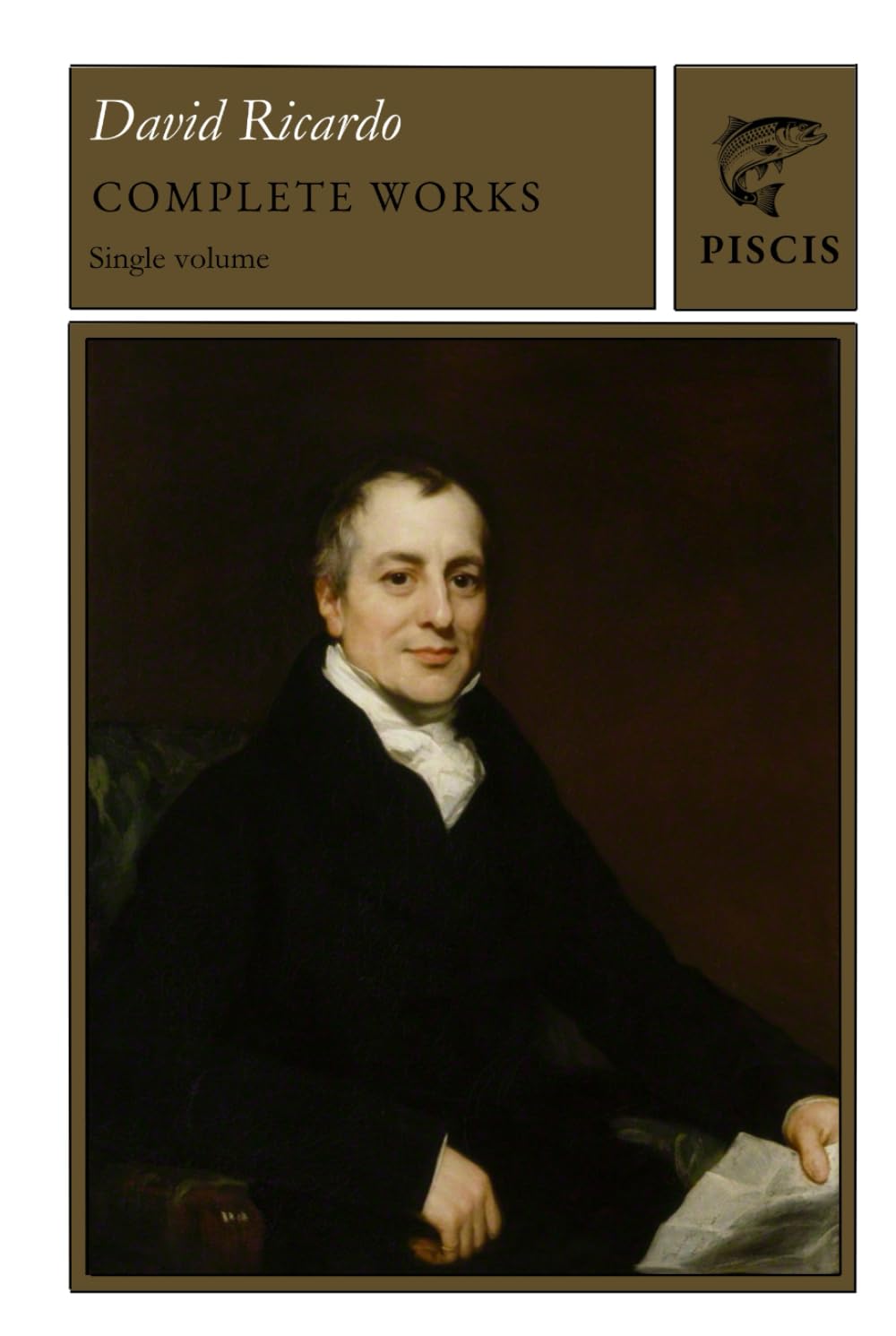



David Ricardo (1772–1823) was an English political economist and one of the leading figures of classical economics. Born in London to a Sephardic Jewish family of Portuguese origin, Ricardo began his career in finance as a stockbroker and amassed considerable wealth before turning to the study of political economy. His most influential work, On the Principles of Political Economy and Taxation (1817), set out theories that became central to economic thought, including the law of rent, the labor theory of value, and comparative advantage, which provided a foundational argument for free trade. Ricardo also wrote on monetary policy, taxation, and distribution, engaging in important debates with contemporaries such as Thomas Robert Malthus and James Mill. Elected as a Member of Parliament in 1819, Ricardo combined practical political engagement with theoretical analysis. His writings remain central to the history of economics, influencing later thinkers from Karl Marx to modern international trade theorists.