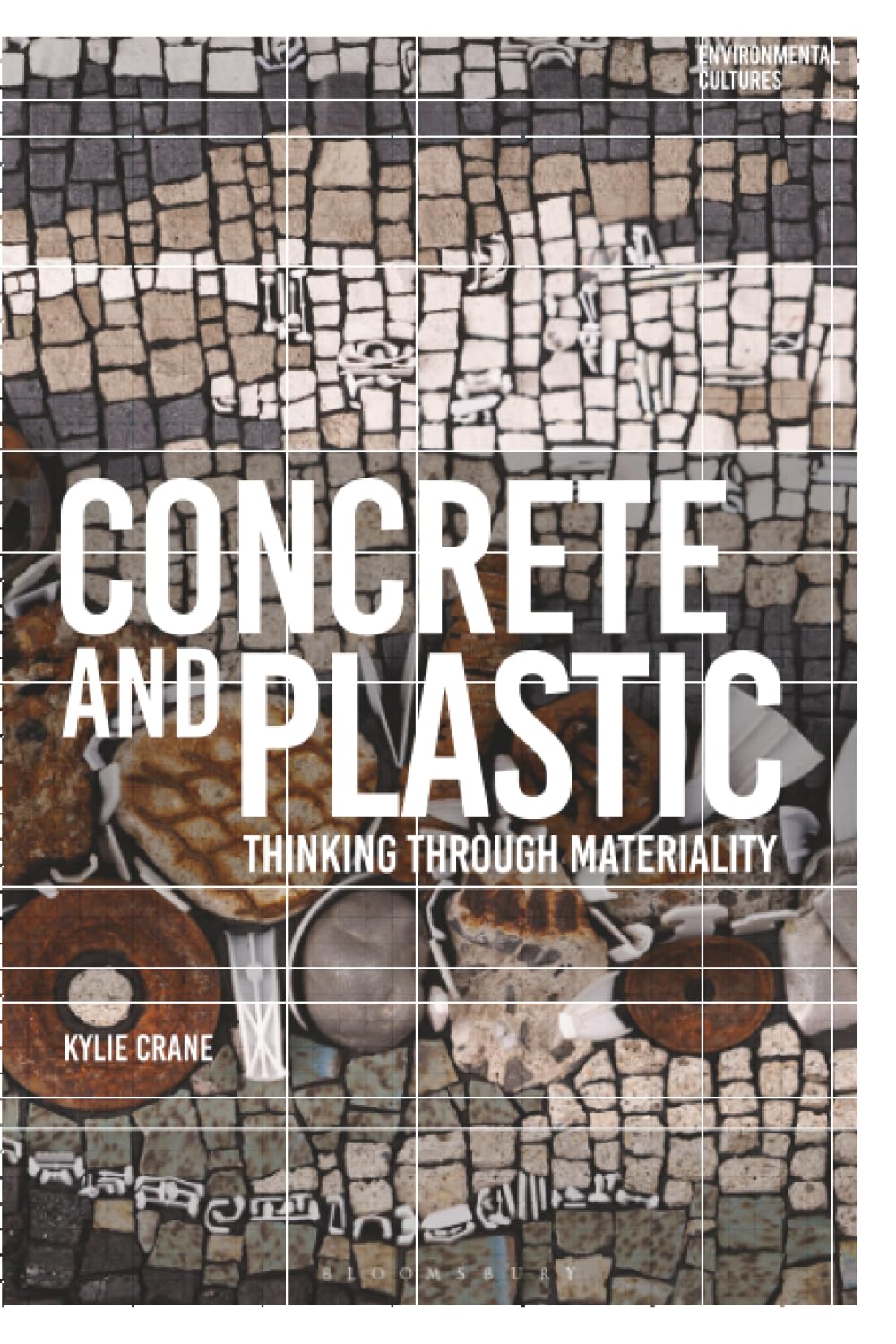
Concrete and Plastic: Thinking through Materiality (Environmental Cultures)
$39.95
by Kylie Crane



Plastic and concrete are two of the most ubiquitous materials of the modern age. This open access book traces inventions, inventories and interventions of these materials as they pervade our day-to-day lives across various forms. By proposing we think of the ways materials configure ‘future artefacts’, and by recognizing the various ways in which materials shape our encounters with the world, the book explores the productive tensions implicit in, and between, concrete and plastic. Drawing ona wide range of sources, including novels, essays, travel and nature writings, films, poems, souvenirs, advertisements, policy documents, environmental art, wrapping,and (popular) science writing, the book attends to all kinds of cultural artefacts to trace imaginative entanglements with disparate others in the Anthropocene. The ebook editions of this book are available open access under a CC BY-NC-ND 4.0 licence on bloomsburycollections.com Open access was funded by The University of Rostock . “Kylie Crane's fascinating new book traces two of the most pervasive and pertinent materials of modernity: plastic and concrete ... What the book [makes] clear is that to study such diffractions of plastic and/with concrete is a particularly apt way to come to terms with modernity both in its cultural expressions and its naturecultural repercussions in the Anthropocene.” ― Anglistik: International Journal of English Studies “This book performs an exciting update to methods in material culture studies, bridging these to concerns raised by the new materialists. It offers brilliant overviews of the qualities of plastic and concrete as objects in flow, and it develops these accounts of modern materiality in a delightfully eclectic array of readings.” ― Caren Irr, Kevy and Hortense Kellerman Endowed Chair in the Humanities, Brandeis University, USA “Marvelously eclectic… a theoretically sophisticated academic book focused on “the capacity of materials to form relations across spatial and temporal dimensions"… a work attuned to heartening possibilities; to alternative futures.” ― Zeitschrift für Anglistik und Amerikanistik “While Concrete and Plastic is not solely a history book, it makes a significant contribution to historical scholarship by examining materials through the lenses of environmental justice, decay, and the entanglement of bodies, substances, and infrastructures. Crane emphasizes the afterlife of materials - their toxicity, longevity, and cultural presence-adding urgency to debates on sustainability and extractive economies.” ― Technology & Culture Kylie Crane is Professor of British and American Cultural Studies at the University of Rostock, Germany. Richard Kerridge is a nature writer and ecocritic who leads the MA in Creative Writing and co-ordinates research and postgraduate studies in English Literature and Creative Writing at Bath Spa University, UK. His works include: Cold Blood: Adventures with Reptiles and Amphibians (2014), J. H. Prynne's place-based poem-sequence The Oval Window, in collaboration with the late N. H. Reeve (2018), Writing the Enviornment (1998) and his other nature writing has been broadcast and published in BBC Wildlife, Poetry Review and Granta. He was awarded the 2012 Roger Deakin Prize by the Society of Authors, and has twice received the BBC Wildlife Award for Nature Writing. He was founding Chair of ASLE-UKI and has been an elected member of the ASLE Executive Council. With Greg Garrard he is co-editor of the Bloomsbury Academic series 'Environmental Cultures' – the first series of monographs in the Environmental Humanities to be published in Britain and he is a member of the steering committee of New Networks for Nature. Greg Garrard is Associate Professor of Sustainability at the University of British Columbia, Canada. He is the author of the bestselling book Ecocriticism (2nd edition, 2011) and editor of The Oxford Handbook of Ecocriticism (2014).