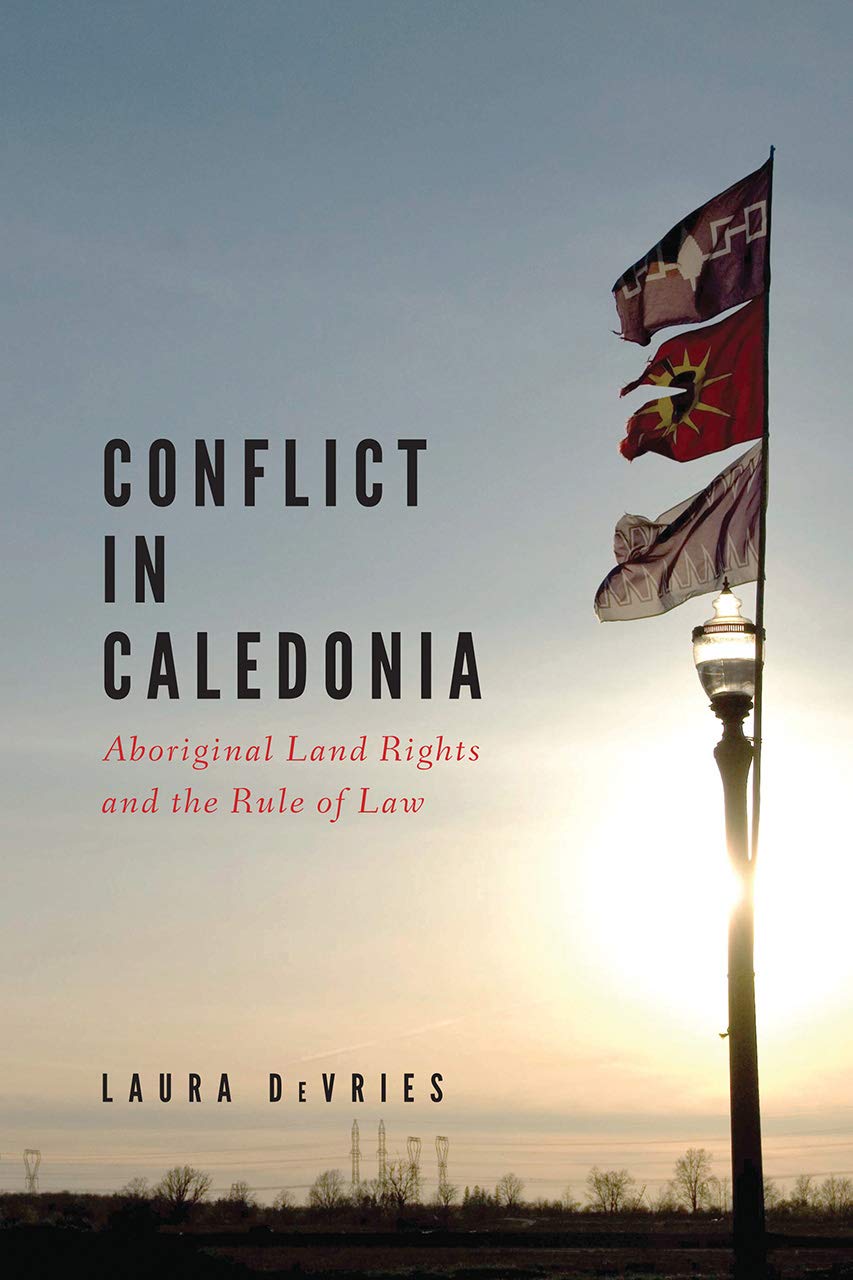
Conflict in Caledonia: Aboriginal Land Rights and the Rule of Law (Law and Society)
$94.00
by Laura DeVries



In February 2006, First Nations protesters blocked workers from entering a housing development in southern Ontario. The protest highlighted the issue of land rights and sparked a series of ongoing events known as the “Caledonia Crisis.” This powerful account of the dispute links the actions of police, officials, and locals to non-Aboriginal discourses about law, landscape, and identity. DeVries encourages non-Aboriginal Canadians to reconsider their assumptions, to view “facts” such as the rule of law as culturally specific notions that prevent truly equitable dialogue. She seeks out possible solutions in alternative conceptualizations of sovereignty over land and law embedded in the Constitution. This book offers, for those non-Aboriginals who will read it to the very end, a chance to decolonize their minds by questioning non-Aboriginal, taken-for-granted discourses that negatively impact Aboriginal–non-Aboriginal relations, both historically and in the present. -- Craig Proulx, Department of Anthropology, St. Thomas University From the first to the last page, the author pulls the reader into the fascinating and conflicting narrative surrounding the events leading to and eventually affecting all of Caledonia. It takes the conversation and understanding of Six Nations--Canadian relationship to a whole new level. -- Lorraine Mayer, chair, Native Studies Department, Brandon University "From the first to the last page, the author pulls the reader into the fascinating and conflicting narrative surrounding the events leading to and eventually affecting all of Caledonia. It takes the conversation and understanding of Six Nations―Canadian relationship to a whole new level."―Lorraine Mayer, chair, Native Studies Department, Brandon University An illuminating look at Canada–First Nations relations from the perspective of the uncommon ground in Caledonia. In February 2006, First Nations protesters blocked workers from entering a housing development in southern Ontario. The protest highlighted the issue of land rights and sparked a series of ongoing events known as the "Caledonia Crisis." This powerful account of the dispute links the actions of police, officials, and locals to non-Aboriginal discourses about law, landscape, and identity. DeVries encourages non-Aboriginal Canadians to reconsider their assumptions, to view "facts" such as the rule of law as culturally specific notions that prevent truly equitable dialogue. She seeks out possible solutions in alternative conceptualizations of sovereignty over land and law embedded in the Constitution. In February 2006, First Nations protesters blocked workers from entering a housing development in southern Ontario. The protest highlighted the issue of land rights and sparked a series of ongoing events known as the "Caledonia Crisis." This powerful account of the dispute links the actions of police, officials, and locals to non-Aboriginal discourses about law, landscape, and identity. DeVries encourages non-Aboriginal Canadians to reconsider their assumptions, to view "facts" such as the rule of law as culturally specific notions that prevent truly equitable dialogue. She seeks out possible solutions in alternative conceptualizations of sovereignty over land and law embedded in the Constitution. Laura DeVries is currently studying law at theUniversity of British Columbia.