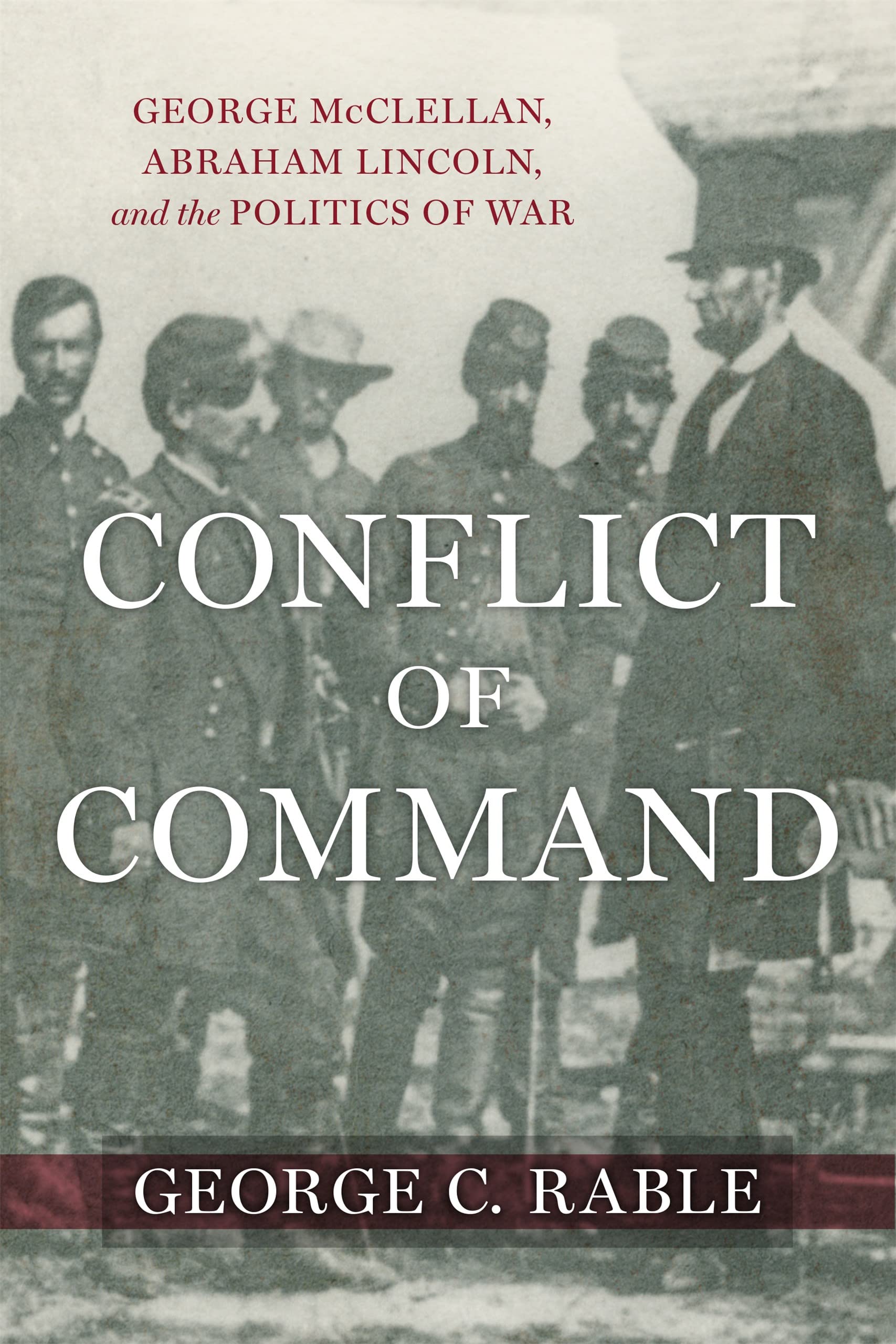
Conflict of Command: George McClellan, Abraham Lincoln, and the Politics of War (Conflicting Worlds: New Dimensions of the American Civil War)
$27.44
by George C. Rable



Winner of the Barondess/Lincoln Award Winner of the Austin Civil War Round Table Book Prize Finalist for the American Battlefield Trust Book Prize The fraught relationship between Abraham Lincoln and George McClellan is well known, so much so that many scholars rarely question the standard narrative casting the two as foils, with the Great Emancipator inevitably coming out on top over his supposedly feckless commander. In Conflict of Command , acclaimed Civil War historian George C. Rable rethinks that stance, providing a new understanding of the interaction between the president and his leading wartime general by reinterpreting the political aspects of their partnership. Rable pays considerable attention to Lincoln’s cabinet, Congress, and newspaper editorials, revealing the role each played in shaping the dealings between the two men. While he surveys McClellan’s military campaigns as commander of the Army of the Potomac, Rable focuses on the political fallout of the fighting rather than the tactical details. This broadly conceived approach highlights the army officers and enlisted men who emerged as citizen-soldiers and political actors. Most accounts of the Lincoln-McClellan feud solely examine one of the two individuals, and the vast majority adopt a steadfast pro-Lincoln position. Taking a more neutral view, Rable deftly shows how the relationship between the two developed in a political context and ultimately failed spectacularly, profoundly altering the course of the Civil War itself. “George C. Rable has tackled one of the most controversial stories of the Civil War as only a master historian can. Sifting through generations of partisan bickering, he offers a crisp, candid view of the Lincoln-McClellan saga that accomplishes something truly remarkable. It proves fair to both men.” -- Zachery A. Fry, author of A Republic in the Ranks: Loyalty and Dissent in the Army of the Potomac “With Conflict of Command: George McClellan, Abraham Lincoln, and the Politics of War , esteemed historian George C. Rable offers a compelling overview of the relationship between Abraham Lincoln and his most difficult general, George B. McClellan. . . . The value of the book is not that it offers new sources, but rather that by framing the story around politics it offers new insights and ways of thinking about this troubled relationship.” -- Journal of Southern History “ Conflict of Command stands out from other works on Lincoln and McClellan's relationship by placing a comprehensive analysis of their interactions in the context of the political and military landscapes of the Civil War era. . . . [It] contributes to Rable's reputation for meticulously researched, thoughtfully analyzed accounts of the Civil War. . . . This nuanced analysis of the intersection of politics and war during one of the most tumultuous periods in American history offers insights into leadership, decision making, and the complex nature of civil-military relations. Through meticulous research and comprehensive analysis, Rable presents a compelling argument that the Lincoln-McClellan dynamic was emblematic of the broad struggles within the Union's war effort, showcasing the difficulties of balancing military objectives and political necessities. -- Journal of American History George C. Rable is professor emeritus of history at the University of Alabama and the author of numerous books on the Civil War, including Damn Yankees! Demonization and Defiance in the Confederate South .