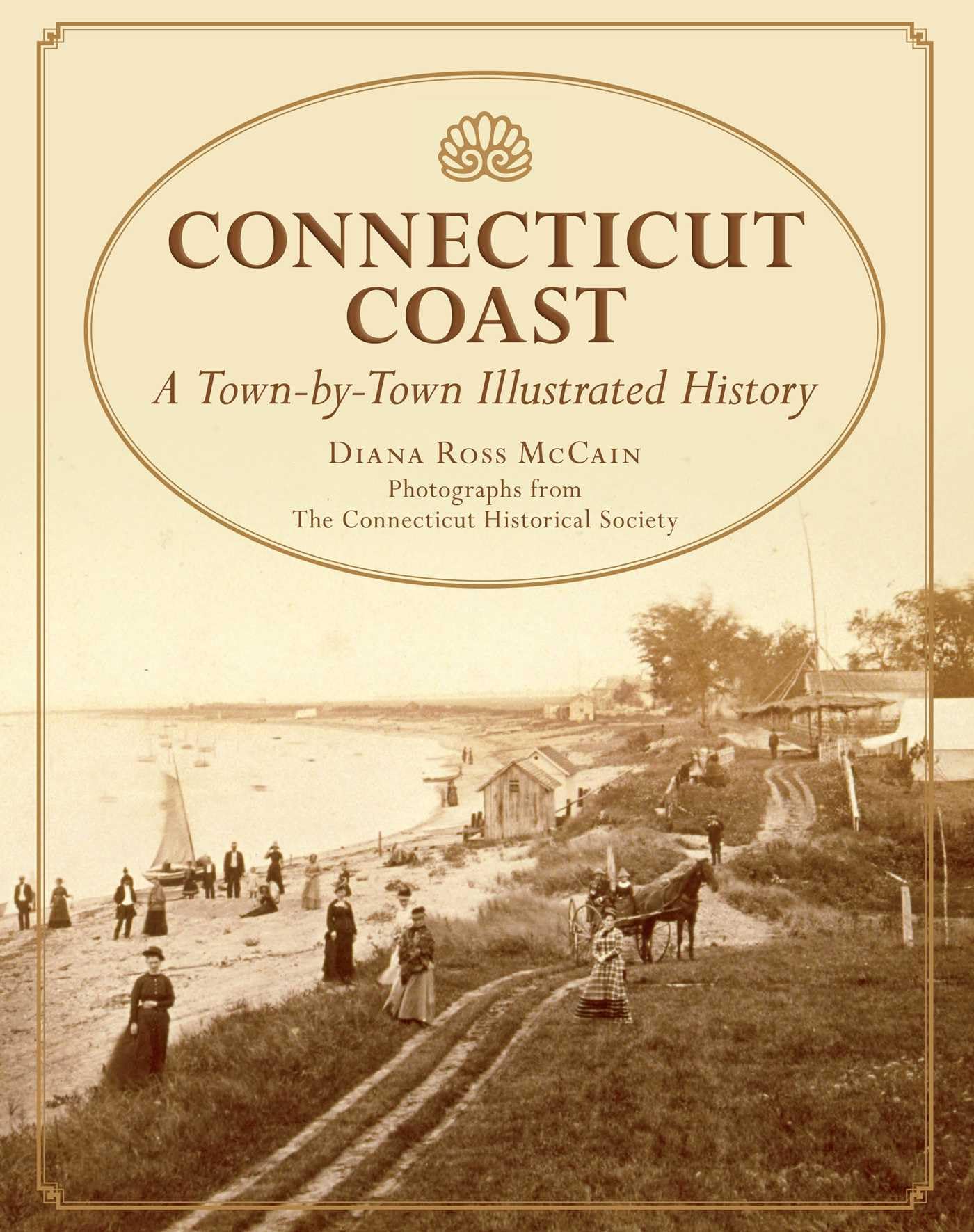



Connecticut Coast is a richly illustrated history of the Nutmeg State's storied shoreline, from New York State to Rhode Island. Researched and written by a longtime expert in Connecticut history, it comprises a brief narrative on each of the twenty-four shoreline communities, accompanied by the area's best historic photography. Sidebars sprinkled throughout present lighthouses, fishing and shellfishing, transportation, storms, and more—from the legendary Savin Rock Amusement Park to stylish Jackie Kennedy christening the USS Lafayette in Groton. Connecticut Coast is a richly illustrated exploration of the vast, varied, and unique heritage of the Connecticut coast. A surf-and-turf sampling of the Nutmeg State's storied shoreline, it covers twenty-four towns from New York State to Rhode Island with a compelling narrative by historian Diana Ross McCain and archival images from the Connecticut Historical Society. These towns have seen changes both transformative and trifling in the 370 years since the first Europeans arrived here. Images of assembly lines and roller coasters, circus elephants and “fat cat” entrepreneurs, battlefields and serene town greens are sure to evoke a kaleidoscope of memories. Also included are features on such shoreline icons as coastal fishing and shellfishing, lighthouses, coastal weather, and more. Diana Ross McCain has written about Connecticut's past for more than twenty-five years and holds bachelor's and master's degrees in history. A frequent contributor to Early American Life and Connecticut magazines, and The Hartford Courant, McCain wrote the award-winning publication To All on Equal Terms, the story of Connecticut's official state heroine, Prudence Crandall. Her most recent book is It Happened in Connecticut . 14. Guilford With more than 450 historic buildings and thousands of acres of pastures, meadows, fields, and forests, Guilford evokes the romantic vision and traditional values of classic New England as few towns can. The town green, surrounded by dozens of structures of varying sizes and ages, is reminiscent of a table around which generations of families have come together. The stately white First Congregational meetinghouse at the head of the green—its steeple rising above all other buildings—is the venerable paterfamilias presiding over the gathering. One of Connecticut's oldest towns, Guilford was established in 1639 by a band of 350 English Puritans under the leadership of the Reverend Henry Whitfield. Its original boundaries included what is today the town of Madison. The Guilford coast's lack of a harbor deep enough to accommodate large sailing vessels prevented it from developing into a major colonial shipping port like New Haven or New London. From the original seed of settlement near the coast subsequent generations pushed inland. Within a century parts of town farthest from the Sound had been settled. Dozens of Guilford men marched off to serve in the war for independence from Great Britain that erupted at Lexington and Concord in 1775. More than two dozen died. On two occasions the fighting came literally to Guilford's doorsteps. In the summer of 1776, the enemy British gained control of Long Island—so close to Guilford that its shore is visible on a clear day. Redcoat raiders came ashore at Sachem's Head on June 17, 1777, but succeeded only in burning down a house and barns before the townspeople forced them to retreat. On June 18, 1781, three British vessels deposited a force of 150 men on Leete's Island. Residents repelled the invaders in a skirmish that left two Guilford men dead. Women on the homefront contributed to the war effort as well. Lyman Beecher, father of Harriet Beecher Stowe, was a boy in North Guilford during the Revolution. He recalled how the women of the household spun flax and wool into yarn from which “they made all sorts of linen work, tablecloths, shirting, sheets, and cloths. If it hadn't been for this household manufactory we never should have succeeded in the Revolution.” The half century following the American Revolution saw a massive exodus from small Connecticut towns of people seeking fresh land and opportunity on far-flung frontiers, including Vermont, New York, and Ohio. Guilford avoided the drastic decline in population experienced by so many communities, although it was reduced in size by nearly half when the eastern portion broke off to become the town of Madison in 1826. Guilford did feel the impact of other changes in the years preceding the Civil War. The controversial crusade to abolish slavery throughout the United States roiled and finally went to the membership of the First Congregational Church. In 1843, 123 members who supported abolition broke away to form a new congregation. The abolitionists built their own house of worship, the Third Congregational church, a short distance away on Park Street. Sixty-two sons of Guilford, some still in their teens, died in the Civil War precipit