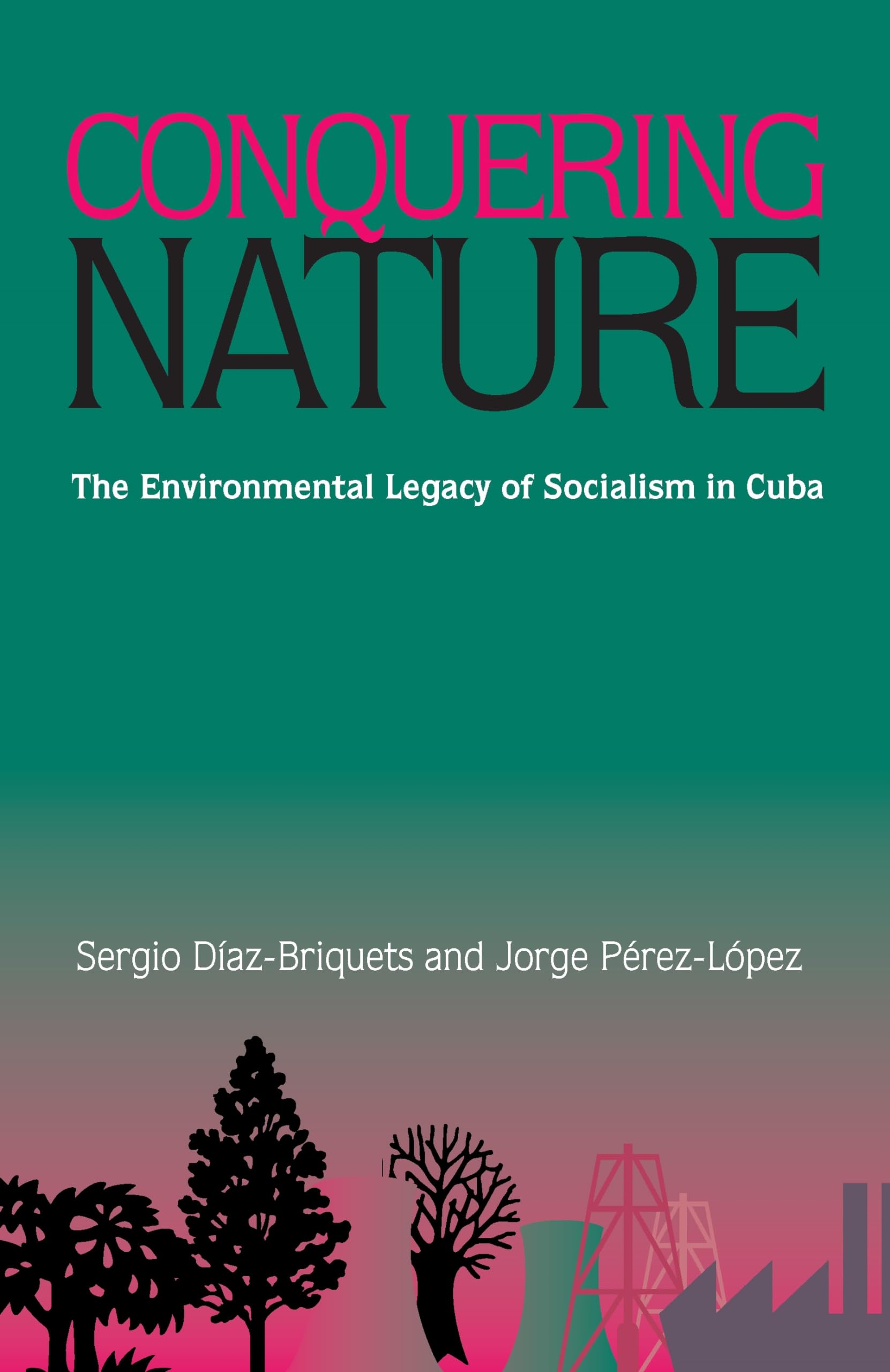
Conquering Nature: The Enviromental Legacy of Socialism in Cuba (Pitt Latin American Series)
$50.00
by Sergio Diaz-Briquets



Conquering Nature provides the only book-length analysis of the environmental situation in Cuba after four decades of socialist rule, based on extensive examination of secondary sources, informed by the study of development and environmental trends in former socialist countries as well as in the developing world. It approaches the issue comprehensively and from interdisciplinary, comparative, and historical perspectives. Based on the Cuban example, D\u00edaz-Briquets and P\u00e9rez-L\u00f3pez challenge the concept that environmental disruption was not supposed to occur under socialism since it was alleged that guided by scientific policies, socialism could only beget environmentally benign economic development. In reality, the socialist environmental record proved to be far different from the utopian view. Between the early 1960s and the late 1980s the environmental situation worsened despite Cuba\u2019s achieving one of the lowest population growth rates in the world and having eliminated extreme living standard differentials in rural areas, two of the primary reasons often blamed for environmental deterioration in developing countries. The government\u2019s approach was to \u201cconquer nature\u201d and under its central planning approach, it did not take local circumstances into consideration. This disregard for the environmental consequences of development projects continues to this day despite official allegations to the contrary—as the country pursues an economic survival strategy based on the crash development of the tourist sector and exploitation of natural resources. An underlying conclusion of the book is that the environmental legacy of socialism will present serious challenges to future Cuban generations. Conquering Nature provides, for the first time, a relevant analysis of socialist environmental policies of a developing country. It will be of interest to students and scholars of Cuba and those interested in environmental issues in developing countries. “Fills an important gap in the growing literature on Latin American environmental history. . . .Thoroughly illustrates the multiple dimensions of environmentalism from inputs to outputs, rural to urban, coasts and in-land waterways, and how development and legal schemes interact with these. In fact, the book is a fine primer on environmental studies and ecological interactions. . . . A welcome, thought-provoking addition to the literature that should cause environmentalists to look more carefully at Cuba.” ―H-Net Reviews “This book is a necessary and timely contribution to our understanding of the challenges that Cuba faces at the turn of the century. It attempts an overview of the environmental problems that have resulted from (or have been worsened by) almost forty years of socialist policies. The book is balanced and avoids excessively ideological positions. It is a remarkable book." ―Héctor Sáez, School for Field Studies, Beverly, Massachusetts, and the Center for Sustainable Development Studies, Costa Rica Conquering Nature provides the only book-length analysis of the environmental situation in Cuba after four decades of socialist rule, based on extensive examination of secondary sources, informed by the study of development and environmental trends in former socialist countries as well as in the developing world. It approaches the issue comprehensively and from interdisciplinary, comparative, and historical perspectives. Based on the Cuban example, D\u00edaz-Briquets and P\u00e9rez-L\u00f3pez challenge the concept that environmental disruption was not supposed to occur under socialism since it was alleged that guided by scientific policies, socialism could only beget environmentally benign economic development. In reality, the socialist environmental record proved to be far different from the utopian view. Between the early 1960s and the late 1980s the environmental situation worsened despite Cuba\u2019s achieving one of the lowest population growth rates in the world and having eliminated extreme living standard differentials in rural areas, two of the primary reasons often blamed for environmental deterioration in developing countries. The government\u2019s approach was to \u201cconquer nature\u201d and under its central planning approach, it did not take local circumstances into consideration. This disregard for the environmental consequences of development projects continues to this day despite official allegations to the contrary—as the country pursues an economic survival strategy based on the crash development of the tourist sector and exploitation of natural resources. An underlying conclusion of the book is that the environmental legacy of socialism will present serious challenges to future Cuban generations. Conquering Nature provides, for the first time, a relevant analysis of socialist environmental policies of a developing country. It will be of interest to students and scholars of Cuba and those inte