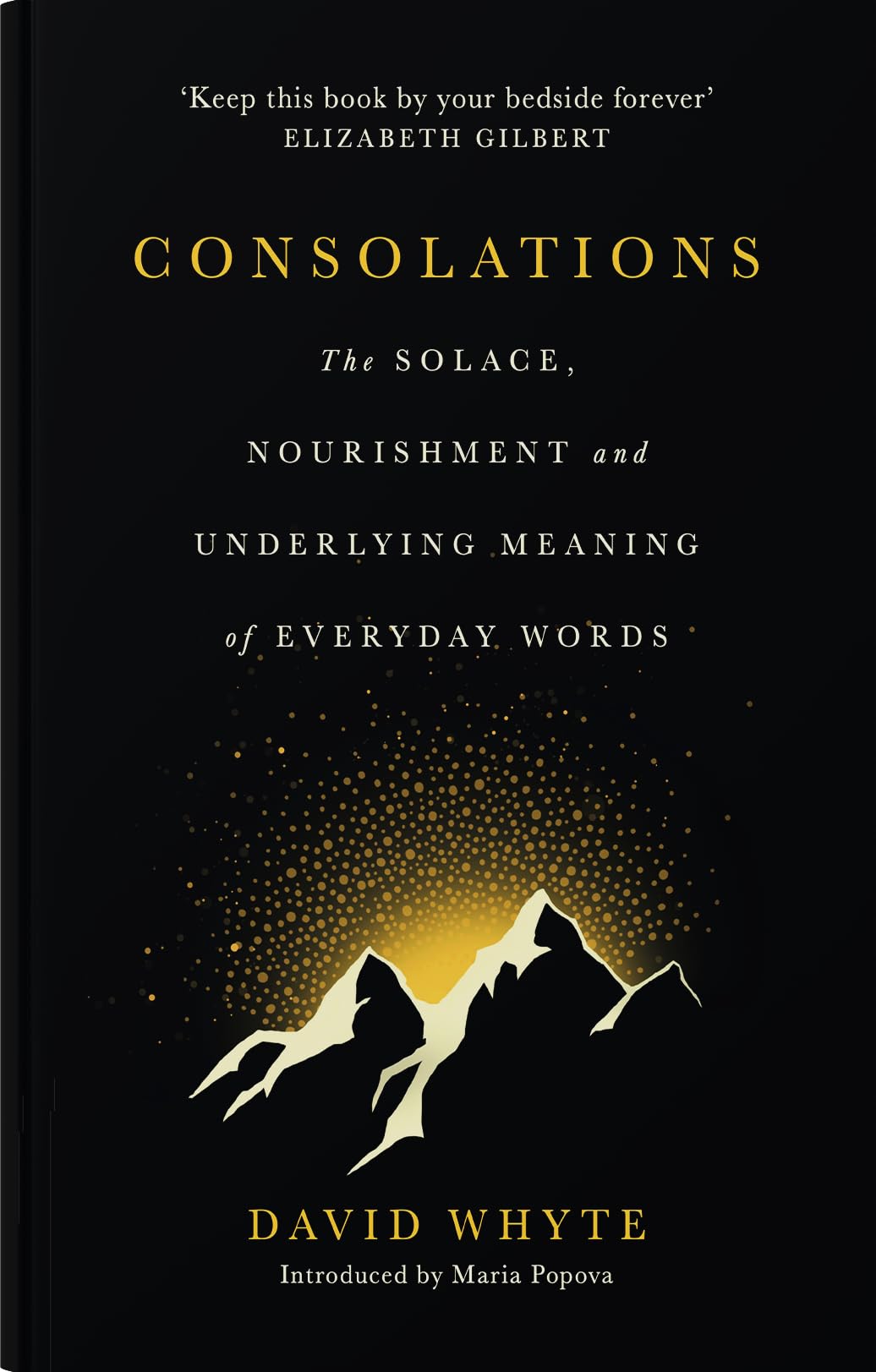
Consolations - The Solace, Nourishment and Underlying Meaning of Everyday Words
$27.00
by David Whyte



With the imagery of a poet and the reflection of a philosopher, David Whyte turns his attention to 52 ordinary words, each its own particular doorway into the underlying currents of human life. Beginning with Alone and closing with Work, each chapter is a meditation on meaning and context, an invitation to shift and broaden our perspectives on the inevitable vicissitudes of life: pain and joy, honesty and anger, confession and vulnerability, the experience of feeling besieged and the desire to run away from it all. Through this lens, procrastination may be a necessary ripening; hiding an act of freedom; and shyness the appropriate confusion and helplessness that accompanies the first stage of revelation. Consolations invites readers into a poetic and thoughtful consideration of words whose meaning and interpretation influence the paths we choose and the way we traverse them throughout our lives. We think we know what we are talking about, the meaning of things, the basic rules of language, until we read David Whyte's Consolations; where we are forced to reassess everything and begin again. Such an essential and beautiful book. --Nick Cave Beautiful, elegant, tiny essays on the consoling power of words, written by one of my favorite living poets. I think Whyte is as much a mystic as an author, and this book proves it. Beautiful, soulful, thoughtful. --Elizabeth Gilbert Consolations remains one of the most luminous books I've ever encountered. --Maria Popova David Whyte grew up with a strong, imaginative influence from his Irish mother among the hills and valleys of his father's Yorkshire. He now makes his home in the Pacific Northwest of the United States.The author of seven books of poetry and four books of prose, David Whyte holds a degree in Marine Zoology and has trav- eled extensively, including living and working as a naturalist guide in the Galapagos Islands and leading anthropological and natural history expeditions in the Andes, Amazon and Himalaya. He brings this wealth of experience to his poetry, lectures and workshops.His life as a poet has created a readership and listenership in three normally mutually exclusive areas: the literate world of readings that most poets inhabit, the psychological and theological worlds of philosophical enquiry and the world of vocation, work and organizational leadership.An Associate Fellow at Said Business School at the University of Oxford, he is one of the few poets to take his perspectives on creativity into the field of organizational development, where he works with many Europen, American and international companies. In spring 2008 he was awarded an honorary doctorate from Neumann College, Pennsylvania.In organizational settings, using poetry and thoughtful commentary, he illustrates how we can foster qualities of courage and engagement; qualities needed if we are to respond to today's call for increased creativity and adaptability in the workplace. He brings a unique and important contribution to our understanding of the nature of individual and organizational change, particularly through his unique perspectives on Conversational Leadership.