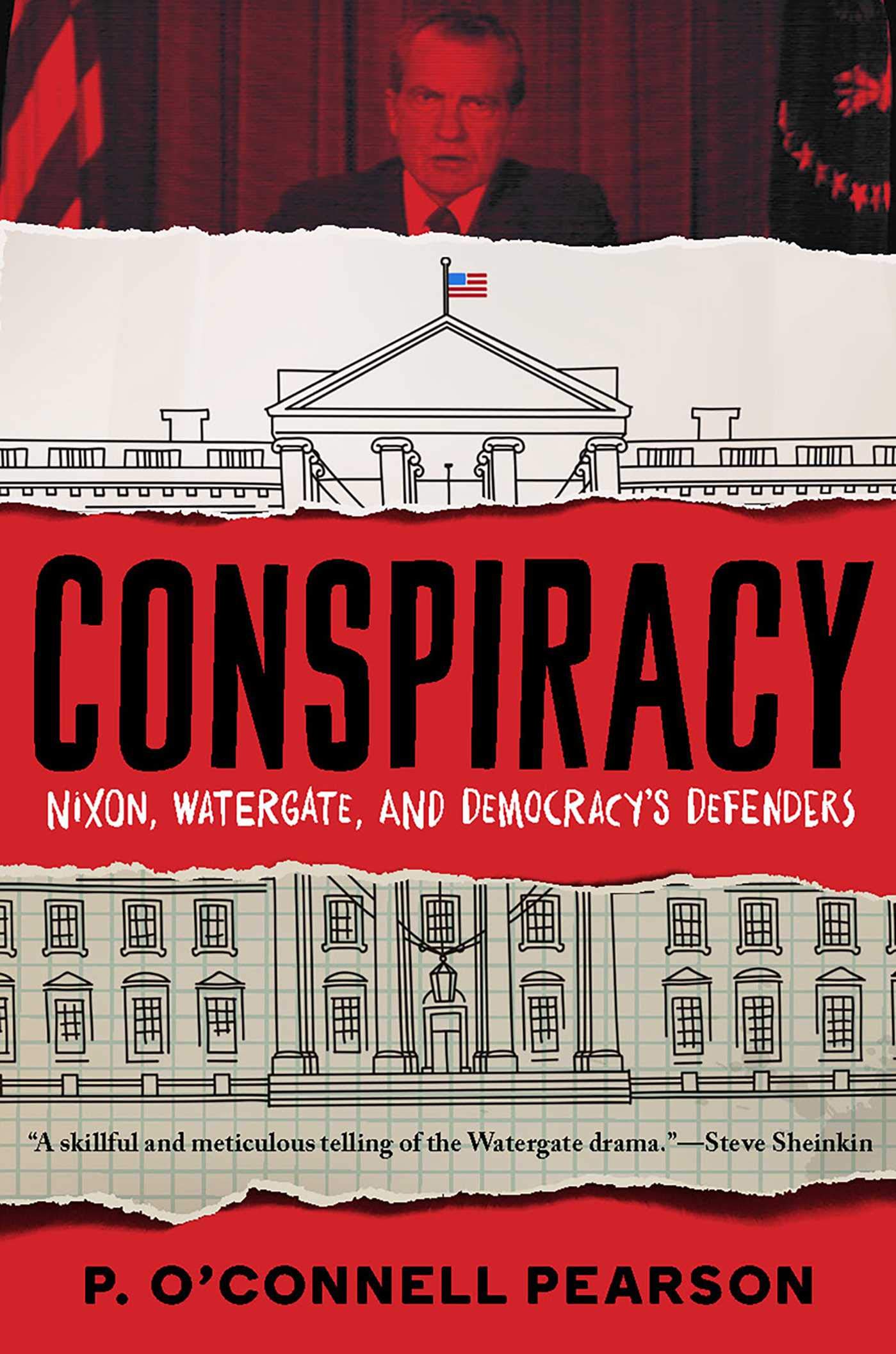



The “indisputably timely” ( Kirkus Reviews ) story of President Richard Nixon and those who fought against him comes to life in this insightful and accessible nonfiction middle grade book from the author of Fly Girls and Fighting for the Forest . The Watergate scandal created one of the greatest constitutional crises in American history. When the House Judiciary Committee approved three articles of impeachment against President Richard Nixon and the Supreme Court ruled that he had to turn over to Congress the tapes that proved the claims against him, he realized his support in the Senate had collapsed. He resigned rather than face almost certain conviction on abuse of power and obstruction of justice. We know the villain’s story well, but what about the heroes? When the country’s own leader turned his back on the Constitution, who was there to defend it? Conspiracy is about the reporters, prosecutors, judges, justices, members of Congress, and members of the public who supported and defended the Constitution when it needed it most. "An indisputably timely account of the last time an American president thought the Constitution didn’t apply to him. Smooth, clear writing makes this an appealing and accessible read. A cautionary episode from a half-century ago that ends up sounding eerily relevant." -- Kirkus Reviews ― August 15, 2020 P. O’Connell Pearson has always taught history—first in the high school classroom and then as a curriculum writer and editor across grade levels. Ready to share her enthusiasm for stories of the past in a new way, she earned an MFA in writing for young people from Lesley University and now writes narrative nonfiction for ages ten and up. Her books have received recognition from Bank Street, NCSS, the New-York Historical Society, Arizona Library Association, and more. When Pearson is not writing about history, she can often be found talking about history as a volunteer with the National Park Service in Washington, DC. Chapter 1: Landslide CHAPTER 1 Landslide NOVEMBER 7, 1972 Approval. Richard Nixon had spent his entire life working for approval. Now, as the earliest vote counts came in on election night, 1972, it became clear that he’d finally gotten what he wanted. Not simply a second term as president. No. Nixon had won his first term as president in 1968 with a tiny majority and decided right then that when he ran for a second term, he’d win big, no matter what. He wanted real recognition. He wanted to be an unquestioned, undeniable, undoubted winner. And he’d done it. Richard Milhous Nixon had won a majority of votes in forty-nine of the fifty states. Nixon, a Republican, had defeated his Democratic opponent by nearly eighteen million votes in one of the most lopsided wins in presidential history. Naturally, Nixon was pleased with the results. Voters had finally recognized his worth. As he saw it, he now had a mandate , a kind of authority to act boldly, and he planned to use it. But while Republicans around the country cheered the victory, Nixon made just one quick visit to a nearby celebration and a short television appearance to thank his supporters. Then he huddled with two close aides in a room on the second floor of the White House. They talked long into the night, the president serious and unsmiling. Electoral College totals by state, 1972 presidential election Nixon wrote later that he didn’t really know why he was in such a gloomy mood that night. But he thought perhaps he was worried about Vietnam, or perhaps about the upcoming trial in the scandal everyone was calling Watergate .1 Worry about the war in Vietnam made sense. Nixon had campaigned for his first term in 1968 on a “secret plan” to end the long, long war. He’d reduced the number of Americans fighting there, but the war still wasn’t over and it grew more unpopular by the minute. Nixon believed that the presidents who led the country into the war had made a real mess of things, a mess he was stuck trying to clean up. And it got in the way of everything else he wanted to do as president. In 1972, he campaigned again on ending the war. The situation was complicated, but Nixon was determined to finally achieve peace. Watergate was another matter. In June, five months before the election, police had interrupted a middle-of-the-night break-in at the Watergate office and apartment complex a mile west of the White House. They arrested the burglars on the spot and soon discovered that the men were somehow connected to Nixon’s reelection committee. The story hit the newspapers the next morning, and it could have been very awkward for the president if people believed his campaign staff had done something illegal to try to win votes. But Nixon’s press secretary—the White House aide who talks to reporters—went on television and described the crime as a “third-rate burglary” that had nothing to do with the president or any of his aides. Most news outlets soon moved on to other stories, and the