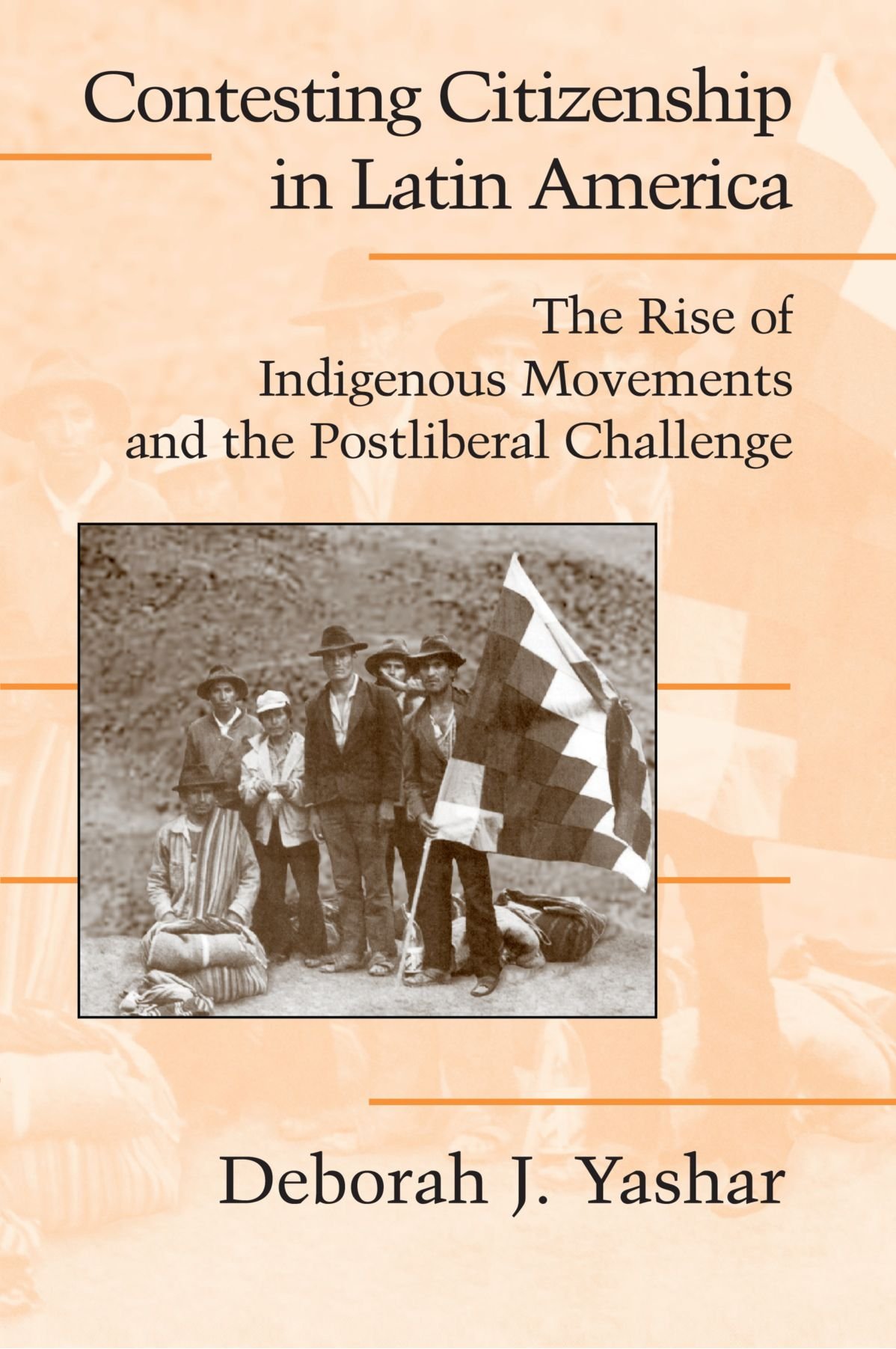
Contesting Citizenship in Latin America: The Rise of Indigenous Movements and the Postliberal Challenge (Cambridge Studies in Contentious Politics)
$24.39
by Deborah J. Yashar



Deborah Yashar analyzes the contemporary and uneven emergence of Latin American indigenous movements--addressing both why indigenous identities have become politically salient in the contemporary period and why they have translated into significant political organizations in some places and not others. She argues that ethnic politics can best be explained through a comparative historical approach that analyzes three factors: changing citizenship regimes, social networks, and political associational space--providing insight into the fragility and unevenness of Latin America's third wave democracies. "...a rigorous theoretical framework to a study of democratic issues related to ethnic movements...the book...will inspire students in international relations, political science, indigenous studies and sociology of development." Political Studies Review "well-researched" American Journal of Sociology, William I. Robinson "This is an excellent book and a worthy addition to the series of volumes on collective violence and political movements in the Cambridge Studies in Contentious Politics." Perspectives on Politics, Waltraud Queiser Morales, University of Central Florida This book studies the indigenous political movements of Latin America in the twentieth century. Deborah J. Yashar is Associate Professor of Politics and International Affairs at Princeton University. She is the author of Demanding Democracy: Reform and Reaction in Costa Rica and Guatemala, 1870s-1950s (Stanford University Press) as well as articles and chapters on democratization, ethnic politics, collective action, and globalization. Used Book in Good Condition