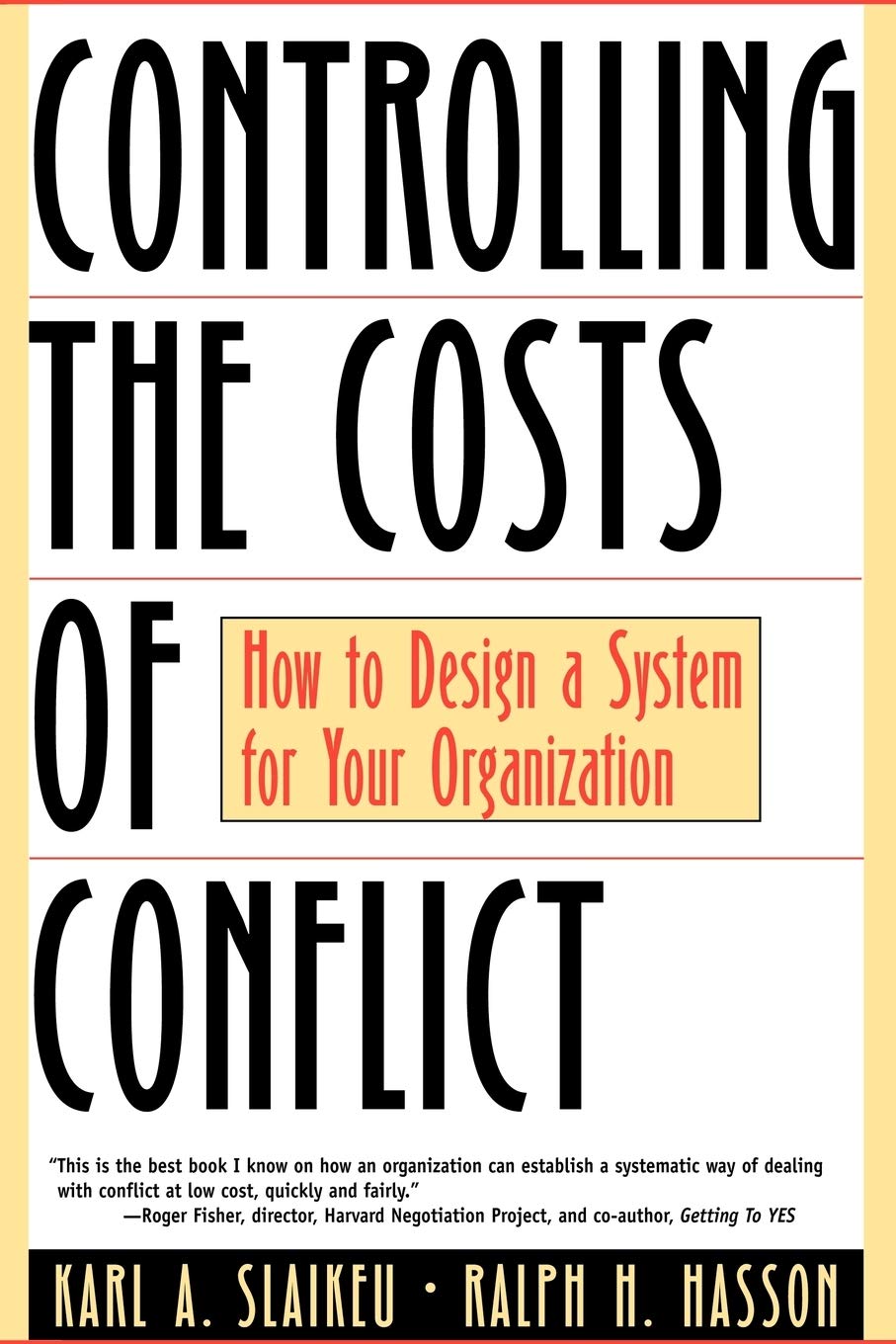
Controlling the Costs of Conflict: How to Design a System for Your Organization (Jossey-Bass Business & Management)
$13.33
by Karl A. Slaikeu



Written for non-experts in jargon-free language, this work shows how to create systems within organizations that preempt the monetary, strategic, and emotional costs associated with on-the-job conflict. Its clear and simple approach translates advanced concepts into practical how-tos and provides readers with four guiding principles they can follow to create conflict control systems of their own. Amply illustrated with real-world examples, it details the policies, procedures, and practices that make for successful control systems and tells precisely how to implement them. "Slaikeu and Hasson have outlined a thoughtful and accessibleconflict resolution blueprint for those companies that seek to beamong the employers of choice in the next century." --Wilbur Hicks,ombudsman, Shell Oil Company "Slaikeu and Hasson, who are practitioners as well as researchers,are for real. This systems-design book--finally--is about the nutsand bolts of what really has to be in a system. The checklists andbest-practice summaries will be helpful to all managers, and toeveryong who thinks about organizations in a systematic way."--Mary Rowe, MIT ombudsperson, and adjunct professor of negotiationand conflict management, MIT Sloan School of Management "Anyone interested in better understanding how to control the costsof conflict will find this book of significant value." --BenjaminW. Heineman Jr., senior vice president, general counsel andsecretary, General Electric In an increasingly collaborative business environment, continued success often depAnds on the ability of individuals, teams, and organizations with mutual interests to work smoothly together. But as any manager knows, things do not always go as planned.When the inevitable conflict arises, many companies resort to power plays, rush to litigation, or simply choose to ignore the problem-options that can cost a company dearly in more ways than one. Those costs can often be avoided, however, with the establishment of systems that promote collaboration and stop disagreements from becoming expensive disputes. Here, two experts offer four guiding principles for doing just that.Written for non-experts in jargon-free language, Controlling the Costs of Conflict shows readers how to build the kinds of policies, procedures, and practices that can cut up to 80 percent of related legal expenses, slow turnover, strengthen long-term business relationships, reduce stress, and promote the success of an organization's mission. Its clear and simple approach translates advanced concepts into practical how-tos, illustrating key points with real-world examples.From choosing the best resolution option to early intervention to fostering collaborative strength, the guidelines found here apply equally to businesses, public agencies, religious institutions, schools, neighborhood associations, even nations. These principles will help organizations diagnose the weaknesses in their existing systems or build from scratch new systems that have the power to reduce the monetary, strategic, and emotional costs of conflict. In an increasingly collaborative business environment, continued success often depends on the ability of individuals, teams, and organizations with mutual interests to work smoothly together. But as any manager knows, things do not always go as planned. When the inevitable conflict arises, many companies resort to power plays, rush to litigation, or simply choose to ignore the problem-options that can cost a company dearly in more ways than one. Those costs can often be avoided, however, with the establishment of systems that promote collaboration and stop disagreements from becoming expensive disputes. Here, two experts offer four guiding principles for doing just that. Written for non-experts in jargon-free language, Controlling the Costs of Conflict shows readers how to build the kinds of policies, procedures, and practices that can cut up to 80 percent of related legal expenses, slow turnover, strengthen long-term business relationships, reduce stress, and promote the success of an organization's mission. Its clear and simple approach translates advanced concepts into practical how-tos, illustrating key points with real-world examples. From choosing the best resolution option to early intervention to fostering collaborative strength, the guidelines found here apply equally to businesses, public agencies, religious institutions, schools, neighborhood associations, even nations. These principles will help organizations diagnose the weaknesses in their existing systems or build from scratch new systems that have the power to reduce the monetary, strategic, and emotional costs of conflict. KARL A. SLAIKEU is president of Chorda Conflict Management, a consulting and training company that specializes in conflict management systems. He has taught in the psychology departments of the University of South Carolina at Columbia and the University of Texas at Austin, and is the author of