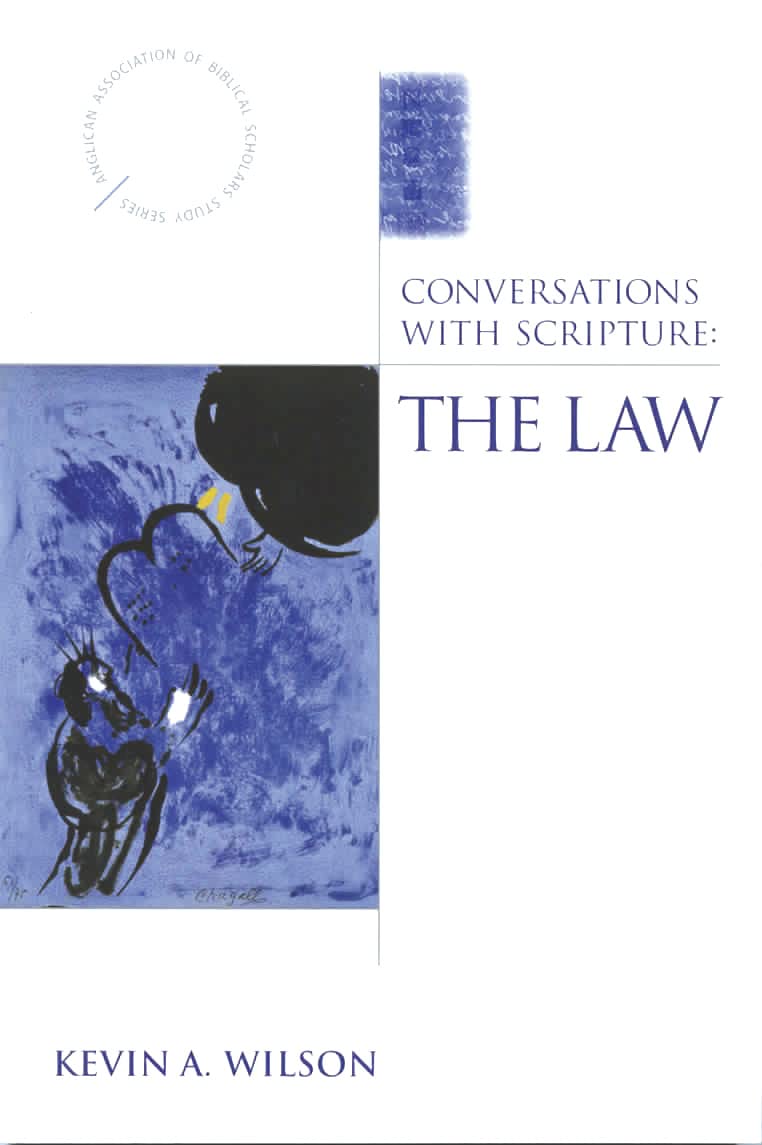
Conversations with Scripture: The Law (Anglican Association of Biblical Scholars)
$21.95
by Kevin A. Wilson



Although the Ten Commandments has been the center of much recent controversy in American politics, scripture contains many laws about which Christians are perplexed. If the Bible contains laws, shouldn't those laws be followed? What does the law that prohibits reaping a harvest to the very edges of your field mean in modern times? Or, what about God's prohibition, in Leviticus, not to round off the hair on your temples or to mar the edges of your beard? The Decalogue and the Holiness Code in Leviticus contain guidelines to ethical behavior that originally helped to shape a covenant community and still have meaning for us today. In the newest addition to the Conversations with Scripture series, Kevin Wilson offers fresh insights into the meaning of the Law for today. In chapters that explore the Law in Exodus and Leviticus, Wilson examines the historical and cultural contexts of these legal codes. He discusses rituals such as sacrifice and rituals related to purification from defilement. Wilson demonstrates the ways in which the temple priests used many of these laws as their own code of purity and their own method of enforcing purity in the covenant community. As with other books in the series, Wilson's book features definitions and sidebars in each chapter on particular topics, as well as study questions. Kevin A. Wilson is Professor of Biblical Studies at Lithuania Christian College. He has taught Old Testament at Virginia Theological Seminary and biblical studies at Wartburg College. He is frequently a guest speaker in parishes in the Episcopal Dioceses of Maryland and Washington, D.C., and he serves on the executive board of the Anglican Association of Biblical Scholars. CONVERSATIONS WITH SCRIPTURE: THE LAW By KEVIN A. WILSON Church Publishing Incorporated Copyright © 2006 Kevin A. Wilson All right reserved. ISBN: 978-0-8192-2147-6 Contents Chapter One The Ten Commandments The Ten Commandments are a part of our Judeo-Christian heritage. Some even go so far as to claim that our civil laws are derived from the Ten Commandments. Such a claim is questionable, however. A quick glance at the Decalogue demonstrates this. Out of the ten laws, only three are reflected in modern law: the prohibitions against murder, theft, and the bearing of false witness in court. The other seven are not a part of our laws. In place of the first commandment to worship only God, the United States and many other countries have laws that guarantee the right to worship any god or no god at all. These same laws also prohibit laws against idols. While blue laws used to prevent business from operating on Sunday, most places have taken these laws off the books, and there is now no connection between the civil law and the commandment to honor the Sabbath. Dishonoring one's father and mother isn't a crime, and while adultery may be grounds for divorce, it is not an arrestable offense in most places. And as for coveting, most advertising is geared toward getting us to covet the goods the advertisers are selling, and there is certainly no law against it. The Centrality of the Ten Commandments While the Ten Commandments have little to do with our secular law, it's impossible to overstate their centrality to our Christian moral systems. Most people who grow up in the church memorize these laws at one time or another, and even those who enter the church as adults are generally familiar with their content. Many churches even display the Ten Commandments in their sanctuaries and Sunday school classrooms. With the possible exception of some of the psalms and a few of the stories, the Ten Commandments are probably one of the most familiar parts of the Old Testament. This centrality is not accidental. It's rooted in the Bible itself, where the Ten Commandments are accorded a special status among the laws of the Torah. This is clear from the two passages that preserve the Decalogue, Exod 20:117 and Deut 5:621. In Exodus 20, God has delivered the people from Egypt through the exodus and they have journeyed to Mount Sinai, where Moses tells them to prepare themselves for God's appearance. During the theophany, God delivers the Ten Commandments directly to the people. Having heard God's voice, however, the people fear that they will die, and they ask Moses to act as an intermediary: "You speak to us, and we will listen; but do not let God speak to us, or we will die" (Exod 20:19). From that point on, God speaks the law to Moses, who relays it to the people. The direct delivery of the Ten Commandments, combined with their position as the first laws given to the people, highlights the centrality of these laws to the ancient Israelites. Deuteronomy also reinforces this impression through its placement of the Decalogue. Deuteronomy is set up as an address by Moses to the people of Israel as they prepare to enter Canaan. The book begins with a series of instructive sermons by Moses in chapters 111 that retell