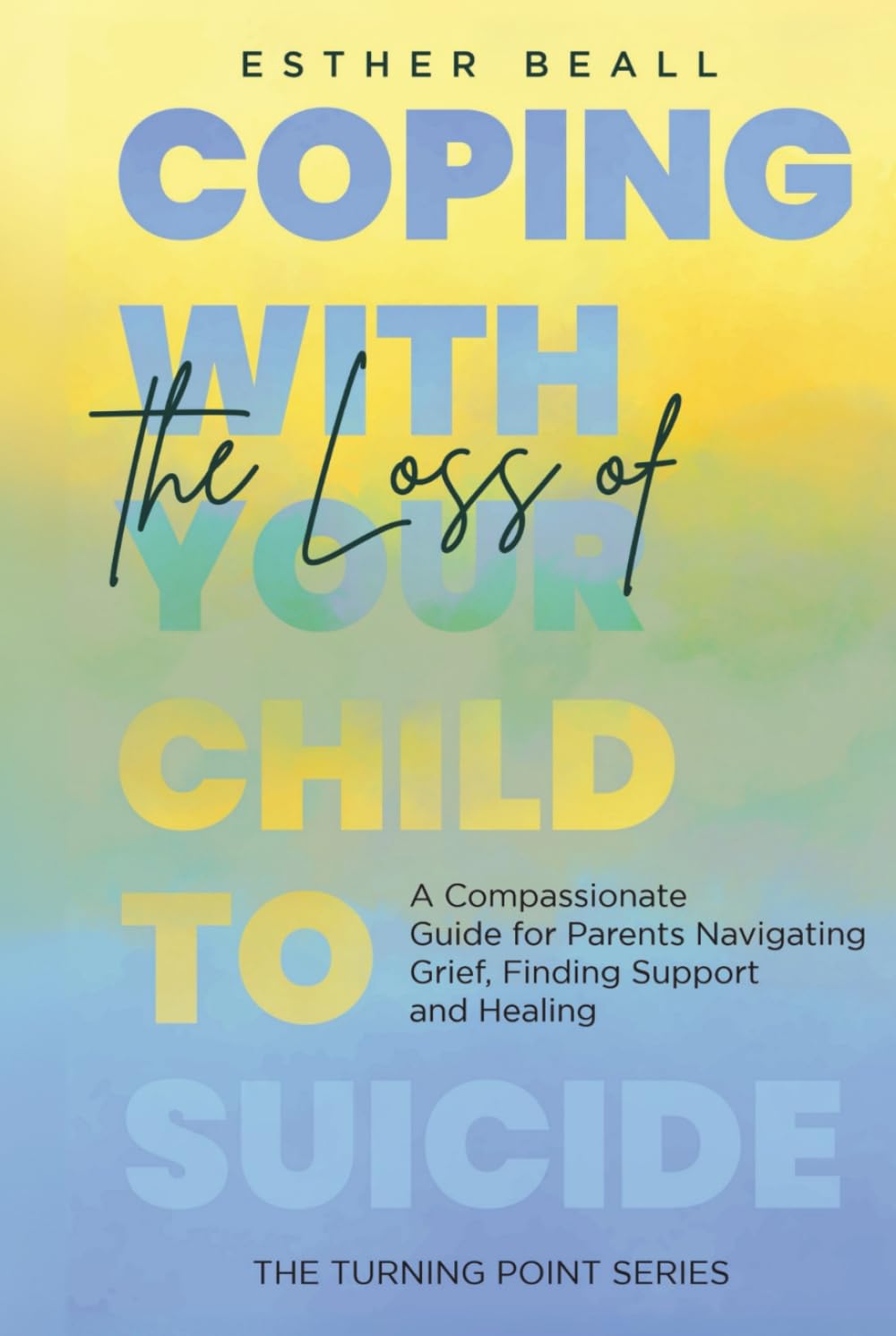
Coping With the Loss of Your Child to Suicide: A Compassionate Guide for Parents Navigating Grief, Finding Support and Healing (The Turning Point
$14.99
by Blik Books



Coping with the sudden loss of a child. When the Unthinkable Happens, What Do You Do With the Silence That Follows? The house is still, yet everything aches. You might find yourself staring at your child’s empty chair, the last message on their phone, or a door that never opens again. How do you survive something that breaks you in ways no one can see? How do you keep breathing when every breath feels like a betrayal? How can anyone navigate life after a child’s suicide? Coping With the Loss of Your Child to Suicide is written for parents facing this devastating reality. It doesn’t offer false comfort or easy answers—but it does offer presence, understanding, and steps to help you hold on when everything feels lost. Written by Esther Beall, a grief counselor who's supported many parents through child suicide loss, this book brings together compassionate guidance, lived experience, and clinical insight. Throughout the pages, Esther shares the voices of parents she’s walked beside—real stories, honest questions, and quiet revelations from those living through the unimaginable. This guide gives voice to the thoughts and questions you may be too tired to ask: Why didn’t I see the signs? How do I face the people who don’t know what to say? Will I ever feel like myself again? Inside, you’ll find a guide to: ● Understanding grief: What suicide loss does to a parent’s mind and body ● Facing the silence: Stigma, guilt, and surviving conversations that hurt ● Getting support: What to ask, where to turn, and how to get through a day ● Helping your family: Siblings, fathers, and the space grief takes up at home ● Daily life after loss: Routines, anniversaries, decisions, and rest ● Honoring their memory: Meaningful ways to carry your child forward ● Advocacy and awareness: How some parents turn pain into purpose ● Bonus resources: Support groups, books, therapy, media, and memorial ideas “Losing a child to suicide is an unimaginable tragedy—one that ripples far beyond the immediate family. Our research shows that each suicide deeply affects at least 135 people. Grief after suicide is often filled with guilt, confusion, and silence. This book breaks that silence. It offers parents a compassionate, honest space to process their loss and begin healing. I’m grateful for resources like this that remind survivors they are not alone.” –Dr. Julie Cerel, Clinical Psychologist, Past President of the American Association of Suicidology This book isn't a cure, but a companion in the loneliest part of loss. You're not alone. And even though it may not feel like it now, your pain deserves space and support.