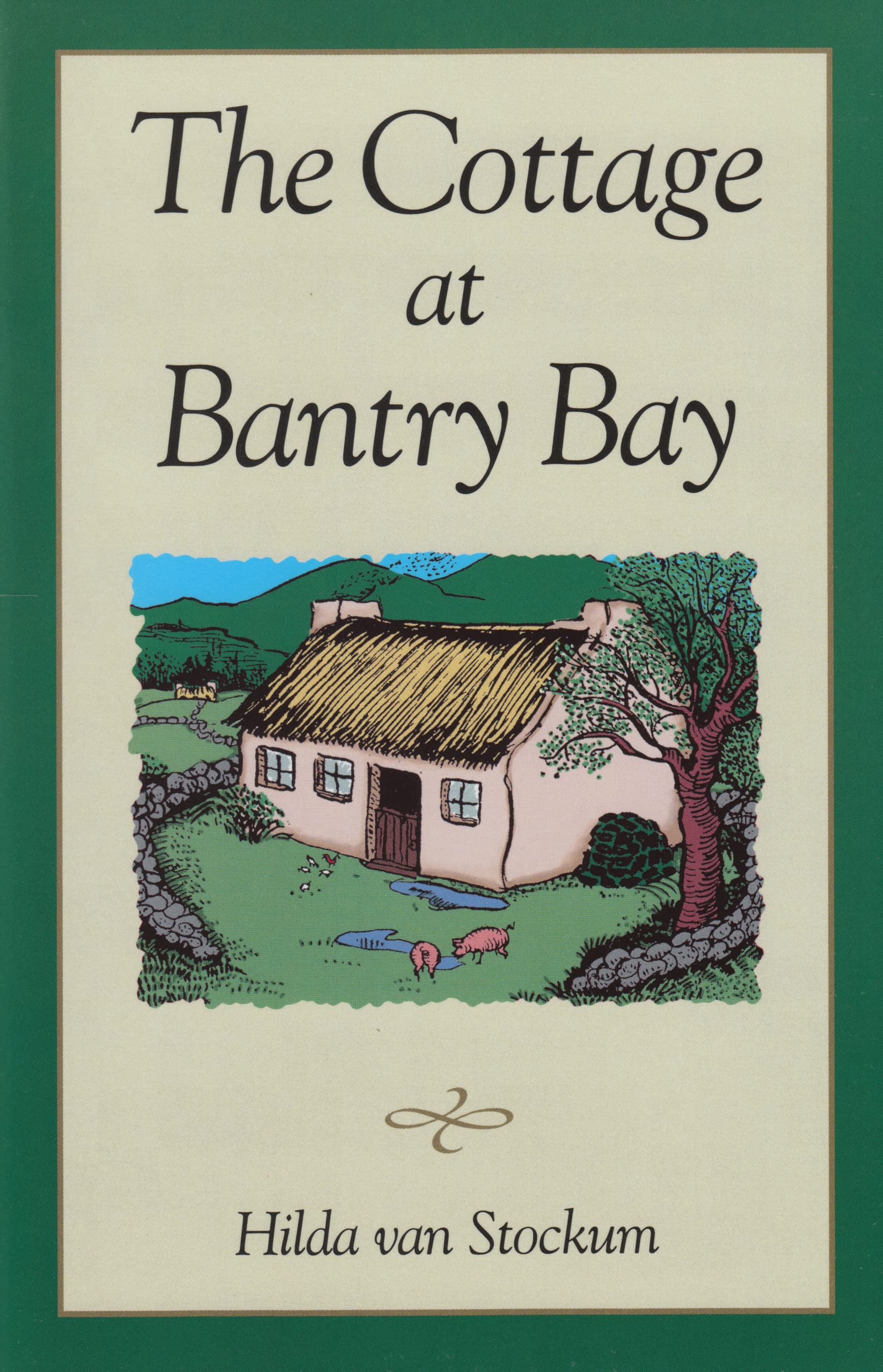



This book, written in 1938, offers a vivid picture of an Ireland that has all but disappeared. The O'Sullivan family invite the reader to share their many homey adventures. Michael and Brigid brave the wilds and gypsies on an errand for their injured father and come home with a new friend; twins Liam and Francie keep everyone hopping; Mother and Father draw the family together with story-telling, warmth and humor. Then Michael and Brigid find a treasure which changes the course of things for all. Ireland, 1930's RL4.9 Of read-aloud interest ages 6-up Hilda van Stockum (1908-2006), wife of E.R. Marlin and mother of six children, wrote and illustrated nearly 20 books for children between the years 1934 and 1976. Born in Holland of Dutch and Irish heritage she met her American husband in Ireland at the outset of her portrait painting career. After her marriage she put her training in art to very good use in her books for children. Her works reflect the various countries and cultures of which she has been a part. For instance, her book The Winged Watchman remains a stirring tribute to the courage of her countrymen during World War II. BRIGID sat in the corner of the big kitchen, trying to put a patch in one of Liam’s breeches. She had to help her mother as much as she could, for Mrs. O’Sullivan had her hands full with the washing and cleaning, and the feeding of the men folk, not forgetting the chickens and pigs and the cabbage patch. Father was out all the time in wind and weather; he did the rough work, the haying and the plowing, the fishing and the cutting of turf. There was little he could not do, from mending Mother’s pots and pans and broken furniture to slaughtering pigs and playing the pipes. But he would leave odds and ends scattered about the place and Mother was forever tidying after him. Brigid sighed. She had no liking for needlework; she would rather have been a big boy like Michael, able to help his father shoot rabbits. “Ow!” she cried as the needle stuck in her thumb and the blood pearled up like a round, red jewel. Brigid sucked the sore spot and watched Mother, who was putting plates on the scrubbed deal table for tea. It would soon be time for Father to come home, and then she could stop sewing. The black kettle, hung on the chain over the fire, sang softly as Mother moved about, cutting the bread and putting scant butter on each slice. Then she kneaded something in a bowl and flattened it out on the table, fashioning nice round slabs. “Oh, is it potato cakes you’re making, Mother?” cried Brigid, sitting straight with sudden interest. Mother smiled. “It is so bad a day, there was need for something to fill ye all,” she said. Indeed it was bad weather. The rain had been beating against the windowpanes all day long, and dark clouds chased over the mountain tops. Mother put the cakes into a skillet and crouched in front of the fire, turning them quickly with a fork. A delicious smell of fried butter filled the kitchen. Suddenly Mother stopped and turned around. “I haven’t heard the twins this long time,” she said. “Do you know where they are?” Brigid gladly put down the breeches and jumped up. “They’re sure to be out in the rain,” she said. “Shall I fetch them in?” “Do so. Francie’s so delicate he might catch his death of cold.” Brigid threw a shawl over her head and slipped out of the back door. She looked all over the yard, the mud squeezing between her bare toes, and called: “Francie! Liam!” but there was no answer. The chickens left their shelter and ran to her, hoping with greedy little eyes that she would throw them some food. But she was intent on finding the boys and called again, cupping her hands around her mouth: “Francie and Liam!” The blue Kerry mountains, looming behind the green fields, threw the sound back at her; still there were no answering shouts from the twins. She went around the whitewashed cottage and peeped down the road. The cottage stood halfway up a hill; below she could see several thatched roofs, with turf smoke curling from the chimneys. Through the trees there were silver glimpses of Bantry Bay. But it was not at the scenery Brigid gazed; there was something else to attract her attention. For, in the middle of the road, where horses’ hoofs had pawed a groove which the rain was transforming into a river, two little boys stood ankle deep in the water, spattered with mud from grimy legs to sopping hair. They were scooping up the dirt with some old battered cans, and they hailed her gladly. “Come and see, Biddy. Come and see!” cried Francie, dancing up and down in his excitement. “We’ve built a bridge that’ll keep the enemy out of the country entirely. Liam is the Sassenach and I’m a Sinn Feiner. When he comes with his men I’ll knock them all into the river. . . .” He brandished a stick. Liam seemed less happy. “I’m no Sassenach,” he kept repeating. “I’m a patriot.” But Francie would not listen. “Come and see, Biddy,” he repeated. “It’s the grandest bridge ever