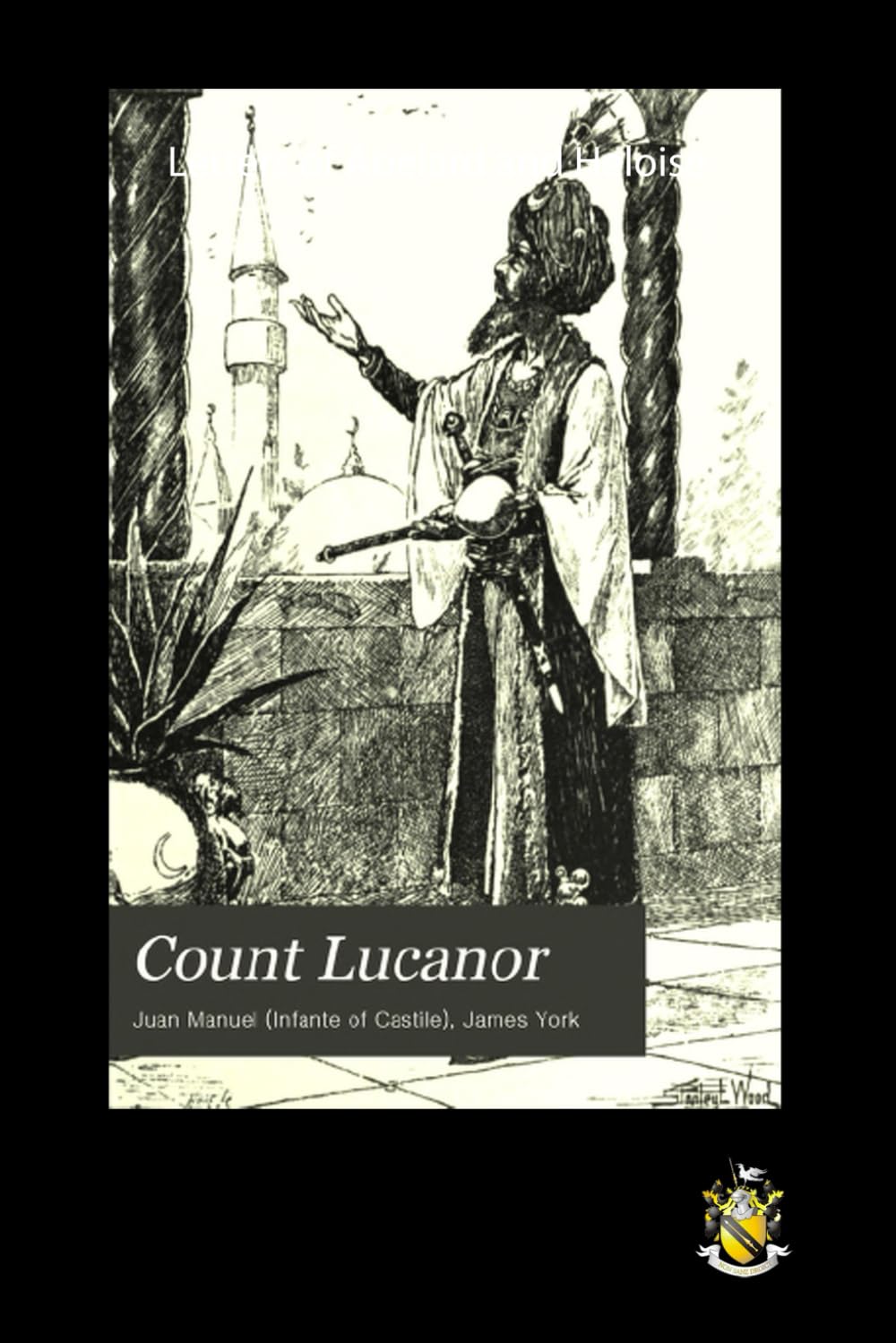
Count Lucanor: The most important book of Medieval tales in Spain
$25.95
by Don Juan Manuel



Count Lucanor is a masterpiece of Medieval Literature and the most important book of tales ever written in Spain. A piece of art, translated into English by James Yotk. It was called The Tales of the Spanish Boccaccio Count Lucanor or the Fifty Pleasant Stories of Patronio the first time it was published in English Language back in 1888. Don Juan Manuel's Tales of Count Lucanor , in Spanish Libro de los ejemplos del conde Lucanor y de Patronio ( Book of the Examples of Count Lucanor and of Patronio ), also commonly known as El Conde Lucanor, Libro de Patronio , or Libro de los ejemplos (original Old Castilian: Libro de los enxiemplos del Conde Lucanor et de Patronio ), is one of the earliest works of prose in Castilian Spanish. It was first written in 1335. The book is divided into four parts. The first and most well-known part is a series of 51 short stories (some no more than a page or two) drawn from various sources, such as Aesop and other classical writers, and Arabic folktales. Tales of Count Lucanor was first printed in 1575 when it was published at Seville under the auspices of Argote de Molina. It was again printed at Madrid in 1642, after which it lay forgotten for nearly two centuries. Many of the stories written in the book are the first examples written in a modern European language of various stories, which many other writers would use in the succeeding centuries. Many of the stories he included were themselves derived from other stories, coming from western and Arab sources. Shakespeare's The Taming of the Shrew has the basic elements of Tale 35, "What Happened to a Young Man Who Married a Strong and Ill-tempered Woman". Tale 32, "What Happened to the King and the Tricksters Who Made Cloth" tells the story that Hans Christian Andersen made popular as The Emperor's New Clothes . Story 7, "What Happened to a Woman Named Truhana", a version of Aesop's The Milkmaid and Her Pail , was claimed by Max Müller to originate in the Hindu cycle Panchatantra . Tale 2, "What happened to a good Man and his Son, leading a beast to market," is the familiar fable The miller, his son and the donkey. In 2016, Baroque Decay released a game under the name "The Count Lucanor". As well as some protagonists' names, certain events from the books inspired past events in the game.