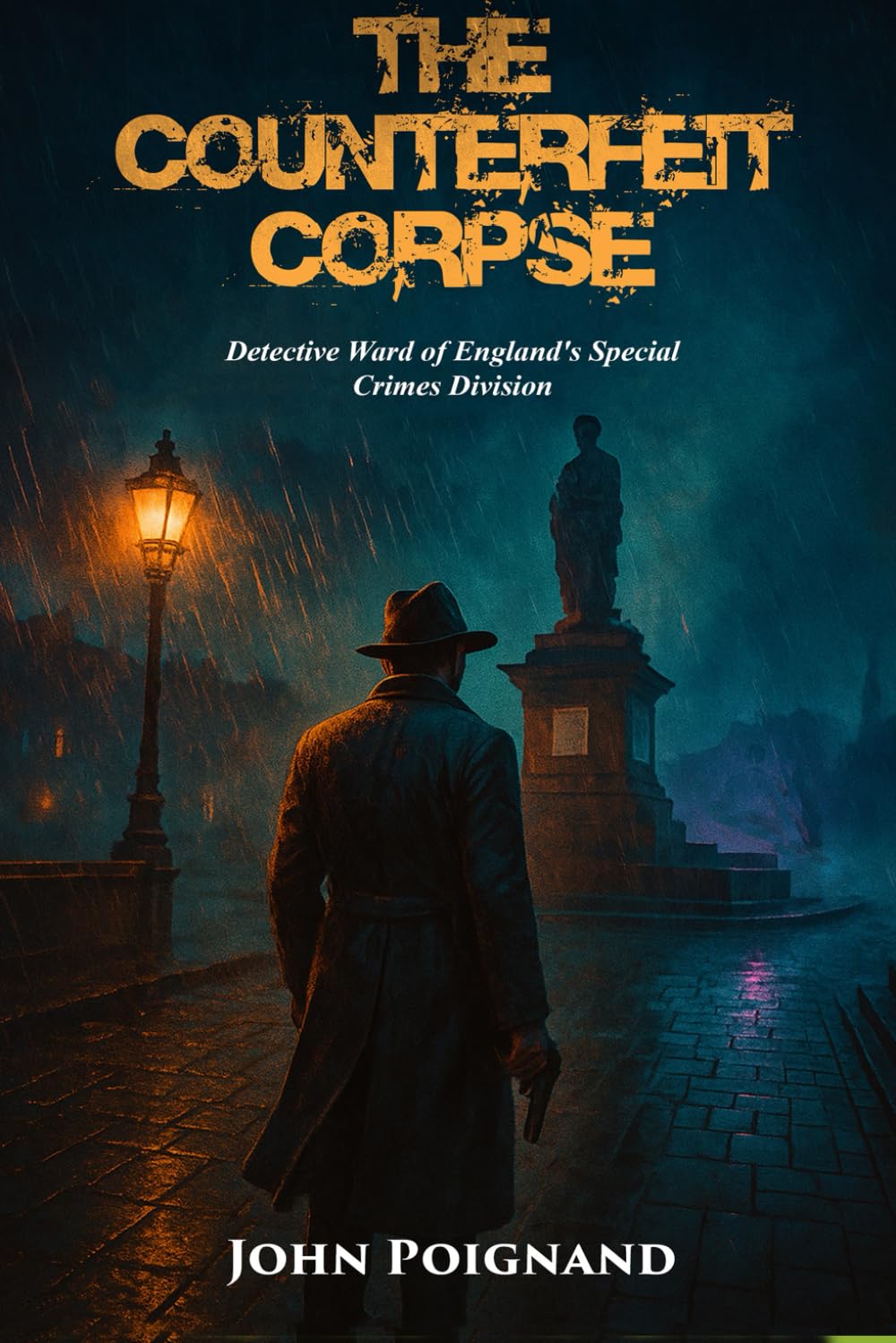
Counterfeit Corpse: Detective Ward of England's Special Crime Division
$22.00
by John M Poignand



In the Shadow of War, a Detective Confronts the Ghosts of Justice In the fog-laden landscape of 1950s Britain, a time of ration-book memories and burgeoning Cold War anxieties, John Poignand’s ambitious novel, "The Counterfeit Corpse," finds its footing. This is a story that wears the trench coat of a classic police procedural, but beneath it beats the heart of a complex moral thriller. The novel introduces us to Detective Inspector Michael Ward, a man of letters from Cambridge, and his nemesis a man of action from the back alleys of the London docklands, each wrestling with professional and deeply personal demons The plot begins with a chillingly dark premise: a headless body is found in the small Yorkshire town of Kettlewell, gruesomely displayed on a war monument. While recovering from a violent shootout and dealing with his complicated romance, DCI Ward is reluctantly pulled into the investigation. It’s a testament to Poignand’s storytelling that this gruesome discovery is only the starting point of a much more complex deception. Ward’s sharp mind quickly leads him to realize that this isn’t just a straightforward murder but a carefully staged act—a "counterfeit corpse" meant to serve as an alibi for the powerful London gangster, Johnnie Knight. The novel’s greatest strength lies in its dual character study. Ward is a compellingly modern protagonist adrift in a historical setting, a man whose sense of duty is constantly at war with his desires and a newfound, complex legacy. His antagonist, Johnnie Knight, is more than a simple villain; his violent present is given tragic weight by a backstory rooted in the horrors of the Blitz and the cruelty of the orphanage system, making him a fascinating and formidable foe.