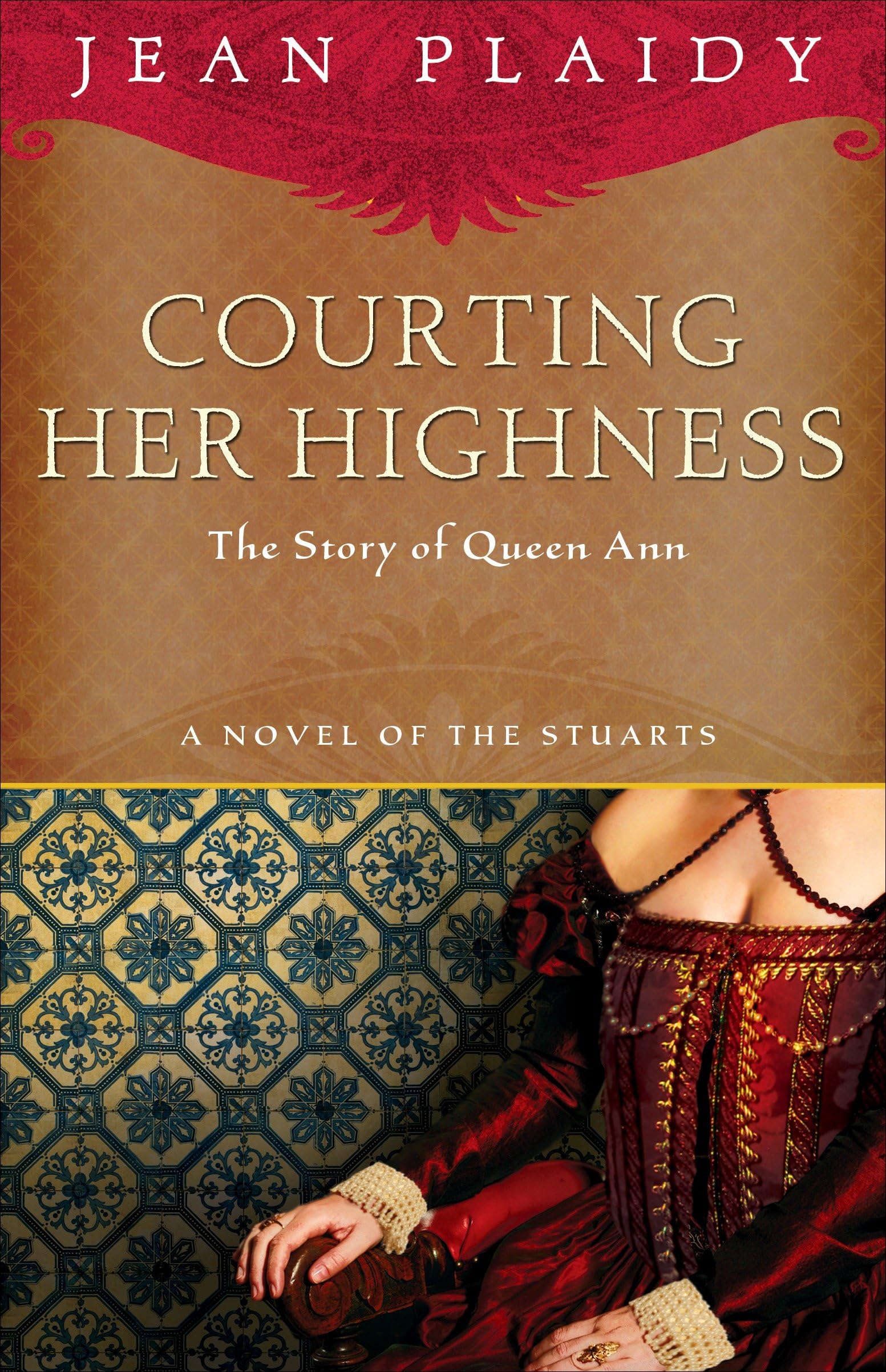
Courting Her Highness: The Story of Queen Anne (A Novel of the Stuarts)
$15.99
by Jean Plaidy



A private battle rages at court for the affections of a childless queen, who must soon name her successor—and thus determine the future of the British Empire. It is the beginning of the eighteenth century and William of Orange is dying. Soon Anne is crowned queen, but to court insiders, the name of the imminent sovereign is Sarah Churchill. Beautiful, outspoken Sarah has bewitched Anne and believes she is invincible—until she installs her poor cousin Abigail Hill into court as royal chambermaid. Plain Abigail seems the least likely challenger to Sarah’s place in her highness’s affections, but challenge it she does, in stealthy yet formidable ways. While Anne engages in her private tug-of-war, the nation is obsessed with another, more public battle: succession. Anne is sickly and childless, the last of the Stuart line. This final novel of the Stuarts from Jean Plaidy weaves larger-than-life characters through a dark maze of intrigue, love, and destruction, with nothing less than the future of the British Empire at stake. JEAN PLAIDY is the pen name of the prolific English author Eleanor Hibbert, also known as Victoria Holt. Courting Her Highness is the final book in her seven-book Novels of the Stuarts series. More than fourteen million copies of her books have sold worldwide. ABIGAIL HILL When the attention of Lady Marlborough was called to her impecunious relations, the Hills, she looked upon the entire subject as a trivial inconvenience, although later—much later —she came to realize that it was one of the most—perhaps the most—important moments of her brilliant career. In the first place it was meant to be an insult, but one which she had brushed aside as she would a tiresome gnat at a picnic party. The occasion had been the birthday of the Princess Anne, and on that day Her Highness’s complete attention had been given to her son, the young Duke of Gloucester. Anne’s preoccupation with that boy, although understandable, for he was the only one of her children who had survived after countless pregnancies—at least Lady Marlborough had lost count, for there must have been a dozen to date—was a source of irritation. Before the boy’s birth, Sarah Churchill, Lady Marlborough, had become accustomed to demanding the whole of the Princess’s attention, and the friendship between them was the wonder and speculation of all at Court; when they were together Anne and Sarah were Mrs. Morley and Mrs. Freeman respectively, because Anne wished there to be no formality to mar their absolute intimacy. But since the boy had been born, although the friendship had not diminished, Anne’s first love was for her son, and when she went on and on about “my boy” Sarah felt as though she could scream. Thus it had been at the birthday celebrations; the boy was to have a formal introduction to the Court, and for the occasion Anne had ordered that a special costume be made for him; and she had had the absurd idea of decking him out in her own jewels. Anne herself did not greatly care for ceremonial occasions; she was far more comfortable reclining on her couch, with a cup of chocolate in her hand or a dish of sweetmeats beside her, entertaining herself with the cards or gossip. But she wanted “my boy” as she, to Sarah’s exasperation, constantly referred to him, to look magnificent. Poor little wretch! thought Sarah, who delighted in applying terms of contempt to persons in high places. He needed to be adorned. When she compared him with her own handsome son—John after his father— who was a few years older than the young Duke, she wanted to crow with triumph. In fact it was all she could do to prevent herself calling Anne’s attention to the difference in the two boys. When she brought young John to Court, as she intended to quite soon, Anne would see for herself what a difference there was between the two. But young Gloucester, in spite of his infirmity, was a bright boy. He was alert, extremely intelligent, and the doctors said that the fact that he suffered from water on the brain, far from harming his mind, made it more alert; and so it seemed. He was old for his years; sharp of wits, and to see him drilling the ninety boys in the park whom he called his army, was one of the sights of the Court. All the same, his head was too big for his body and he could not walk straight unless two attendants were close beside him. He was the delight and terror of his parents’ life—and no wonder. There he was on this occasion in a coat of blue velvet, the button- holes of which were encrusted with diamonds; and about his small person were his mother’s jewels. Over his shoulder was the blue ribbon of the Garter which Sarah could never look on without bitterness; she had so wanted the Garter for her dear Marl, her husband, who, she believed, was possessed of genius and could rule the country if he only had a chance. Therefore to see the small figure boasting that he was already a Knight of the Garter was a maddening sight;