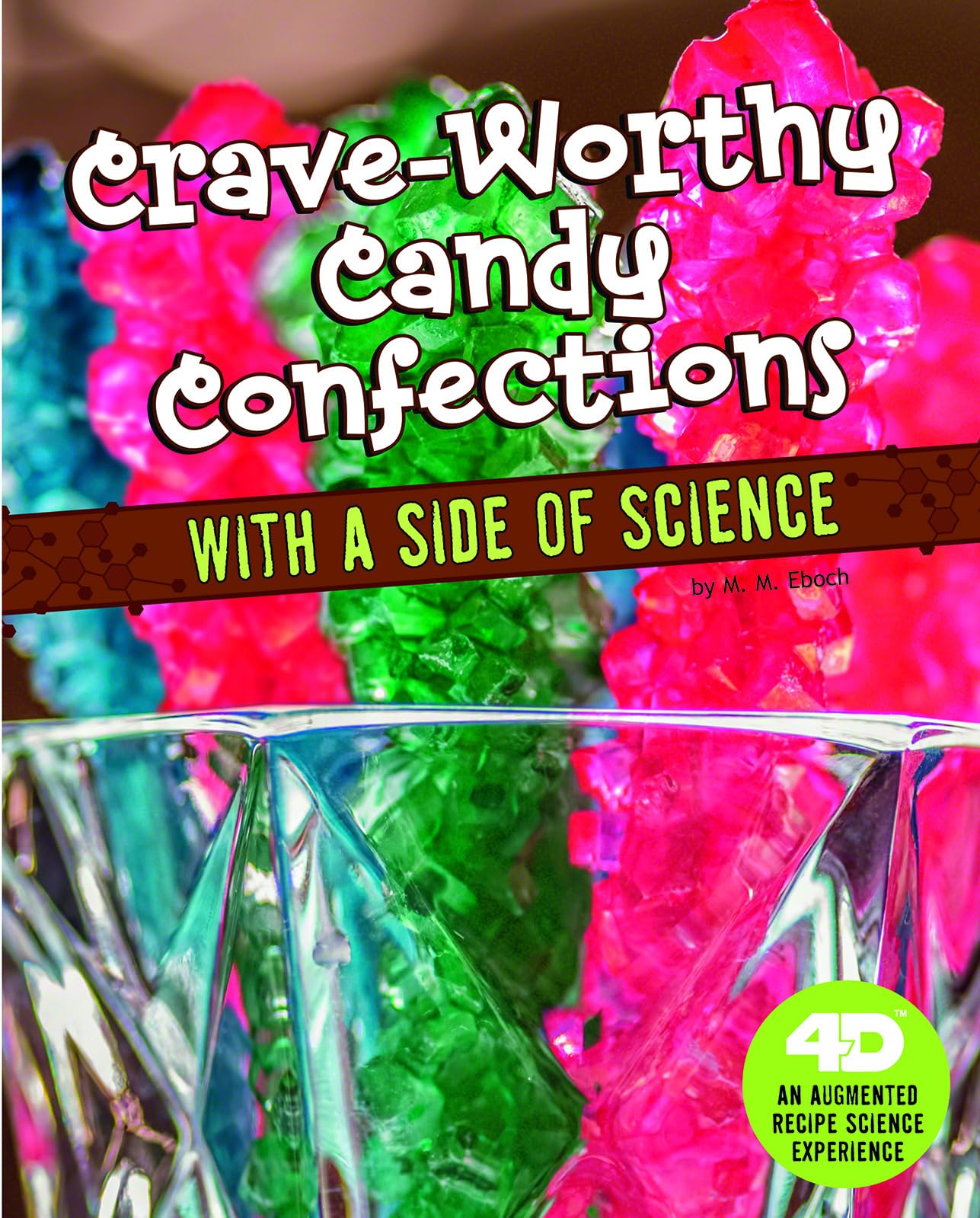
Crave-Worthy Candy Confections with a Side of Science: 4D An Augmented Recipe Science Experience (Sweet Eats with a Side of Science 4D)
$31.32
by Christine Elizabeth Eboch



What makes some candy sticky? How does a spoonful of sugar turn into your favorite sweet? Budding chefs will discover the science behind making candy all while enjoying some sweet treats. Gr 5 Up�Cooking is a great way to absorb science concepts and learn lab techniques, and when that learning is incentivized with dessert? Slam dunk. Twelve recipes per book are presented in a nice tidy layout, with ingredients and supplies clearly listed in boxes at the top of the page. Detailed process writing in a slightly casual tone is good for clarity�a timer �dings,� frosting can lose its �fluffiness,� and illuminating sidebars explain what is happening as ingredients combine or heat is applied. In each volume, valuable information, especially for students, is �cemented by observable (and edible) results, which will also make for better cooking and baking results. Gluten-free, dairy-free, and vegan recipes are sprinkled throughout, as well as substitutions for common allergens. Some recipes require only a microwave or a refrigerator, which is great for clubs or classrooms without access to an oven. Most recipes are for beginning bakers, but some are more challenging or fiddly�fortune cookies and biscotti. VERDICT Helpful tips, smart science, and lots of sugar! An excellent pick for cooking programs looking to incorporate science concepts.α(c) Copyright 2011. Library Journals LLC, a wholly owned subsidiary of Media Source, Inc. No redistribution permitted. Cooking is a great way to absorb science concepts and learn lab techniques, and when that learning is incentivized with dessert? Slam dunk. . . .Helpful tips, smart science, and lots of sugar! An excellent pick for cooking programs looking to incorporate science concepts.-- "School Library Journal, Series Made Simple" Chris Eboch, aka M.M. Eboch, writes about science, history, and culture for all ages. She has written several novels for ages nine and up. Learn more at www.chriseboch.com.