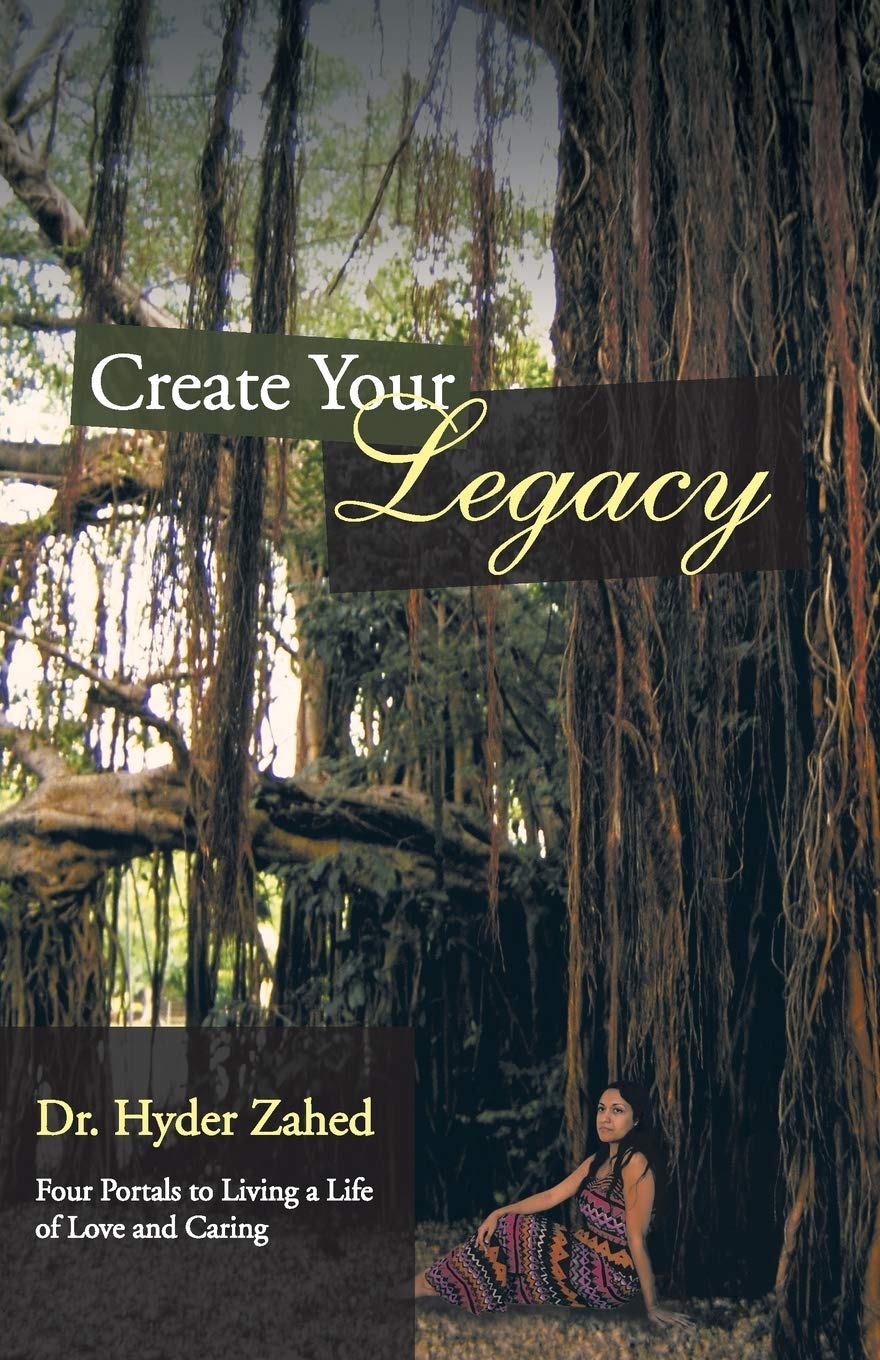
Create Your Legacy: Four Portals to Living a Life of Love and Caring
$11.99
by Dr. Hyder Zahed



Hyder Zahed, PhD, had a good life until it was turned upside down. Following a divorce, a job loss, and a heart attack, he was determined to redesign his life by creating an ongoing legacy. Create Your Legacy offers a simple formula - LGGC (pronounced Legacy, a formula for creating and leaving a lasting legacy). Topics include shifting life, accepting oneself and others, having unconditional love, being honest, balancing work and relationships, being truly present, being generous, and cultivating gratitude. Create Your Legacy seeks to help the reader visualize and make conscious life decisions. It allows you to apply a very simple formula in order to improve your life and leave behind an enduring legacy. This is within everyone's reach, and living the legacy costs nothing. Without a doubt, the rewards from living a good life and creating a legacy are immeasurable. CREATE YOUR LEGACY Four Portals to Living a Life of Love and Caring By HYDER ZAHED Balboa Press Copyright © 2013 Dr. Hyder Zahed All rights reserved. ISBN: 978-1-4525-8029-6 Contents Introduction, xiii, Chapter 1 - Love, 1, Chapter 2 - Generosity, 22, Chapter 3 - Gratitude, 43, Chapter 4 - Compassion, 69, Conclusion, 95, Reference Sources, 101, CHAPTER 1 Love "Love is a force more formidable than any other.It is invisible-it cannot be seen or measured,yet it is powerful enough to transform youin a moment, and offer you more joythan any material possession could."(Barbara de Angelis) LOVE IN THE LGGC (LEGACY) model is the first and most-complexprinciple. However, it, like all the other portals, canbe accessed at any time. First we need to gain knowledge ofdifferent types of love so we can understand what we seek toaccess. We can learn much about the complexity and typesof love from the ancient Greeks. In the Greek language, morethan one word describes love. Eros describes love that changes from moment to momentbased on varying circumstances. For example, when lovepartners are expressing pleasing words and treating eachother with passion, the warm, fuzzy feeling of love grows,and the desire to spend time together increases. But, whenthe partners are negative or share painful words, they maypull away and choose to spend less time together. What causes us to consciously pull away? Let's think aboutit. People want to avoid pain and move toward what theyperceive to be pleasure. We not only withdraw from painor negative emotions in romantic relationships, but we alsowithdraw in all other types of relationships, whether withfamily, coworkers, friends, or acquaintances. When wewithdrawal, Eros love dissipates because it is love based uponexternal pain/pleasure circumstances. Good news! There are options if we want sustainablerelationships. First, we have to expand our understandingof love to extend beyond Eros and consider love a virtuousprinciple. Love as a Virtue If we want a kind of love that is enduring and steady under allcircumstances, we can choose agape love. Agape love is oftenreferred to as a general affection or deeper sense of true loveor sacrificial love. This kind of love honors others regardlessof whether the circumstances are pleasant and whether otherssatisfy us or meet our expectations and desires. To move toward enduring love, I challenge you to think oflove as a virtue rather than as an emotion. Namaste from theHindu tradition means, "I acknowledge the spirit withinyou as the same spirit within me." This kind of love involvesa commitment to stay aware of our oneness with others andall life. Even if someone has a difficult personality or flawedcharacter or if circumstances are not easy, we can still honorthat person from the spiritual perspective because in essence,we are all made of the same spirit. When we are experiencing life-constricting emotions (e.g.,anger, fear) that seem contrary to maintaining a lovingrelationship, all love is not lost. We can turn our attentionto the principle of love and choose to enter that portal. Lovecalls us to treat others with respect and kindness and to speakgently, even when we don't like what they are doing or sayingor how they look or think. Loving another under difficultcircumstances is respecting the other person's divinity, whichis the same as ours. Brother Ishmael Tetteh is a contemporary African mysticand spiritual speaker from Ghana author of the book TheWay Forward: Principles and Practices for Practical Living ,his main claim in this book is—"Love is not a sentiment; itis a discipline." We must discipline ourselves to rememberthat none of us is outside the spirit of life; none of us is reallyalone. When we insist on remembering this truth of ouroneness, we can honor the divinity of others. When we doso, we are acting out of the principle of love. (Tetteh 2005). Loving emotions are valuable expressions and experiences ofhuman life. The truth is that when we regard others fromthe perspective of the unchanging principle of oneness, thenrelationshi