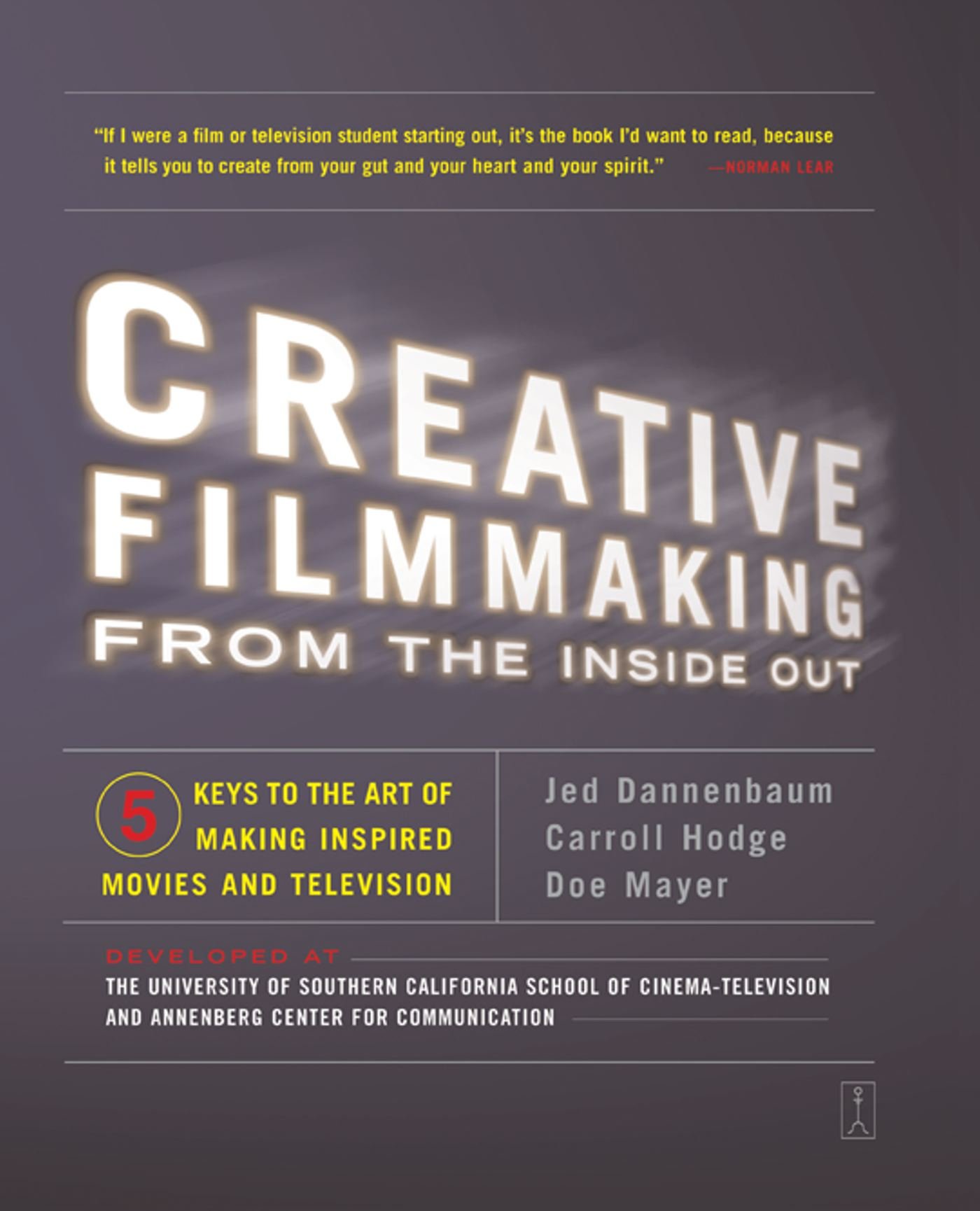
Creative Filmmaking from the Inside Out: Five Keys to the Art of Making Inspired Movies and Television
$17.95
by Jed Dannenbaum



Five keys to creating authentic, distinctive work, whether you are a student, professional or simply love making films on your own For Creative Filmmaking from the Inside Out, three professors at the renowned University of Southern California School of Cinema-Television interviewed fifteen outstanding filmmakers, then distilled their insights into the "Five I's" of creativity. Learn how to: Uncover your unique creative voice (Introspection) Work from real-life observations and experience (Inquiry) Draw on your nonconscious wells of creativity (Intuition) Strengthen your creative collaborations (Interaction) Communicate at the deepest level with your audience (Impact) This comprehensive approach provides practical exercises that will enrich and transform your work, whether you are looking for a story idea, lighting a set, editing a scene or selecting a music cue. The participating filmmakers, who have collectively won or been nominated for 39 Oscars and 27 Emmys, are: Anthony Minghella, writer-director (The English Patient); Kimberly Peirce, writer-director (Boys Don't Cry); John Lasseter, writer-director-producer (Toy Story); John Wells, writer-producer (ER); Hanif Kureishi, writer (My Beautiful Laundrette); Pamela Douglas, writer (Between Mother and Daughter); Renee Tajima-Peña, director-producer (My America...or, Honk If You Love Buddha); Ismail Merchant, producer (The Remains of the Day); Jeannine Oppewall, production designer (L.A. Confidential); Conrad L. Hall, cinematographer (American Beauty); Kathy Baker, actor (Picket Fences); Walter Murch, sound designer-editor (Apocalypse Now); Lisa Fruchtman, editor (The Right Stuff); Kate Amend, editor (Into the Arms of Strangers); and James Newton Howard, composer (The Sixth Sense). Norman Lear If I were a film or television student starting out, it's the book I'd want to read, because it tells you to create from your gut and your heart and your spirit. Victoria Riskin screenwriter and President of the Writers Guild of America, west Indispensable reading for students and professionals alike. George Stoney Professor of Film and Television, Tisch School of the Arts, New York University Creative Filmmaking is entirely fresh and different and welcomed. William McDonald Head of Production, UCLA Department of Film, Television and Digital Media In Creative Filmmaking from the Inside Out, the authors have stunningly codified an elusive process media educators must attempt to articulate every day in every classroom. This practical, illuminating and inspiring book will become a foundation text in film schools around the world. Carroll Hodge, Jed Dannenbaum and Doe Mayer are professional filmmakers who also teach film production at the University of Southern California School of Cinema-Television. You can visit them at www.creativefilmmaking.com. Introduction This is a book about the creative process of filmmaking -- the mysterious transformation of mere glimmers of thought into coherent stories, characters, images and sounds. As filmmakers ourselves and as teachers of film and video production at the University of Southern California, we are passionate about films and fascinated by the challenges of making them well (we use the word "film" in this book to include all story-based moving image media). Inevitably, we have written a book shaped by our own tastes -- we're drawn to films that feel fresh, multilayered and authentic, that bear the distinct imprints of the people who made them, and that have a strong impact on audiences who see them. These are qualities that can be hard to pin down, but we sorely feel their absence in those films that seem to have come off an assembly line: hollow-feeling cut-and-paste pastiches of other movies and TV shows, filled with clichéd characters, cookie-cutter plots, hackneyed dialogue and imitative stylistic flourishes. We have written this book to be appropriate for those learning filmmaking on their own as well as for students in a production class or program. We teach in a film school and see its great value in providing structure, contact with diverse tastes and approaches, a collaborative environment, a wide range of hands-on experience, faculty mentoring and many other benefits. We're also aware that film school is not for everyone and that many outstanding filmmakers never went to film school, including a majority of those interviewed for this book. We have therefore tried to make this a resource that would be informative and inspiring, whether used by an individual reader or as an assigned text in a course. (Teachers using this book in classes and workshops, as well as individual readers, may wish to refer to our website, creativefilmmaking.com, for additional suggestions.) Although we designed the book with developing filmmakers foremost in mind, the aspects of creativity it highlights and clarifies are ones that even the most experienced professiona