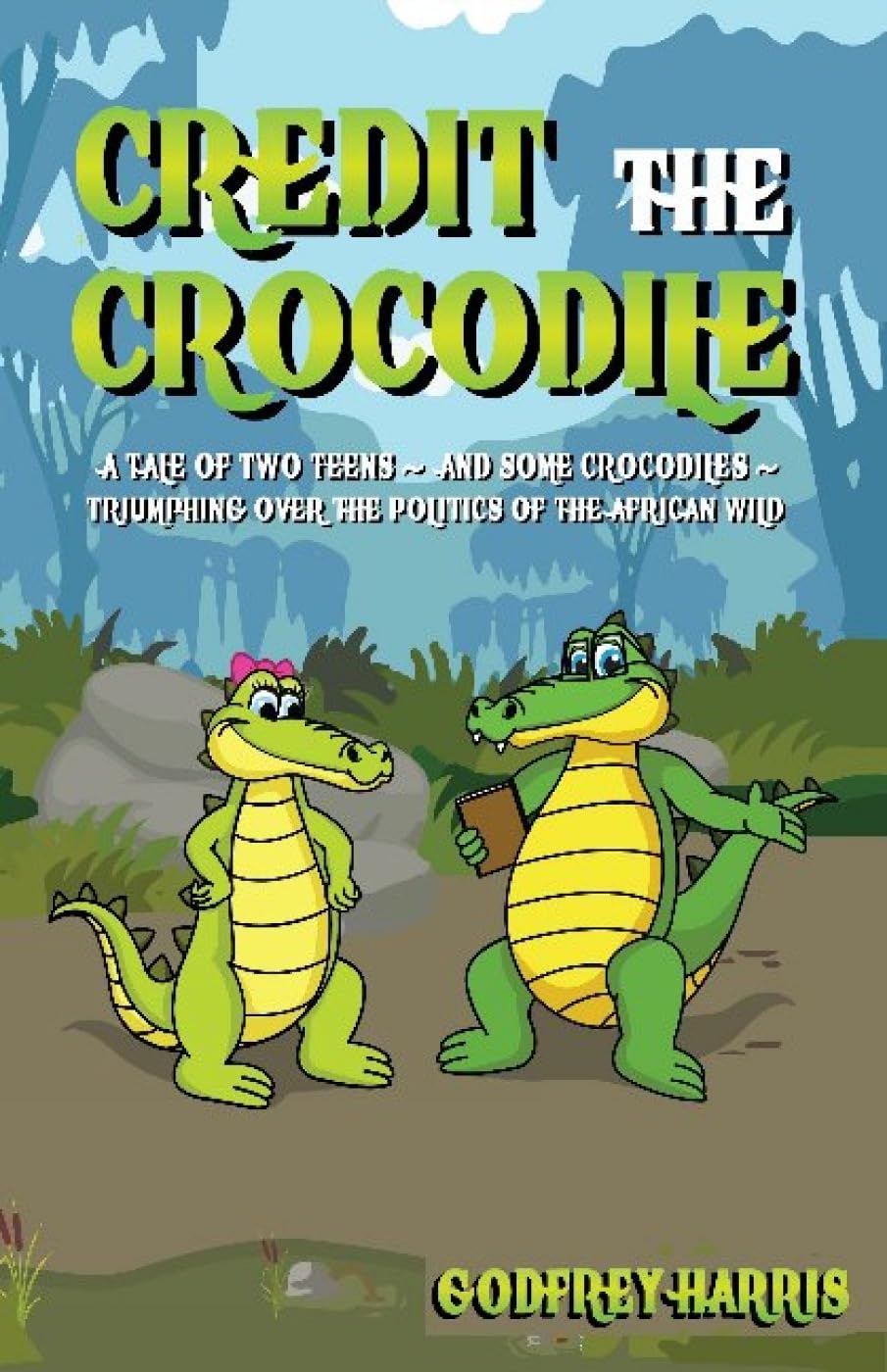



This is the story of how two American teenagers with the help of a few African crocodiles triumph over the politics of the African wild. Two idealistic young boys, on a gap year trip to South Africa, are left late at night, alone, deep in the bush, and surrounded by the incessant noises of the wilderness. They have no idea what they need to do to get through this ordeal. The boys had been organizing a demonstration to free crocodiles from the captivity of being raised on a farm. But the demonstration was illegal and a judge sentenced them to spend two weeks in the bush to experience life as both prey and predator, just as the freed crocodiles would have to do. Their predicament draws the attention of Credit, the dominant crocodile of the farm s bask. Years before, he had been secretly adopted by a son of the farm s owners. Before Credit outgrew his under-the-bed nest, he came to understand English from conversations his master directed at him. Credit and his friends decide to protect the boys while they are among Africa s most fearsome wildlife. The crocodiles want the boys to carry a message back to the United States that concern for human and animal populations living together in Africa is primarily an African responsibility. While in the wild together, the boys and the crocodiles form a surprising bond that promises to change how Westerners deal with African wildlife far into the future. WHERE ONLY CROCODILES SPEAK FOR ALL AFRICANS, by EMMANUEL KORO, ENVIRONMENTAL JOURNALIST, JOHANNESBURG, SOUTH AFRICA Credit the Crocodile is a new book in the young adult genre that deals with an unusual subject: international wildlife politics. That, in itself, is reason for animal rights groups, conservationists and economists to pay some attention. As a novel set in modern-day South Africa, Credit focuses on how Nile crocs were saved from possible extinction by farmers allowed to raise and harvest them. But the principal crocs in this story are particularly interesting because of their ability to understand English. While the descendants of white Europeans may no longer rule black African countries, many Westerners in far away lands still exhibit a strong penchant to dictate how African wildlife is to be protected and preserved. As the story unfolds, the author finds interesting ways to offer ideas on a viable basis for conservation policies in the future. The book is designed to open the eyes of adults through the fresh perceptions of their kids, particularly to the possibility of saving a species while maintaining a trade in its parts. The book raises a crucial question: Does the world appreciate that sustainable use of wildlife products, such as ivory or rhino horns, actually can create incentives for conserving wildlife? Written creatively and compellingly, Credit the Crocodile is a must-read for anyone who values wildlife. One of the key lessons in the book that I have also experienced through my 25-year interaction with poor African rural communities is that stopping international trade in wildlife products will not stop poaching. Without meaningful benefits from their wildlife, poor African rural communities consider wild animals as a nuisance. But with benefits that wildlife can bring those who collaborate with poachers can stop and would start supporting conservation initiatives. I strongly recommend Credit the Crocodile to anyone who has a desire to become involved in saving wildlife in Africa and worldwide. --The Herald, Harare, Zimbabwe, April 18, 2018 You really don t understand or worse, seem to care about how we live. A charming story with a serious message emerges from Happy Hollow, a village in the Republic of South Africa. The two unlikely messengers are Credit the crocodile and his croc friend Cynthia, who live happily on the Stewart Farm crocodile ranch. Credit is as smart as any person and knows how to communicate with humans. When Credit hears that two teenaged white American boys have come to liberate the crocs under the banner of the Animal Welfare Enterprises (AWE), he is intrigued; what are the crocodiles being liberated from, he wonders? Being twenty-five years old and quite smart, Credit knows that crocodile farms brought the crocs back from near extinction by protecting the eggs and adults from human and animal predators; judicious culling for meat and skin is a small price to pay. When the boys are sentenced to time in the bush for protesting without a permit, their education on the hubris of imposing your ideas on others without being asked begins and so does the reader s education. Harris, a seasoned international public policy expert, skillfully unfolds an entertaining tutelage on the meaning of practical conservation. The interplay among Happy Hollow residents, the boys, and Western officials illustrate the growth of politics and greed in international conservation and how ludicrous and impractical the resulting rules can be. But the real schooling comes in the bush, from Credit (a