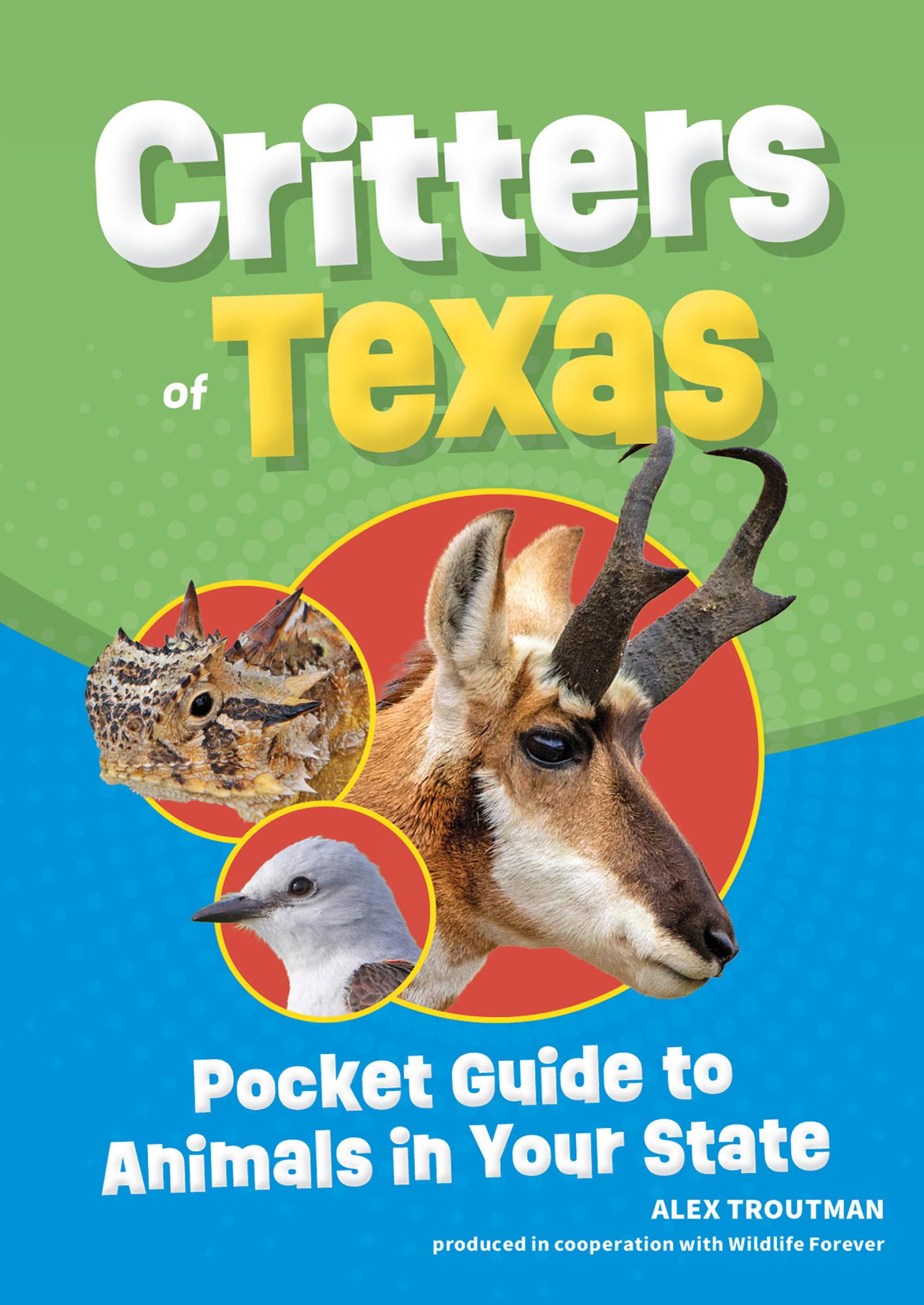
Critters of Texas: Pocket Guide to Animals in Your State (Wildlife Pocket Guides for Kids)
$7.95
by Alex Troutman



Get the perfect kids’ introduction to Texas’s mammals, birds, reptiles, and amphibians. Put nature in the hands of children! Critters of Texas is your wildlife pocket guide that’s informative, concise, and easy to use. Written by wildlife biologist Alex Troutman, this handy book presents 65 critters of the Lone Star State—if an animal is in this book, it’s found in Texas. Each species is showcased in a professional-quality photograph that’s paired with such neat-to-know details as habitat, range, and preferred food sources. Illustrations of the critter’s tracks complement the information, and a “Did You Know?” paragraph provides fascinating trivia worth sharing with family, friends, and teachers. Critters of Texas includes important-to-know mammals, birds, reptiles, and amphibians. Book Features: 65 critters—only Texas animals - Full-color photos of every species - Concise descriptions and interesting “Did You Know?” facts - Attractive layout with kid appeal - A portion of the proceeds from the sale of this book benefits Wildlife Forever to support their conservation efforts Alex Troutman is a wildlife biologist, birder, nature enthusiast, and science communicator from Austell, Georgia. He has a passion for sharing the wonders of nature and introducing the younger generation to the outdoors. He holds both a bachelor’s degree and a master’s degree in biology from Georgia Southern University (the Real GSU), with a focus in conservation. Because he knows what it feels like to not see individuals who look like you (or come from a similar background) doing the things you enjoy or working in the career that you aspire to be in, Alex makes a point not only to be that representation for the younger generation, but also to make sure that kids have exposure to the careers they are interested in and the diverse scientists working in those careers. Alex is the co-organizer of several Black in X weeks, including Black Birders Week, Black Mammalogists Week, and Black in Marine Science Week. This movement encourages diversity in nature, the celebration of Black individual scientists, awareness of Black nature enthusiasts, and diversity in STEAM fields. American Beaver Castor canadensis Size: Body is 25–30 inches long; tail is 9–13 inches long; weighs 30–70 pounds Habitat: Wooded wetland areas near ponds, streams, and lakes Range: Beavers can be found throughout Texas, as well as much of the rest of the US. Food: Leaves, twigs, and stems; they also feed on fruits and aquatic plant roots. Throughout the year they gather and store tree cuttings, which they eat in winter. Den: A beaver’s home is called a lodge. It consists of a pile of branches that is splattered with mud and vegetation. Lodges are constructed on the banks of lakes and streams and have exits and entrances that are underwater. Young: Young beavers (kits) are born in late April through May and June in litters of 3–4. After two years they are considered mature and will be forced out of the den. Predators: Bobcats, mountain lions, bears, wolves, and coyotes. Human trappers are major predators too. Tracks: A beaver’s front foot looks a lot like your hand; it has five fingers. The hind (back) foot is long, with five separate toes that have webbing or extra skin in between each pair. Beavers range from dark brown to reddish brown. They have a stocky body with hind legs that are longer than the front legs. The beaver’s body is covered in dense fur, but its tail is naked and has special blood vessels that help it cool or warm its body. Did You Know? Beavers are rodents! Yes, these flat-tailed mammals are rodents, like rats and squirrels. In fact, they are the largest native rodents in North America. Just like other rodents, beavers have large incisors, which they use to chew through trees to build dams and dens. Beavers are the original wetland engineers. By damming rivers and streams, beavers create ponds and wetlands.