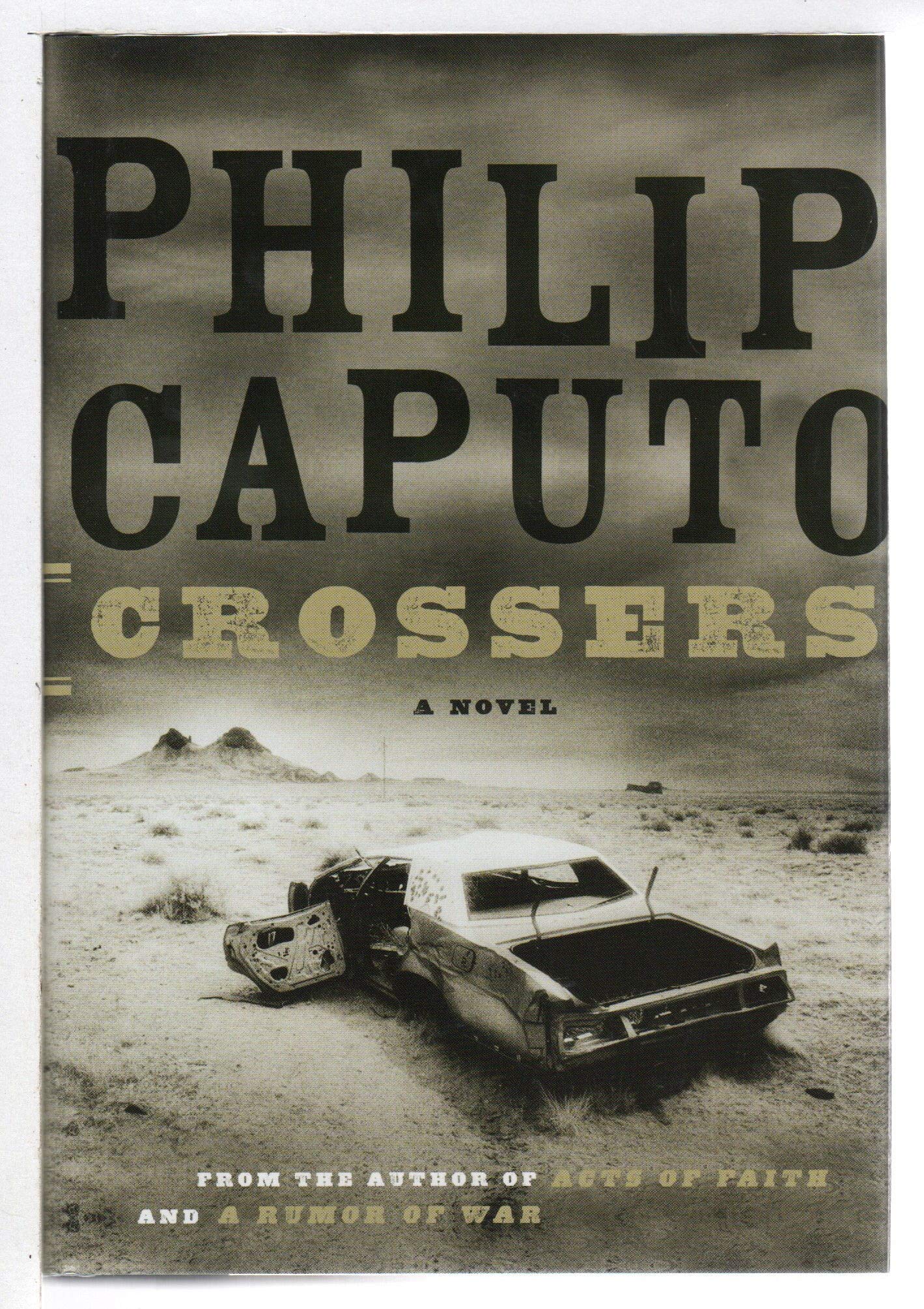



From the acclaimed author of Acts of Faith (“A miracle . . . You can hardly conceive of a more affecting reading experience”— Houston Chronicle ), a blistering new novel about the brutality and beauty of life on the Arizona-Mexico border and about the unyielding power of the past to shape our lives. Taking us from the turn of the twentieth century to our present day, from the impoverished streets of rural Mexico to the manicured lawns of suburban Connecticut, from the hot and dusty air of an isolated ranch to New York City in the wake of 9/11, Caputo gives us an impeccably crafted story about three generations of an Arizona family forced to confront the violence and loss that have become its inheritance. When Gil Castle loses his wife in the Twin Tower attacks, he retreats to his family’s sprawling homestead in a remote corner of the Southwest. Consumed by grief, he has to find a way to live with his loss in this strange, forsaken part of the country, where drug lords have more power than police and violence is a constant presence. But it is also a world of vast open spaces, where Castle begins to rebuild his belief in the potential for happiness—until he starts to uncover the dark truths about his fearsome grandfather, a legacy that has been tightly shrouded in mystery in the years since the old man’s death. When Miguel Espinoza shows up at the ranch, terrified after two friends were murdered in a border-crossing drug deal gone bad, Castle agrees to take him in. Yet his act of generosity sets off a flood of violence and vengeance, a fierce reminder of the fact that while he may be able to reinvent himself, he may never escape his history. Searingly dramatic, bold and timely, Crossers is Philip Caputo’s most ambitious and brilliantly realized novel yet. A Q&A with Philip Caputo Question: Was there a particular idea or event that was the genesis of this novel? Philip Caputo: In 2006 I’d started doing research and interviews for a nonfiction piece about border issues for the Virginia Quarterly Review . In the course of that work, I’d stumbled on historical material and was fascinated to learn that what we think of as contemporary problems on the Mexican border--illegal immigration, smuggling, violence--go back at least a hundred years. I was also struck by the similarities between the Mexican drug cartels and today’s Islamist terrorists. The former are motivated by greed, the latter by religious and political fanaticism, but they are alike in the atrocities they commit, in their utter lack of compassion and conscience. The stories illegal immigrants told me about their sufferings moved me as well. One of those tales involved a man who was abandoned by his coyote (as immigrant smugglers are called), got lost in the mountains, and nearly died before he was rescued by a rancher I know. Moral conflict and moral ambiguity are themes that have consumed me throughout my career, and there is plenty of both on the border. All of this seemed a rich vein for a novel. I never experienced a "eureka" moment, but various experiences and impressions began to flow together, like tributary streams into a river, and I started writing. Question: You spend several months of the year living in Arizona, very close to the Mexican border. How long have you been doing that and what first drew you to Arizona? Philip Caputo: My wife and I started to spend time in Arizona in 1996 at the urging of good friends who live there. Our part of the state, in the southeast, is a kind of the anti-Phoenix--hundreds of thousands of acres of high desert plateaus and mountains, most of them public land. Room to roam, a certain stark beauty. The San Rafael valley, which is near the little town where we own an old adobe house, is gorgeous. I hunt desert quail there behind a pair of English setters, and those days bring me great joy. Leslie and I ride the valley quite a lot on horseback when I’m not hunting. Ranging through those wide-open spaces on foot or in the saddle is the essence of freedom. Question: What kind of research did you need to do--into the history of the border but also on such things as cattle ranching, drug smuggling, etc.? Philip Caputo: I did a lot in historical society archives, sifting through old newspaper stories and personal accounts. A good friend who is a Border Patrol agent gave me tutorials in the drug trade. I accompanied him on two undercover assignments in Mexico and on a few missions on this side of the border. Three other friends are cowboys or cattlemen, whom I joined on roundups and brandings and other ranch work. I learned quite a bit from them, and a had a great deal of fun doing it. Question: How did you decide to structure this novel as a multi-generational story, incorporating family history and oral transcripts? Philip Caputo: Originally, I intended to write two novels. The first was going to be set in the past, from 1903 to 1951, and was going to be titled A Dangerous Man . The second wa