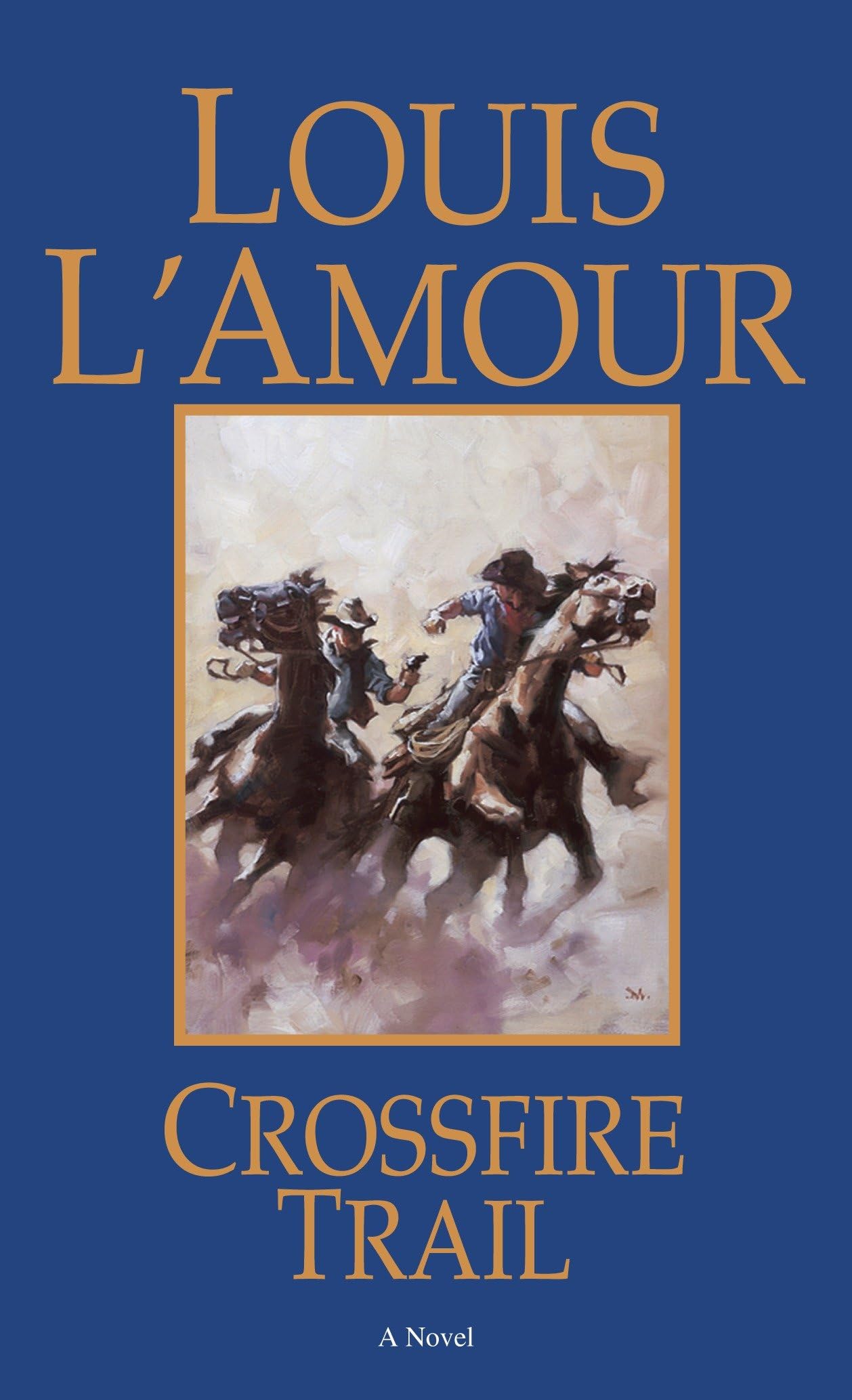



Rafe Caradec—gambler, wanderer, soldier of fortune—was as hard a man as the battlefields and waterfronts of Latin America could fashion, but he was as good as his word. As Charles Rodney lay dying in a dank ship’s fo’c’sle, Rafe swore to make sure that Rodney’s Wyoming ranch went to his daughter, Ann. In Painted Rock, Wyoming, Caradec found land for a man to love, miles of rolling grasslands and towering mountains. He also found that one of the most ruthless men in the territory had set his sights on both Rodney’s ranch and his daughter. But Rafe Caradec had given his word, and once he’d looked deep into Ann Rodney’s eyes, nothing short of death would stop him from keeping the promise he’d made. Rafe Caradec was a man who always rode at the ready, hardened by a life spent among ruthless men who played for the highest stakes. The only thing Rafe held sacred was his word--and now he had sworn to a dying man that he would save his Long Valley ranch for his wife and daughter, Ann. But Ann thought Rafe was moving in for his own crooked gain, and played right into the deadly hands of the greedy ranchers plotting to destroy her. Then Rafe figured a way to save Ann and the land. It would be dangerous--but that was the only way Rafe Caradec knew. Rafe Caradec was a man who always rode at the ready, hardened by a life spent among ruthless men who played for the highest stakes. The only thing Rafe held sacred was his word--and now he had sworn to a dying man that he would save his Long Valley ranch for his wife and daughter, Ann. But Ann thought Rafe was moving in for his own crooked gain, and played right into the deadly hands of the greedy ranchers plotting to destroy her. Then Rafe figured a way to save Ann and the land. It would be dangerous--but that was the only way Rafe Caradec knew. Rafe Caradec was a man who always rode at the ready, hardened by a life spent among ruthless men who played for the highest stakes. The only thing Rafe held sacred was his word--and now he had sworn to a dying man that he would save his Long Valley ranch for his wife and daughter, Ann. But Ann thought Rafe was moving in for his own crooked gain, and played right into the deadly hands of the greedy ranchers plotting to destroy her. Then Rafe figured a way to save Ann and the land. It would be dangerous--but that was the only way Rafe Caradec knew. Our foremost storyteller of the American West, Louis L’Amour has thrilled a nation by chronicling the adventures of the brave men and woman who settled the frontier. There are more than three hundred million copies of his books in print around the world. Chapter One In the dank, odorous fo'c'sle a big man with wide shoulders sat at a scarred mess table, his feet spread to brace himself against the roll of the ship. A brass hurricane lantern, its light turned low, swung from a beam overhead, and in the vague light the big man studied a worn and sweat-stained chart. There was no sound in the fo'c'sle but the distant rustle of the bow wash about the hull, the lazy creak of the square rigger's timbers, a few snores from sleeping men, and the hoarse, rasping breath of a man who was dying in the lower bunk. The big man who bent over the chart wore a slipover jersey with alternate red and white stripes, a broad leather belt with a brass buckle, and coarse jeans. On his feet were woven leather sandals of soft, much-oiled leather. His hair was shaggy and uncut, but he was clean shaven except for a mustache and burnsides. The chart he studied showed the coast of northern California. He marked a point on it with the tip of his knife, then checked the time with a heavy gold watch. After a swift calculation, he folded the chart and replaced it in an oilskin packet with other papers and tucked the packet under his jersey, above his belt. Rising, he stood for an instant, canting to the roll of the ship, staring down at the white-haired man in the lower bunk. There was something about the big man that would make him stand out in any crowd. He was a man born to command, not only because of his splendid physique and the strength of his character, but because of his personality. He knelt beside the bunk and touched the dying man's wrist. The pulse was feeble. Rafe Caradec crouched there, waiting, watching, thinking. In a few hours at most, possibly even in a few minutes, this man would die. In the long year at sea his health had broken down under forced labor and constant beatings, and this last one had broken him up internally. When Charles Rodney was dead he, Rafe Caradec, would do what he must. The ship rolled slightly, and the older man sighed and his lids opened suddenly. For a moment he stared upward into the ill-smelling darkness, then his head turned. He saw the big man crouched beside him and he smiled. His hand fumbled for Rafe's. "You–you've got the papers? You won't forget?" "I won't forget." "You must be careful." "I know." "See my wife, Carol. Explain to her that I didn't r