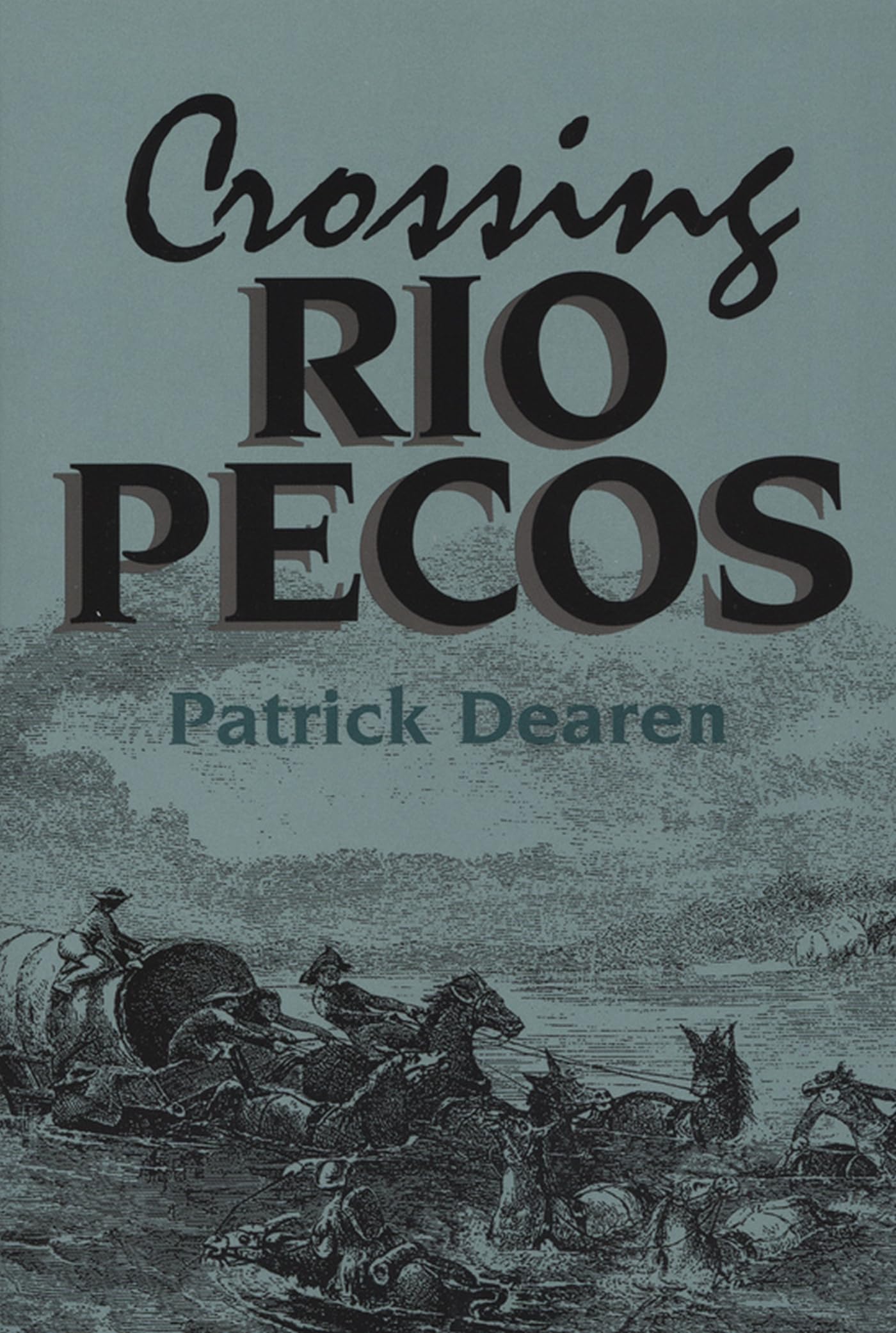



BY THE WINNER OF THE 2015 SPUR AWARD The Pecos River flows snake-like out of New Mexico and across West Texas before striking the Rio Grande. In frontier Texas, the Pecos was more moat than river--a deadly barrier of quicksand, treacherous currents, and impossibly steep banks. Only at its crossings, with legendary names such as Horsehead and Pontoon, could travelers hope to gain passage. Even if the river proved obliging, Indian raiders and outlaws often did not. Long after irrigation and dams rendered the river a polluted trickle, Patrick Dearen went seeking out the crossings and the stories behind them. In Crossing Rio Pecos --a follow-up to his Castle Gap and the Pecos Frontier --he draws upon years of research to relate the history and folklore of all the crossings--Horsehead, Pontoon, Pope's, Emigrant, Salt, Spanish Dam, Adobe, "S," and Lancaster. Meticulously documented, Crossing Rio Pecos emerges as the definitive study of these gateways which were so vital to the opening of the western frontier. The Pecos River flows snake-like out of New Mexico and across West Texas before striking the Rio Grande. In frontier Texas, the Pecos was more moat than river, a deadly barrier of quicksand, treacherous currents, and impossibly steep banks. Only at its crossings - with such legendary names as Horsehead and Pontoon - could travelers hope to gain passage. Even if the river proved obliging, its Indian raiders and outlaws often did not. Its banks echoed with the sounds of the mythic Old West - the war cry of the Indian, the blast of the cowboy's six-shooter, the crack of the stage-driver's whip, the thunder of the stampeding longhorn. While documented history was painting dreary lives for pioneers in many other locations, the Pecos stirred with color and drama and nurtured the stuff of legend. Long after irrigation and dams rendered the river a polluted trickle, Patrick Dearen went seeking out the crossings and the stories behind them. In Crossing Rio Pecos, a follow-up to his Castle Gap and the Pecos Frontier, he draws upon years of research and relates the history and folklore of all the crossings: Horsehead, Pontoon, Pope's, Emigrant, Salt, Spanish Dam, Adobe, S, and Lancaster. Meticulously documented, Crossing Rio Pecos is the definitive study of these gateways which were so vital to the opening of the western frontier. Patrick Dearen is the author of six books, including Castle Gap and the Pecos Frontier , Portraits of the Pecos Frontier , and When Cowboys Die , a novel. Formerly an award-winning reporter for two West Texas daily newspapers, he lives in Midland with his wife and son. Crossing Rio Pecos By Patrick Dearen TCU Press Copyright © 1996 Patrick Dearen All rights reserved. ISBN: 978-0-87565-159-0 Contents Foreword, River of the West, Pope's Crossing, Emigrant Crossing, Horsehead Crossing, Spanish Dam Crossing, Pontoon Crossing, Lancaster Crossing, Other Crossings, Epilogue, About the Author, Notes, Bibliography, Index, CHAPTER 1 River of the West The story of the Rio Pecos in frontier Texas is really the story of its crossings, for generally these vital "gateways to the west" harbored man's only intimate contact with a deadly river otherwise walled by barrier banks. The crossings frequently flowed red with blood and echoed with the sounds of the mythic Old West—the war cry of the Indian, the blast of the cowboy's six-shooter, the crack of the stage driver's whip, the thunder of the stampeding longhorn. At the very time that documented history was painting dreary existences for pioneers in many other locations, the Pecos and its crossings stirred with color and drama and nurtured the stuff of legend. Indeed, the modern perception of the mythic Old West comes closer to fruition in the frontier Pecos country than virtually anywhere else. Formed one-half to one million years ago, the Pecos originates at 11,300 feet in the Sangre de Cristo range in northern New Mexico, a pristine stream splashing down through alpine forests and flower-spangled meadows. To the west of its headwaters, barely thirty air miles, flows the south-trending Rio Grande. Yet, the muddying Pecos sets a course to the southeast that will not see it intersect the Rio Grande for 926 sinuous miles. At the point where the Pecos enters Texas, it splits a parched land 300 miles wide and thirsting in vain for a sister river. Drawn by the life-giving Pecos waters, the so-called Clovis people may have camped on its banks and taken shelter in its lower canyon overhangs by 9000 B.C. These nomadic hunters, the first New World culture identifiable through archaeology, included or were close ancestors of Midland Man, whose eleven thousand-year-old remains surfaced in Midland County, Texas, fifty miles east of the Pecos in 1953. By 8500 B.C., the Clovis culture had disappeared, and a new people, the Folsom, had emerged to leave their defining spear-point style in a mass buffalo kill in Mile Cany