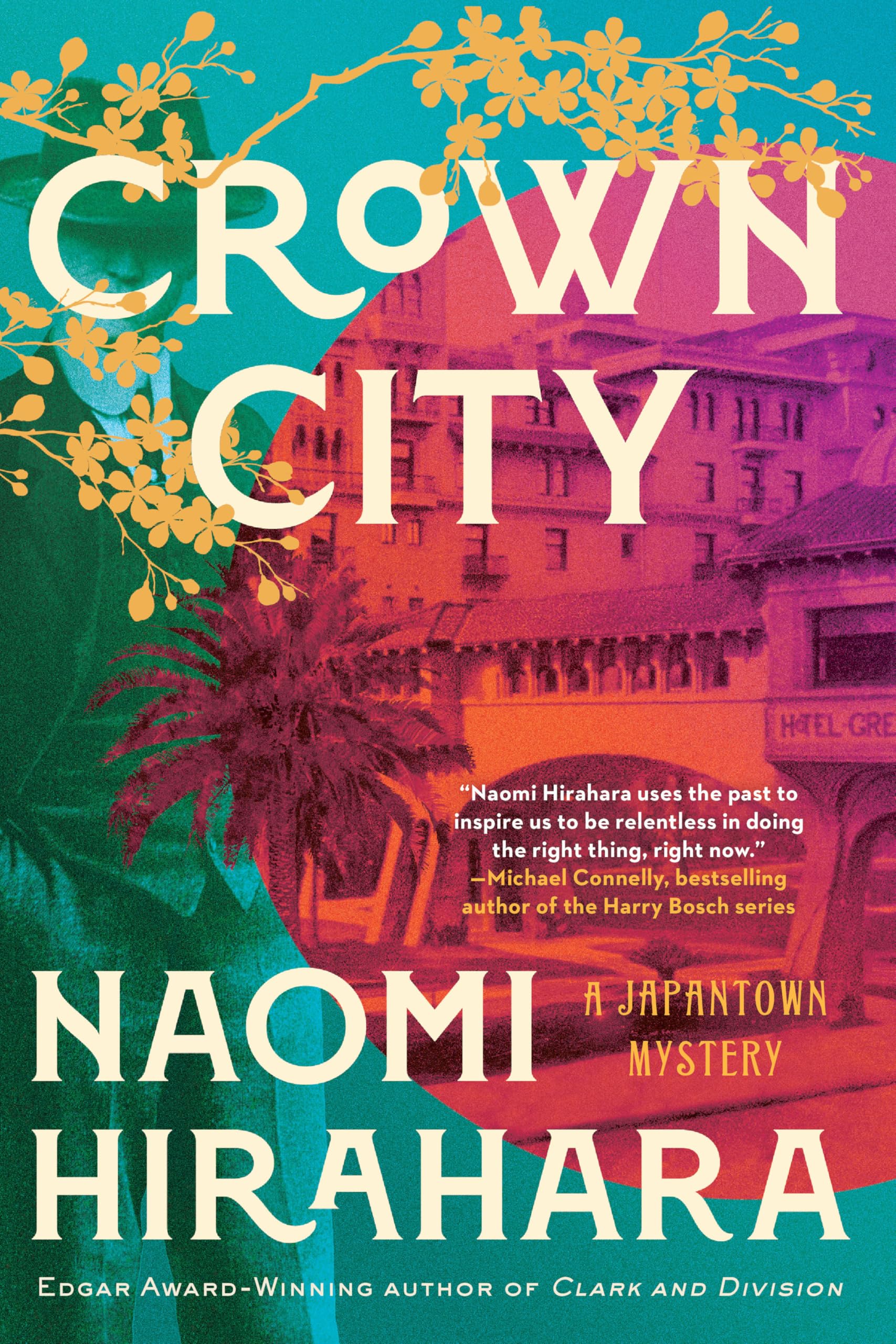



Two Japanese American men hired to investigate an art theft discover something much more sinister in turn-of-the-century California—from the Mary Higgins Clark Award–winning author of Clark and Division. Pasadena, 1903: Eighteen-year-old Ryunosuke “Ryui” Wada staggers off the boat from Yokohama, Japan, ready to reinvent himself after the untimely deaths of his parents. Though battling loneliness and culture shock, Ryui does his best to settle into his work as an art dealer’s apprentice while adjusting to his new home. From his enigmatic photographer roommate, Jack, to the beautiful seamstress living downstairs, Ryui finds himself surrounded by colorful characters and unbelievable opportunities and is soon utterly swept up in all “Crown City” has to offer. But tensions are seething under Pasadena’s bustling prosperity. Ryui is the victim of an anti-Japanese attack, and a painting is stolen from the studio of Toshio Aoki, Pasadena’s most successful Japanese artist, who then hires Ryui and Jack to investigate. It’s not long before their sleuthing leads them into real danger. Ryui is a naive young man in a foreign country—has he bitten off more than he can chew? In this fish-out-of-water mystery, studded with cameos by real historical figures, Edgar Award–winner Naomi Hirahara brings to life a little-known slice of California history. Praise for Crown City “The language is evocative and immersive, lending weight to Ryui’s observations, and real people and events add historical credence and narrative depth to the mystery. Crown City is a measured coming-of-age novel in which a man ponders what must be preserved for the sake of one’s cultural identity.” — Foreword Reviews “Poignant, marvellously well imagined, and deeply moving, this latest from Hirahara is sure to engage fans of historical fiction.” —First Clue Reviews “A fascinating glimpse of turn-of-the century California, with a mystery kicker." — Kirkus Reviews “An immersive treat.” — Publishers Weekly Praise for the Japantown Mysteries Winner of the Lefty Award for Best Historical Mystery Novel Winner of the Mary Higgins Clark Award A New York Times Best Mystery Novel of the Year A Parade Magazine 101 Best Mystery Books of All Time “Hirahara humanizes the struggles of Japanese Americans rebuilding their lives from scratch. Her evocation of Little Tokyo haunts will bring a flood of memories for some Angelenos while introducing a new generation of readers to a pivotal period in L.A. history.” — The Los Angeles Times “Hirahara shows us a corrupt LA whose most endemic corruptions come steeped in racism. But she doesn't wallow in the self-indulgent cosmic nihilism that defines too much noir.” —NPR's Fresh Air “Absorbing . . . Vividly brings to life the experience of being Japanese American during World War II.” — The Seattle Times Naomi Hirahara is the Mary Higgins Clark Award, Edgar Award, and Lefty Award–winning author of Clark and Division and Evergreen ; the Mas Arai mystery series, including Summer of the Big Bachi , which was a Publishers Weekly Best Book of the Year; and the LA-based Ellie Rush mysteries. A former editor of The Rafu Shimpo newspaper, she has co-written nonfiction books like Life after Manzanar and the award-winning Terminal Island: Lost Communities on America’s Edge . She and her husband make their home in Pasadena, California. Chapter I Yokohama 1885-1903 1. I tell people that I’m from Yokohama, but I was actually born in the countryside of Yamaguchi, just below Hiroshima. What should my birthplace mean to me if all of my memories are from Yokohama? I wish that I could have taken my children to Yokohama at least once. Growing up, they viewed Japan as the old country, because many of their friends who actually traveled with their parents to family hometowns like Wakayama, Hiroshima, and Fukuoka would return with reports of dreary places with virtually nothing to do besides fish and plant rice. My Yokohama was nothing like this. It was full of people, sounds, and smells from all around the world—China, the United States, Holland, England, Portugal, and Australia. There were diplomats, soldiers, merchants, sailors, entertainers, and, of course, us artisans. The port was expansive, the bay filled with ships of all sizes, bringing in or taking out passengers and goods of every kind imaginable. Motomachi, a shopping area with as many signs in English as Japanese, had streets lined with fancy photo studios selling postcards depicting watercolor scenes of Yokohama. Since Yokohama was a main port of departure to South America and the United States, many Japanese wearing their best clothing sat for a memento of life before leaving their native country. My favorite spot to view Yokohama was at the top of the steep 102-stone steps that led to a famous teahouse. I’d come at the end of the day, when light was slipping away and docked ships were barely visible. With the sea’s expa