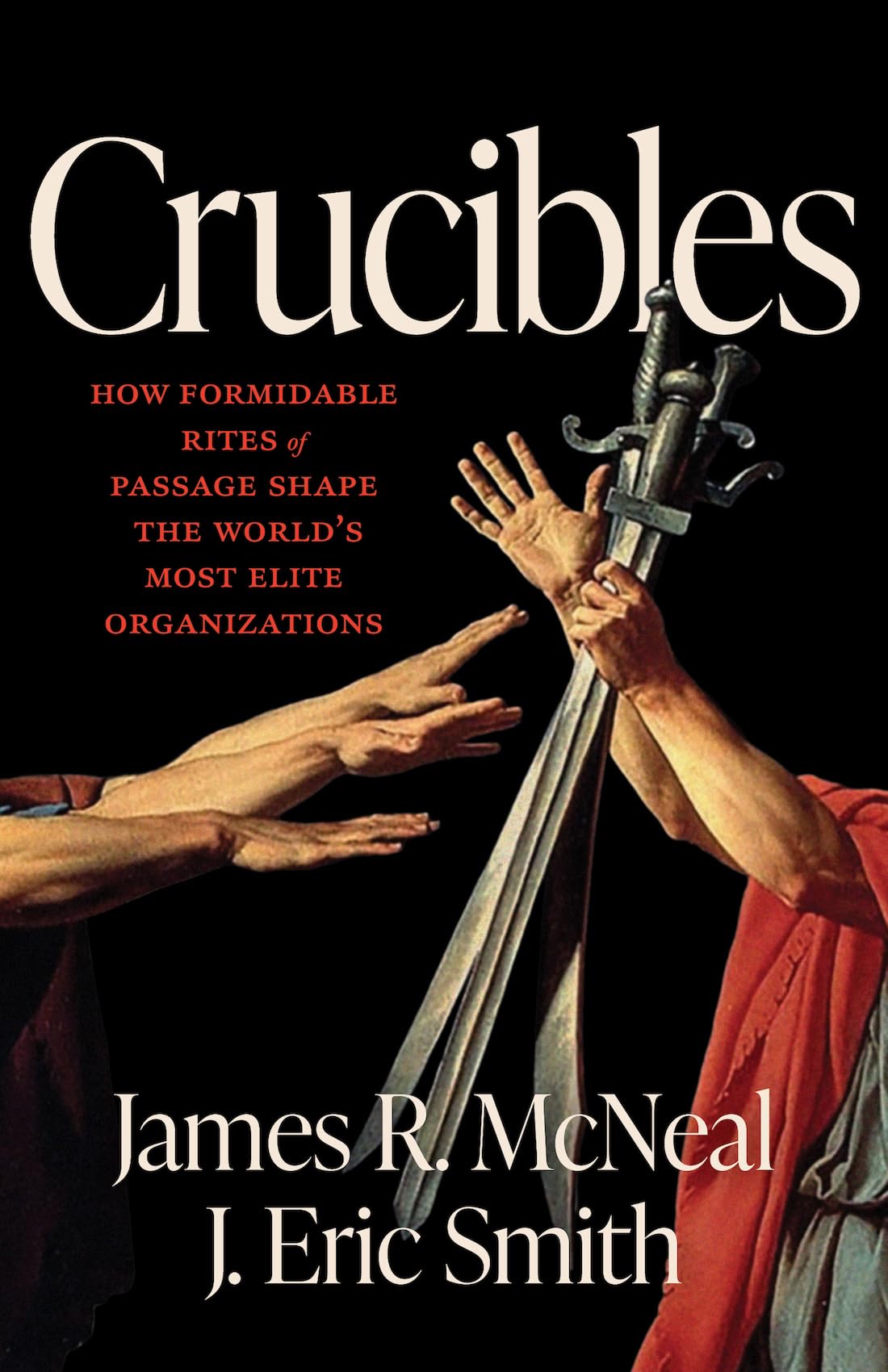
Crucibles: How Formidable Rites of Passage Shape the World’s Most Elite Organizations
$20.80
by James R. McNeal



What do ancient Shaolin monks, NASA astronauts, and the Mafia have in common? How did the rites of passage that have shaped groups ranging from the U.S. Marines to the Swiss Guard influence the way those elite organizations operate today? And what can modern leaders learn from the crucibles that shape the members of the world’s most formidable organizations? In Crucibles: How Rites of Passage Shape the World’s Most Elite Organizations , readers will encounter the unique initiation rituals of fourteen elite groups—both historical and contemporary—that have shaped civilizations, fortified leaders, and made lasting impacts on culture and power dynamics in societies around the globe and across time. From the grueling physical trials of traditional warrior castes to the intellectual challenges faced by members of secret societies, Crucibles delves deep into the tests such groups design and deploy to separate aspirants from the chosen few. Why are people willing to endure such demanding trials? What do these crucible experiences reveal about human nature and commitment? And how do these crucibles shape the organizations that require them—both for better and worse? This book uncovers the universal principles behind these rites of passage and offers insights that modern organizations can use to design their own rigorous processes, fostering excellence while remaining ethical and relevant in today’s world. With practical lessons for leaders in business, education, and beyond, Crucibles is an in-depth journey into understanding how elite groups are forged. Readers will discover how these time-honored practices can inform and inspire the next generation of leaders. If you are curious about how elite groups have marshaled these experiences to shape human excellence as they define it, Crucibles offers a provocative exploration of the unique and sometimes hidden role played by such initiation rituals. PRAISE FOR CRUCIBLES “As a U.S. Marine, Naval Academy graduate, and someone who has participated in combat operations, I know firsthand how intense training and real-world challenges shape individuals and teams. This book offers a timely and powerful look at how the hardest trials create the strongest leaders. Whether you’re in the military, business, or simply fascinated by elite performance, this is a must-read.” — Matthew "Jerry" Glavy, retired Lieutenant General, U.S. Marine Corps “This enlightening and entertaining survey shows the wide range of what a crucible can be. The insights from participants—and even some leaders—provide an intimate view inside each example, and the authors offer pithy takeaways that help guide those trying to understand their own crucibles or developing new ones.” — Steve Bowen, retired U.S. Navy Captain, USNA Class of ‘86 "Coauthors Rear Admiral Jim McNeal and J. Eric Smith know how to tell a story that informs, influences, and leaves a lasting impact with the reader. They've done it with a previous book and succeeded again with Crucibles . Each has tremendous credibility writing about formidable rites of passage in elite organizations because each displayed their own measure of outstanding 'Teamwork, Tone, Tenacity' while serving in unique locations and organizations, such as southwest Asia combat zones and the Naval Nuclear Propulsion Program. What’s especially intriguing about this fascinating topic of Crucibles is the wide professional and geographic diversity of organizations that are examined across modern and ancient times. Want to be educated and entertained? Read one of Jim McNeal’s and J. Eric Smith’s books!" —Rear Admiral Paul Becker, USN (Ret) Former Director for Intelligence (J2), Joint Chiefs of Staff "Always looking for gems in the hidden and unique aspects of history, both McNeal and Smith know how to select appealing and interesting topics that pull a reader into an engaging book. With their unique ability to assimilate disparate historical facts, in this book they are experts at how to methodically conduct a thorough examination of the distinct and usually shielded world of rituals required to enter certain groups or societies. Each author possesses that special ability to expose a reader to the mental, physical, and social commitments that make one experience an enlightening lesson in how people interact and why they are willing to conform themselves to belong to groups or societies. At times funny, serious, and disarming, both authors are brilliant writers who will create a book that pulls readers into wanting to know more about how the social need to belong affects group dynamics and why individuals choose to become part of the fabric of those groups." —Commander Kirk S. Lippold, USN (Ret) Former Commanding Officer, USS Cole (DDG 67) “This is a must-read for those looking to better understand the rites of passage most will never attempt. My experiences in the United States Navy and joining the locker room of the New England Patriots helped me und